Ecuador’s reported cacao compliance progress could be good news for Cuenca’s bean-to-bar makers
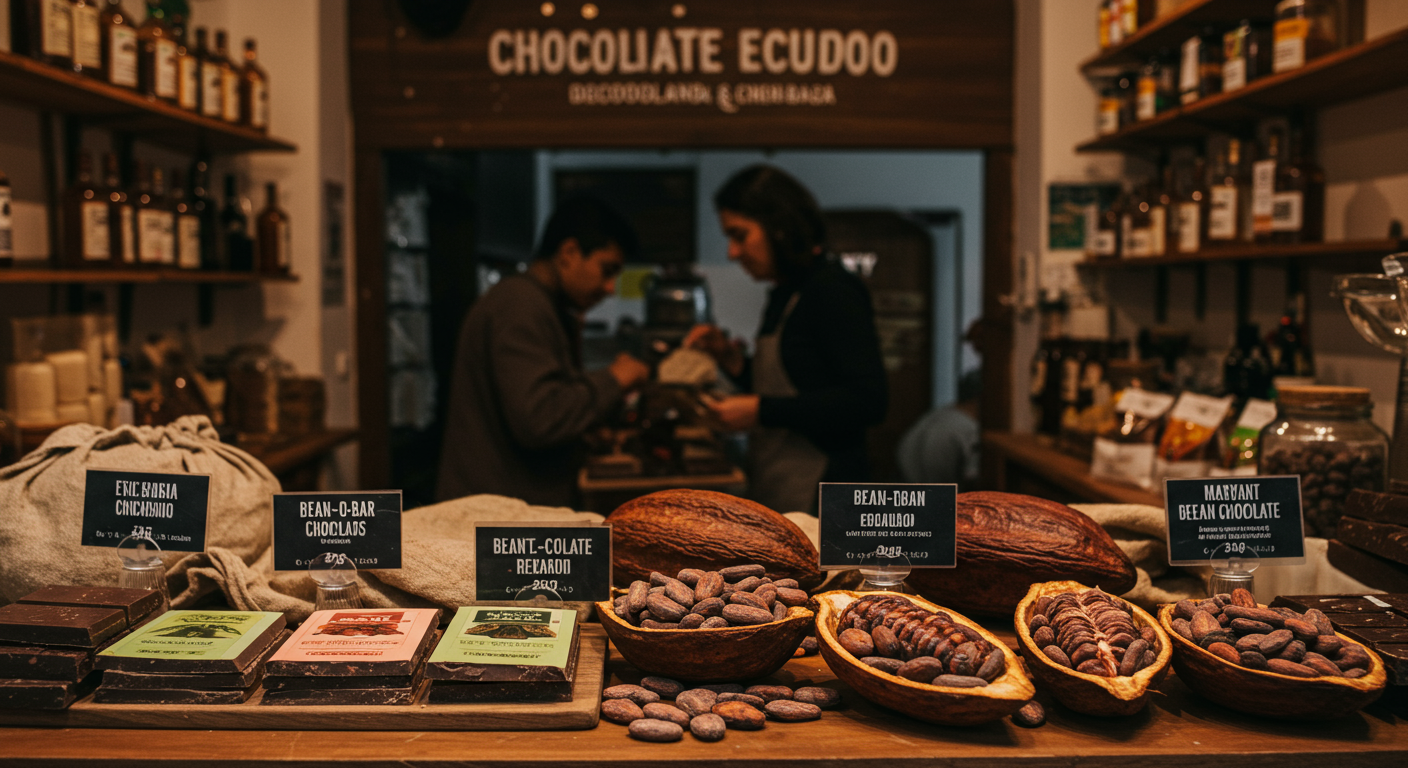
Reports that Ecuador has reached roughly 90% compliance with Europe’s upcoming deforestation-related import requirements offer a reassuring headline for the cacao sector. For Cuenca’s dining scene, though, the more practical takeaway is narrower: if that progress holds, it could reduce supply-chain friction for local bean-to-bar businesses that rely on well-documented cacao sources.
Why Ecuador’s EU deforestation compliance matters to chocolate right now
The European Union’s new deforestation rules are meant to require stronger traceability and origin documentation for agricultural products, including cacao. For exporting countries, the issue is less about changing the chocolate itself and more about proving where the raw material came from and whether it meets the market’s documentation standards.
That is why reports of Ecuador nearing 90% compliance matter. Even so, that figure is best treated as a reported benchmark, not an unqualified fact, unless it is tied to a specific official statement or published report. In practical terms, this is best understood as a trade and supply-chain development with possible local business implications, not a blanket all-clear for every chocolate maker in Cuenca.
What the reported compliance progress actually suggests
In this context, compliance likely refers to systems such as traceability, farm-level origin records, export paperwork, and the ability to show that EU-bound cacao meets the new requirements. That matters for a country like Ecuador, whose reputation for fine-flavor cacao gives it a strong incentive to keep access to premium markets as smooth as possible.
But national progress does not mean every producer, cooperative, exporter, or chocolate business is equally prepared. Some parts of the supply chain may be further along than others, and some businesses may still need to adapt their processes or documentation. The December deadline is therefore best seen as a regulatory milestone affecting market access and administrative readiness more than an immediate change in what consumers taste in a chocolate bar.
What this means for Cuenca’s bean-to-bar scene
For Cuenca’s artisan chocolate world, the biggest upside of stronger upstream compliance would be sourcing confidence. If cacao moving through export-oriented networks is better documented and easier to trace, local makers buying through those channels may face less uncertainty tied to regulation, paperwork, or international market disruption.
That does not mean Cuenca’s bean-to-bar scene is automatically “safe.” Some businesses may rely on different suppliers, operate at different scales, or have varying exposure to export-linked pricing and logistics. Still, reported national progress could lower risk for local chocolate businesses connected to compliant supply chains, especially those that already emphasize origin and transparency.
Why diners and chocolate shoppers in Cuenca may notice little change
For most customers, this kind of compliance milestone is unlikely to produce an immediate visible change in café menus, retail shelves, or chocolate prices on its own. The bigger effects are mostly behind the scenes: smoother sourcing, more reliable documentation, and preserved access to important markets for Ecuadorian cacao.
What consumers may notice over time is more messaging around traceability, farm origin, and responsible sourcing. For local bean-to-bar brands, this is the kind of moment that can reinforce the value of explaining where cacao comes from and how it moves through the supply chain before it becomes a finished bar or dessert in Cuenca.
The caveats behind the reassuring headline
The encouraging version of this story depends heavily on how solid the reported 90% figure proves to be. Without a clearly identified official or reputable published source attached to that number, it should remain attributed and treated with caution.
There is also a local reality check: Cuenca’s resilience still depends on the choices and exposure of individual makers. Supplier relationships, certification habits, costs, and dependence on Europe-linked trade channels all matter. So while the broader outlook for Ecuadorian cacao appears encouraging, that is not the same as proof that every business in Cuenca is fully insulated from regulatory change.
The balanced conclusion is simple: if Ecuador is indeed nearing broad compliance with Europe’s deforestation rules, that is a positive signal for the cacao sector and potentially helpful for Cuenca’s chocolate scene. But it is better understood as a risk-reducing development than a guarantee.