Ecuador's Exotic Fruit Exports Diverge: Pineapple Jumps 28% as Pitahaya Cools
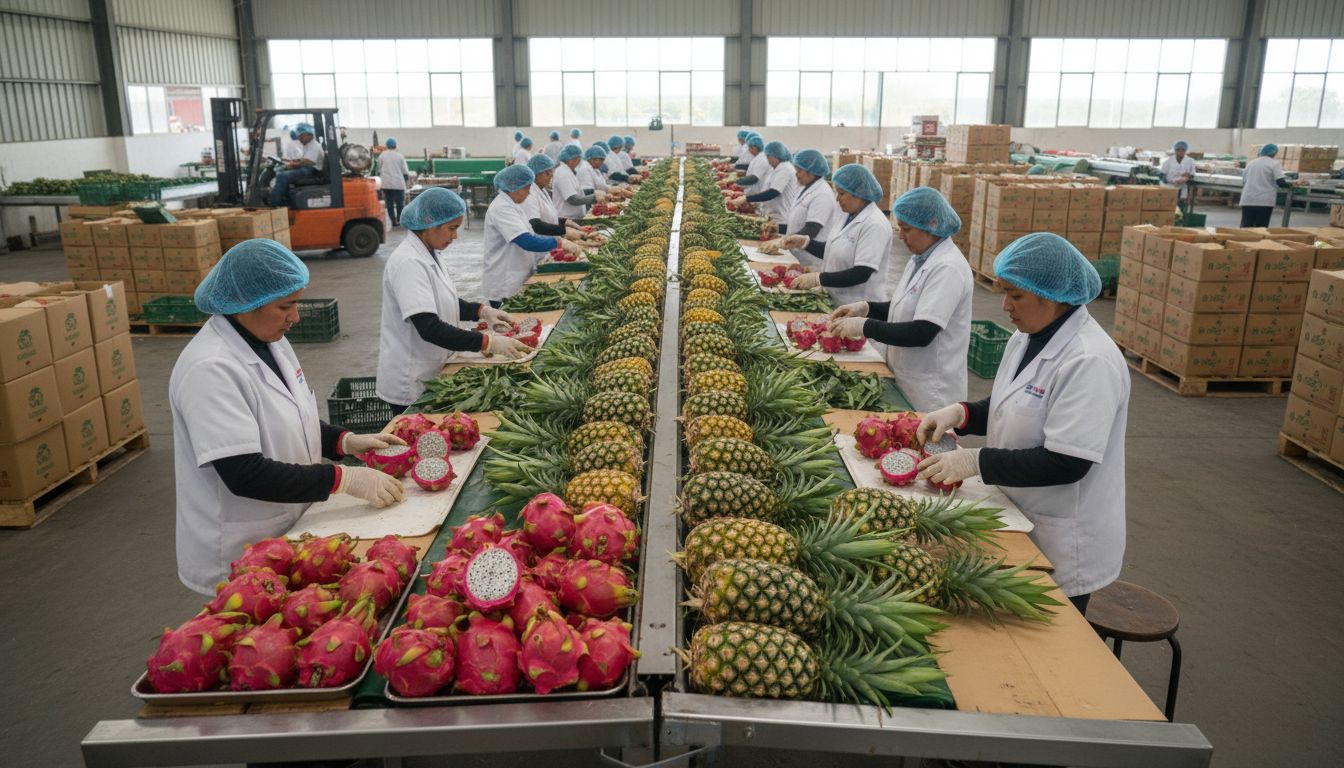
Ecuador's Exotic Fruit Sector Sends Mixed Signals in 2026
Ecuador's exotic fruit exporters are having very different years. Pineapple shipments have surged in value and volume through the first half of 2026, while pitahaya, the spiky dragon fruit that became something of a breakout star in 2025, appears to be cooling off. Observers note that the two crops' fortunes have diverged sharply enough to raise questions about what's driving each trend.
The story matters beyond the produce aisle. Ecuador has spent years trying to diversify its export base beyond shrimp, bananas, and cacao, and non-traditional fruits like pineapple and pitahaya have been positioned as part of that push. According to figures from Fedexpor and the Central Bank of Ecuador, pineapple and pitahaya together accounted for roughly $171 million in accumulated exports through June 2026, a sizable sum for what are still considered secondary crops relative to Ecuador's traditional exports.
Pineapple's Surge: Riding Costa Rica's Supply Gap
Pineapple exports reportedly grew 28% in value and 15% in volume during the first half of 2026, reaching approximately $50 million and 78,550 tonnes. That's a notable jump, and the explanation offered by industry sources centers on a supply gap thousands of miles away.
Costa Rica, long recognized as the world's largest pineapple exporter, has faced production shortfalls this year tied to reduced plantings and increased rainfall, according to trade press coverage. A recurring theme in reporting on Costa Rica's agricultural sector is one of compounding pressure: a strong colón squeezing exporter margins, layoffs among agricultural exporters, and what some outlets have characterized as a "perfect storm" for the country's agro sector. Whether these factors combined to meaningfully constrain global pineapple supply is a claim that rests substantially on trade-press and industry accounts rather than independently verified production data.
Multinational buyers reportedly pivoted toward Ecuador to fill the resulting gap. It's a plausible narrative given the timing and the scale of Ecuador's export growth, but it originates largely from named industry sources rather than independent market analysis, so it's worth treating the causal link as a reasonable working explanation rather than an established fact.
Where Ecuador's Pineapple Comes From
Ecuador's pineapple production is geographically concentrated, with an estimated 87% grown in Santo Domingo de los Tsáchilas and about 11% in Guayas. That concentration may help explain how quickly the sector could respond to new buyer interest, since production and export logistics are clustered rather than spread thin across the country.
Logistics may also be playing a role in Ecuador's appeal to buyers seeking alternatives to Costa Rican supply. Reported sea transit times put Ecuador within 8 to 11 days of the United States, roughly 10 days from Chile, 16 to 20 days to Europe, and 27 to 43 days to China—figures that position Ecuador as a workable, if not always faster, alternative sourcing point for global buyers.
Pitahaya's Comedown After a Breakout 2025
Pitahaya's 2026 story looks quite different. The fruit had a strong 2025, with exports reportedly growing 40% in value to reach $179.9 million through August of that year. That kind of growth made pitahaya something of a flagship product among Ecuador's non-traditional exports.
Reports suggest a 14% decline in pitahaya exports for 2026, though this particular figure was not directly confirmed in the trade reporting reviewed for this piece and should be treated with some caution pending verification against primary Fedexpor and Central Bank data. If accurate, several explanations seem plausible: a high base effect following 2025's rapid growth, softening demand in key markets, or broader saturation as more producers entered the pitahaya export business. A recurring concern in coverage of niche export crops is that rapid early growth can be difficult to sustain once markets adjust, and pitahaya's trajectory may be an example of that pattern rather than evidence of a deeper problem.
Pitahaya production in Ecuador is concentrated in a few provinces, with the yellow variety reportedly grown roughly 67% in Morona Santiago, 23% in Manabí, and 8% in Cañar. That concentration means shifts in demand or pricing can have outsized effects on specific regional economies.
What the Divergence Means for Ecuador's Export Strategy
Taken together, the two fruits illustrate both the opportunity and the volatility inherent in Ecuador's non-traditional export push. Pineapple's gains show how quickly Ecuadorian producers can capture market share when a competitor stumbles, while pitahaya's cooling suggests that fast early growth in a niche export category isn't necessarily permanent.
For producers and regional economies tied to these crops, the implications differ. Pineapple growers in Santo Domingo de los Tsáchilas and Guayas may be benefiting from a temporary but meaningful demand shift, while pitahaya producers in Morona Santiago, Manabí, and Cañar may be navigating a more uncertain outlook. Broader trade data from Fedexpor and the Central Bank point to continued growth across Ecuador's non-traditional export categories overall, suggesting the sector's diversification strategy remains intact even as individual crops rise and fall.
Caveats and Open Questions
Several aspects of this story rely on figures and causal narratives sourced from industry associations, government trade data, and trade-press reporting rather than independently verified analysis. The specific 14% decline attributed to pitahaya in 2026 was not directly confirmed in the source material reviewed here, and readers should treat it as a reported figure pending verification. Similarly, the precise scope and severity of Costa Rica's production problems—while consistent with multiple trade-press accounts of reduced plantings, weather pressures, and currency-driven exporter strain—has not been independently quantified in a way that fully substantiates the "severe" characterization used in some coverage. As with much agricultural trade reporting, the numbers offer a useful snapshot, but the underlying causes deserve continued scrutiny as more complete data becomes available.