Ecuador’s Cocoa Reversal Hits Export Earnings as Prices Retreat
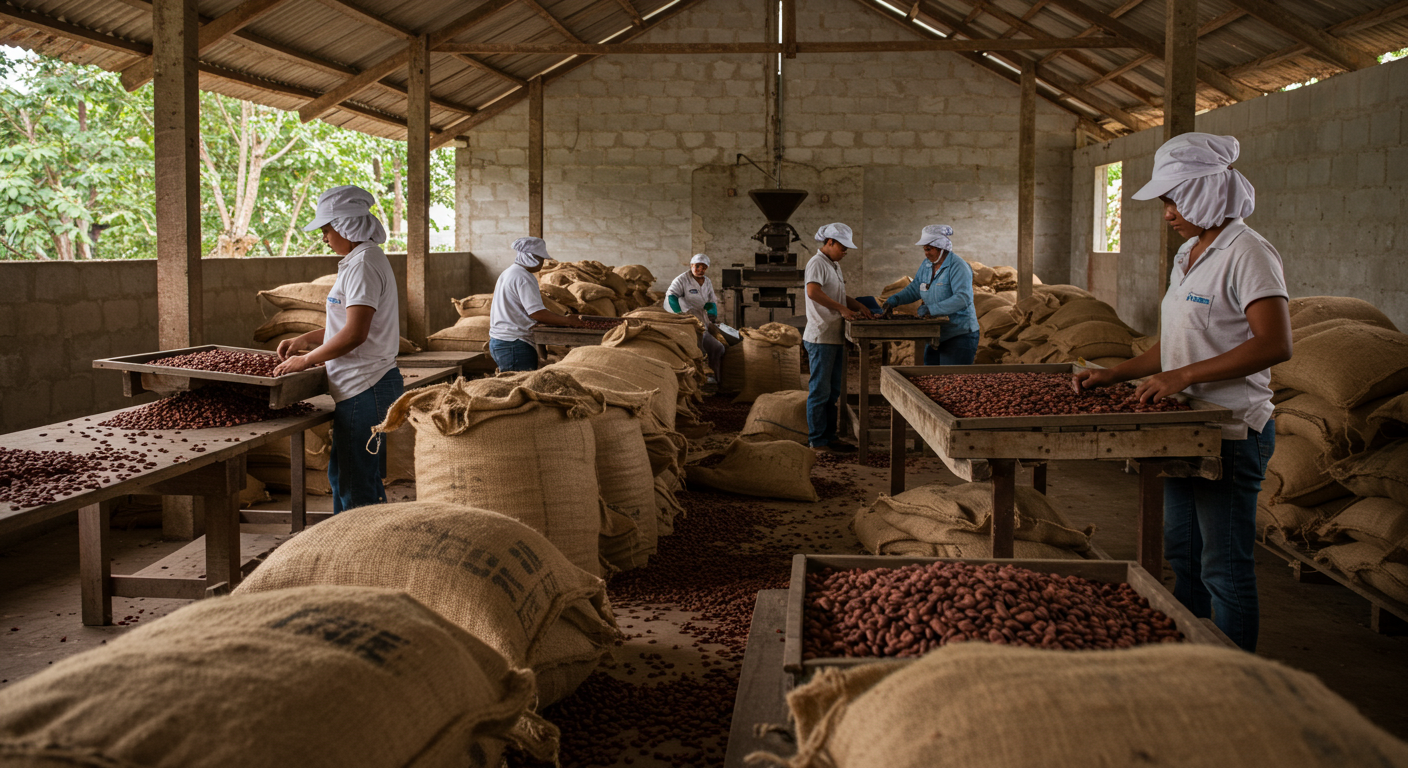
Ecuador’s cocoa windfall appears to be fading quickly. After a stretch of unusually high prices in global cocoa markets, benchmark values have pulled back to about $4,200 a ton, according to Reuters and Bloomberg Commodities. At the same time, Ecuador’s export earnings have reportedly fallen 59 percent in the relevant period, underscoring how abruptly a commodity boom can reverse.
That matters well beyond trading desks. Cocoa is one of Ecuador’s signature export products, and price swings affect farmers, exporters, processors, and food businesses tied to chocolate and confectionery supply chains. For readers interested in food and dining, it is a reminder that menu ingredients and retail chocolate prices are often shaped by volatility much farther up the supply chain.
Ecuador’s cocoa windfall is fading fast
The recent downturn follows an exceptional run-up that lifted cocoa prices to historic highs and delivered a temporary windfall to producing countries. Ecuador, a major global supplier known for its fine-flavor cocoa, was well positioned to benefit from that surge. But commodity rallies can unwind quickly, and the latest market reporting suggests that is now happening.
Reuters and Bloomberg have described a broad correction in cocoa markets as supply expectations, trading sentiment, and futures positioning shifted. In practical terms, that means prices that once looked sustainably elevated are now being reassessed. The roughly $4,200-a-ton level should be understood as a snapshot of the market, not a permanent benchmark.
What caused the boom and what changed
The earlier boom was driven by tight supply conditions and intense concern over harvests in key producing regions, especially in West Africa. Those fears helped push futures sharply higher and created an environment in which exporters and producing countries could capture much stronger values than usual.
What changed was not necessarily a single event, but a shift in expectations. As traders reassessed supply prospects and market momentum cooled, prices retreated from extreme levels. Corrections like this can be steep in commodity markets, especially after speculative enthusiasm and supply worries have already pushed prices far above long-term norms.
For Ecuador, the key point is that global cocoa pricing is set in an international market that local producers do not control. Even when domestic output remains important, external price swings can quickly reshape income across the sector.
Why lower prices hit export earnings so hard
A drop in headline cocoa prices does not automatically translate one-for-one into export revenue, because export earnings depend on several moving parts at once. Futures prices are one measure, but export unit values, shipment volumes, contract timing, and the mix of products shipped all matter too.
That helps explain how export earnings can fall faster than the most visible market price indicator. If exporters are shipping at lower prices while volumes also weaken, or if contracts are settled on less favorable terms than during the peak, total export income can decline sharply. The reported 59 percent drop in earnings points to a broader adjustment than price alone.
Official Ecuadorian sources such as the Central Bank of Ecuador and the Ecuador Ministry of Production are important for confirming the exact period and composition of that decline. In stories like this, timing matters: a monthly or short-period comparison can look much steeper than a longer annual view.
What it means for farmers, exporters, and the chocolate supply chain
For farmers, a price retreat can quickly squeeze income after what may have felt like a rare window of stronger returns. Higher global prices do not always flow evenly to the farmgate, but when benchmark prices fall, pressure on producer margins can arrive fast, especially for smaller growers managing labor, transport, and input costs.
Exporters and processors also feel the shift. Businesses that benefited from a high-price environment may now face weaker margins, slower deal flow, or more cautious buying. Volatility itself becomes a challenge, because planning inventories, contracts, and financing is harder when market values move dramatically in either direction.
For the broader food sector, cocoa instability can ripple through chocolate makers, bakers, dessert businesses, and specialty food brands. Lower raw commodity prices do not always mean immediate savings for consumers or restaurants, since production, logistics, hedging, and retail pricing all shape the final cost. Still, turbulence in cocoa markets eventually works its way into the economics of chocolate products.
Ecuador’s place in the global cocoa market
Ecuador occupies an important place in world cocoa trade. International industry and agricultural datasets, including those from the International Cocoa Organization and FAOSTAT, consistently place the country among the leading cocoa producers and exporters. Its reputation is especially strong in premium and fine-aroma segments, giving it a distinct role in global chocolate supply chains.
That prominence also makes Ecuador especially exposed to price swings. When international cocoa markets surge, the country can benefit through stronger export values and improved sector sentiment. When prices reverse, the downside shows up not only in trade data but also in rural incomes and business planning across the supply chain.
In that sense, Ecuador’s current experience reflects both its strength and its vulnerability. Being deeply integrated into the world cocoa market creates opportunity, but it also leaves the sector tied to global cycles it cannot fully influence.
What officials and markets are watching next
The next signals to watch are straightforward: export volumes, farmgate prices, weather conditions, and fresh revisions to global supply expectations. Official commentary from the Central Bank of Ecuador or the Ministry of Production may help clarify whether the earnings drop reflects a temporary adjustment, weaker shipments, or a more sustained slowdown.
Markets will also be watching whether the recent decline represents a normalization after extreme highs or the start of a deeper slump. That distinction matters for growers deciding whether to invest, for exporters managing contracts, and for food businesses trying to understand future chocolate costs.
For now, the clearest takeaway is that Ecuador’s cocoa sector has moved from boom conditions into a more uncertain phase. After an extraordinary rally, the country is once again confronting the familiar reality of commodity dependence: strong gains can vanish as quickly as they arrive.