Ecuador's Cacao Exports Collapse 54.6% as Bananas, Shrimp, and Oil Reshape the Trade Picture
Editor's note: This article addresses Ecuador's national export and trade data. It does not concern restaurants or dining, and its placement under Dining-Out reflects a category mismatch upstream. Readers interested in agricultural and commodity trends that indirectly touch food supply chains may still find it relevant.
Ecuador's Export Mix Shifts as Cacao Prices Collapse
Ecuador's export data for January through July 2026 reveals a sharp divergence across commodity sectors. Cacao exports fell steeply even as the country's overall export totals climbed, driven largely by gains in shrimp, oil, and mining. Bananas held relatively steady, offering a counterpoint to cacao's decline. Many observers describe the period as one of reshuffling among Ecuador's traditional export pillars, with price swings—rather than volume changes—driving much of the movement.
Cacao's Sharp Decline
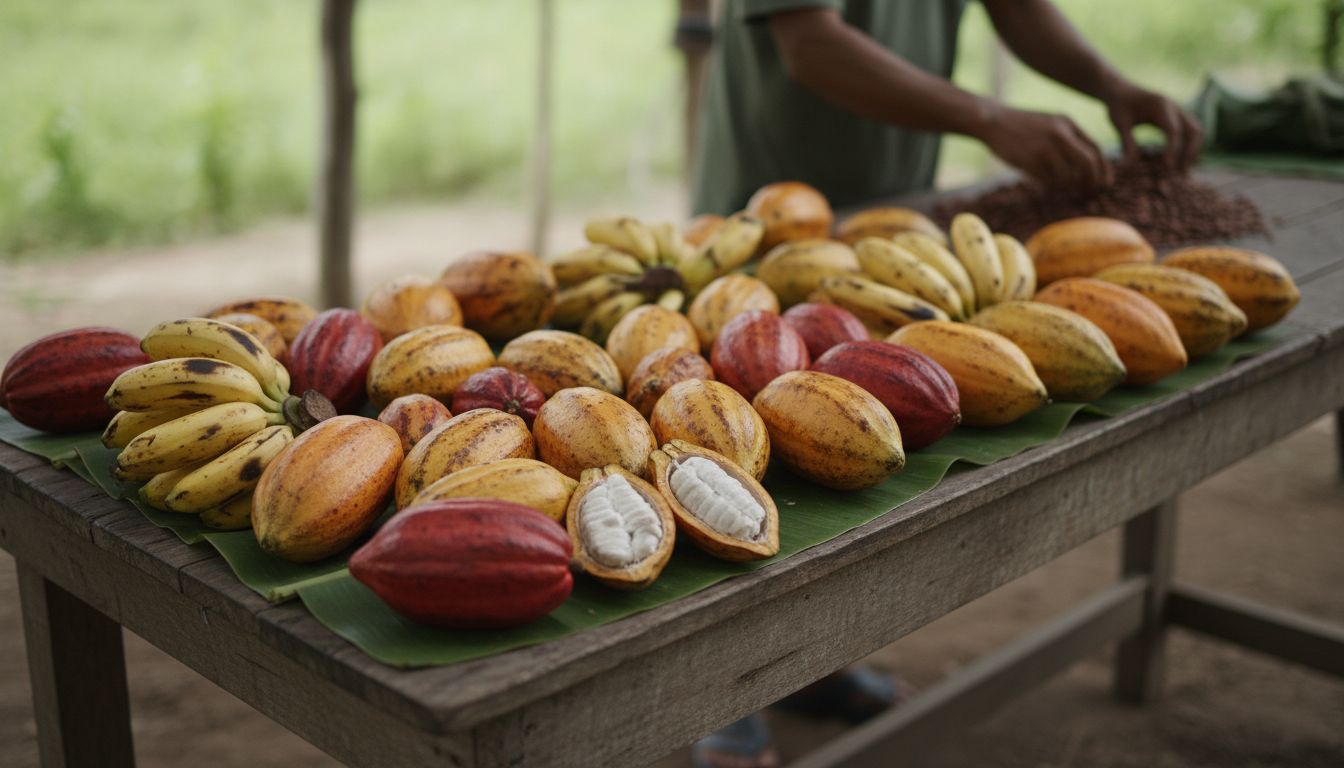
Cacao export revenue fell to approximately $1.196 billion between January and July 2026, a year-over-year decline generally cited in the 54.6% to 55% range depending on the source. Reporting attributes the drop primarily to falling international cacao prices rather than reduced shipment volumes, with some accounts suggesting export volumes were stable or even higher during the period. This price-driven revenue loss raises questions for Ecuadorian cacao producers about the sector's exposure to global commodity price swings, and a recurring concern among analysts is that a country's cacao earnings can shrink sharply even when farmers are shipping the same amount of product.
Bananas Buck the Trend
In contrast to cacao's downturn, banana exports rose by roughly 7% to 7.5% over the same period, reaching approximately $2.74 billion. This makes bananas one of the more stable performers in Ecuador's agricultural export basket. Some industry observers point to steadier international demand patterns, including demand shifts across European and other markets, as a factor helping cushion bananas from the kind of price volatility that has weighed on cacao.
Shrimp Overtakes Oil as Ecuador's Top Export
Shrimp exports climbed approximately 17.6% to 18%, reaching around $5.77 billion, surpassing oil for the first time as Ecuador's leading export category. Oil exports also grew, up about 27.3% to roughly $5.72 billion, though this increase is attributed entirely to a higher average price per barrel—reportedly rising from about $67.72 to $82.17—rather than any increase in export volume. At least one outlet links this price rise to geopolitical tensions between the United States and Iran; this connection should be understood as that outlet's interpretation rather than an independently verified causal finding, and readers should treat it as a contributing narrative rather than settled fact.
Mining's Rapid Rise and Concentration Risk
Mining exports surged approximately 43.5% to about $3.18 billion. Notably, reporting indicates that more than 75% of this mining export value came from just two operations, the Fruta del Norte and Mirador mines. A recurring concern raised in coverage is that this growth is concentrated in a small number of large-scale projects, which may leave the sector's continued expansion vulnerable to operational or price disruptions at a handful of sites rather than reflecting broad-based sectoral growth.
The Bigger Picture: Trade Surplus and Dollarization Pressure
Total exports for January through July 2026 rose about 9.3% to roughly $23.29 billion, according to official figures from the Banco Central del Ecuador. A separate framing focused on non-oil, non-mining trade describes a 2% decline in export value to about $14.36 billion during the same window, illustrating how different ways of slicing the data can tell contrasting stories about the same period. At the same time, rising fuel and diesel import costs—up roughly 35.3%—are reported to have squeezed Ecuador's trade surplus down to about $2.843 billion, compared with roughly $3.909 billion a year earlier.
Many economists consulted in regional coverage note that a narrowing trade surplus carries particular significance for Ecuador given its dollarized economy, which relies on trade performance to help sustain dollar liquidity. A recurring theme across reporting is that combining a commodity-driven revenue picture—cacao's price collapse alongside oil's price-driven gains—with rising import costs creates a structural vulnerability worth watching closely, even as headline export growth appears positive on the surface.