Ecuador’s Banana Export Growth Highlights Strong EU Demand and Zero U.S. Tariffs
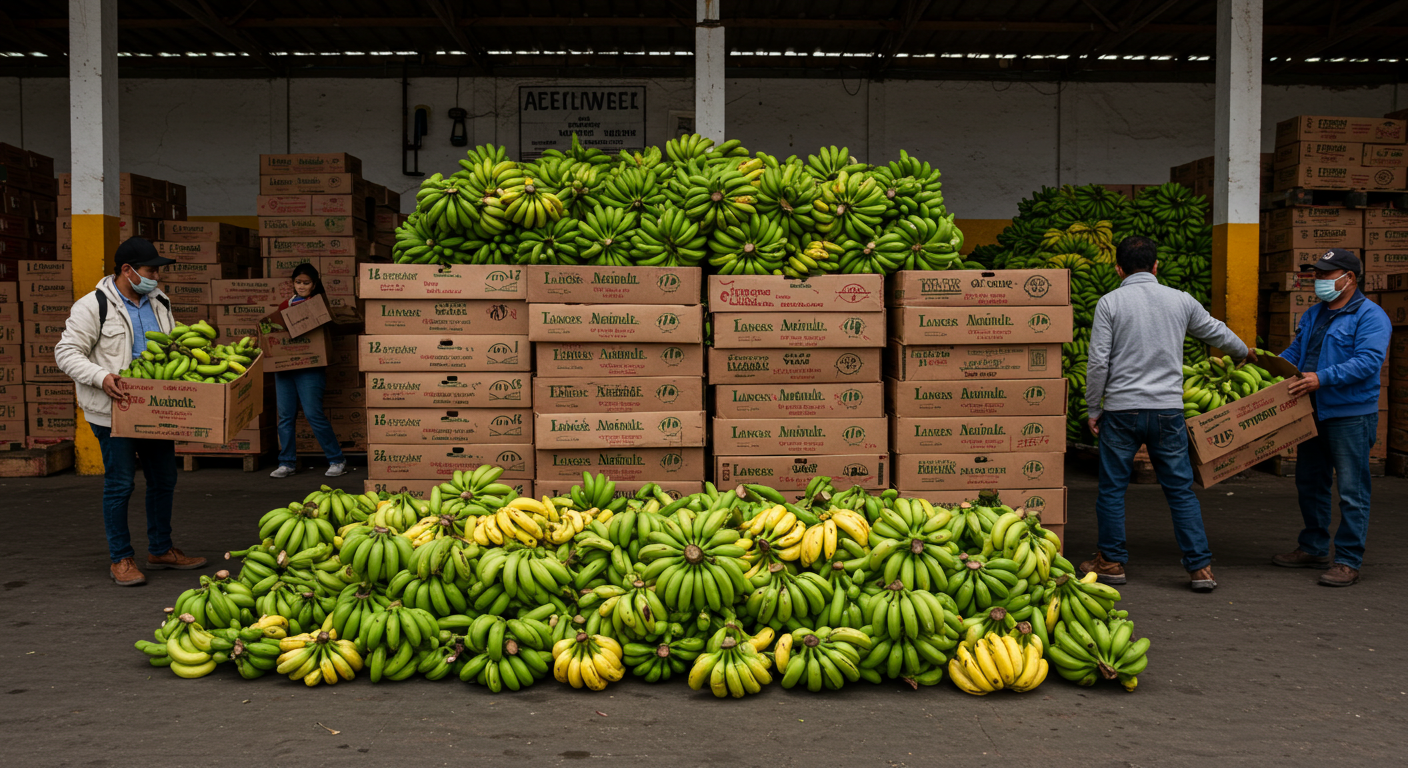
Ecuador’s banana trade is drawing fresh attention after reports that exports rose 8.6 percent, with the European Union accounting for roughly a third of purchases and U.S. tariffs at zero for the relevant imports. For buyers across the food business, that combination matters because bananas are among the world’s most widely traded fresh products, and Ecuador remains one of the industry’s most influential suppliers.
The key point, however, is that the headline figure needs careful framing. Based on the available sourcing, the broader trade narrative appears credible, but the exact reporting period behind the 8.6 percent increase should be clearly identified before the number is treated as a firm benchmark. In trade reporting, whether a change refers to export volume, export value, or a specific month or quarter can materially change the takeaway.
Why Ecuador’s banana trade matters
Ecuador has long ranked among the world’s leading banana exporters, so changes in its export performance can ripple through international produce supply chains. When Ecuador ships more fruit abroad, importers, wholesalers, retailers, and foodservice buyers in destination markets pay attention because supply availability and procurement planning are closely tied to major origin countries.
That is especially relevant for businesses that depend on steady fruit supply rather than spot-market surprises. Restaurants, hotel groups, institutional kitchens, and prepared-food operators may not buy directly from Ecuador, but they are still affected by the overall balance of global supply, shipping conditions, and destination-market demand.
The 8.6 percent increase needs precise attribution
The reported 8.6 percent export jump should be treated as a meaningful trade signal that still requires exact dataset confirmation. The strongest anchors for that number would be official Ecuadorian reporting from Banco Central del Ecuador or export promotion data from ProEcuador. Without the underlying release being clearly identified, the safest interpretation is that Ecuador posted a notable increase in banana exports during the cited comparison period, but the claim should stop short of overstating what has been conclusively verified.
That distinction matters because export growth can describe different things. A rise in shipment volume would suggest stronger physical movement of fruit, while a rise in export value could also reflect pricing, currency effects, or contract shifts. Year-over-year and month-over-month comparisons can also tell very different stories.
Why the European Union remains central
The European Union’s role as roughly a third of demand underscores how important the bloc is to Ecuador’s banana business. Even without a full country-by-country destination breakdown here, the broad picture is clear: stable European demand can provide a strong base for Ecuador’s export performance.
For the produce trade, that kind of concentration is significant. A large, dependable destination market can help exporters maintain volume, support shipping flows, and preserve commercial visibility for growers and packers. It also means that changes in European demand, regulation, logistics, or retail conditions can have outsized effects on Ecuador’s export outlook.
What zero U.S. tariffs actually mean
The zero-tariff angle matters, but it should be interpreted carefully. If the applicable U.S. tariff rate for Ecuadorian banana imports is zero, as reflected in U.S. trade treatment, that lowers border costs and removes one obvious barrier to entry. It does not, however, guarantee lower end-user prices or a larger U.S. market share on its own.
Shipping rates, cold-chain handling, domestic distribution, fuel costs, exchange rates, and contract structures can all shape what buyers ultimately pay. In other words, zero tariffs help keep the trade lane commercially workable, but they are only one part of the final cost equation.
It is also worth separating tariff treatment from destination importance. The United States may offer tariff-free access for the product, yet the European Union can still account for a larger share of Ecuador’s banana export mix depending on demand patterns and established trade relationships.
What this could mean for food buyers
For importers and wholesale produce buyers, reported export growth from a major supplier like Ecuador may point to resilient supply conditions, especially when paired with low border friction in key markets. For restaurant operators and other foodservice businesses, the practical implication is more modest: healthier export flows can support availability, but they do not automatically translate into cheaper menu inputs.
Bananas are often viewed as a basic, high-volume product, yet their pricing still depends on freight, handling, and local market conditions. Buyers looking for direct cost relief should be cautious about reading too much into a single export-growth figure without comparing it with freight trends and downstream contract data.
The main takeaway
The broad story is that Ecuador appears to have posted solid banana export growth, with the European Union remaining a core buyer and U.S. tariffs adding no customs burden for the relevant imports. Those are meaningful signals for the global produce trade and for businesses that rely on stable fruit supply.
The main caveat is precision. Until the exact official release behind the 8.6 percent figure is clearly identified, the number is best presented as a reported trade increase rather than a fully detailed statistical conclusion. That kind of careful attribution is especially important in commodity coverage, where the period, metric, and source can all change the meaning of a headline.