Ecuador Bets on a National Cacao Brand to Ride Out a Price Crash
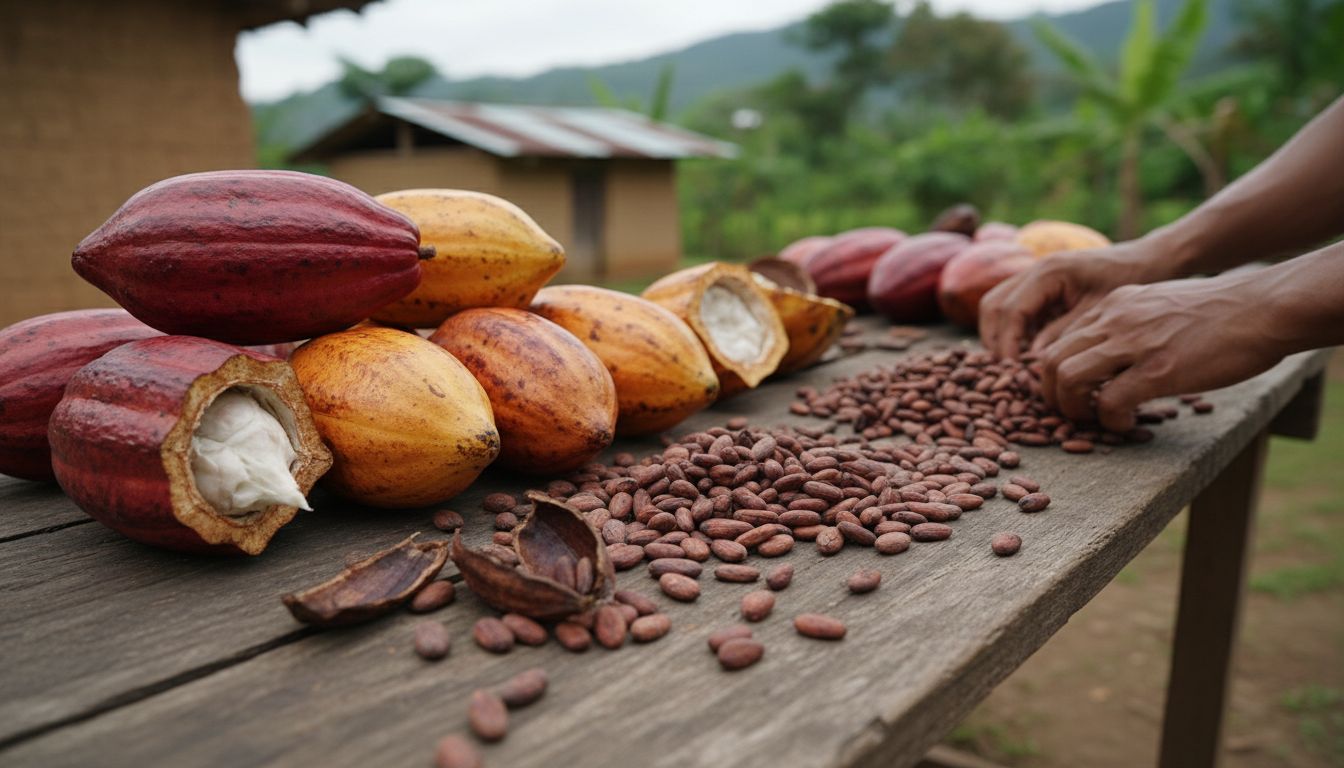
Ecuador Bets on Brand Power as Cacao Prices Collapse
Ecuador's cacao industry has unveiled a new country brand, 'Cacao ecuatoriano, naturalmente, el mejor del mundo' ('Ecuadorian cacao, naturally the world's best'), in a push led by the exporters' association Anecacao alongside government and provincial officials. The launch arrives at a difficult moment: international cocoa prices have fallen by roughly half during 2025, dropping from an estimated $10,000-$11,000 per tonne to around $6,000 per tonne, according to industry figures cited around the announcement.
Many observers note that this price collapse is squeezing producer incomes even as Ecuador's export volumes remain strong. The branding effort is explicitly framed by its backers as a way to shift perception of Ecuadorian cacao from a raw, price-taking commodity toward a premium, value-added product with a distinct identity in global markets.
Why the Price Crash Hurts, Even With Record Export Numbers
According to figures reported around the brand launch, Ecuador's 2025 cacao exports reached approximately 600,000 tonnes, generating more than $4.5 billion in revenue. On the surface, these numbers suggest a thriving sector. But a recurring concern raised in coverage is the disconnect between high export volume and revenue on one hand, and a steep per-tonne price decline on the other—a gap that can disproportionately affect smallholder farmers whose income is tied closely to the price they receive per harvest, rather than aggregate national export totals.
It's worth noting that the specific export volume and revenue figures circulating in coverage of the brand launch are largely attributed to industry sources and have not been independently traced to primary datasets within available reporting. For a fuller picture of global price trends, independent market trackers such as the International Cocoa Organization's monthly cocoa market reports and commodities research from firms like J.P. Morgan offer external reference points that can help contextualize the price-crash narrative beyond industry messaging alone.
Who's Behind Ecuadorian Cacao: Scale and Structure of the Sector
Industry figures describe a sector involving more than 400,000 people, spread across 23 of Ecuador's 24 provinces, with roughly 200,000 producers. An estimated 90 percent of these producers are smallholders farming between one and five hectares, a structure that shapes how price swings are felt at the farm level.
Regional data points cited alongside the brand launch include a claimed yield increase in Los Ríos province, rising from around 14 quintals per hectare to a range of 24 to 28 quintals per hectare. Average national yield is described as near one tonne per hectare across roughly 600,000 hectares of cacao cultivation. These figures come primarily from industry and provincial officials, and readers should treat them as claims associated with the campaign rather than independently audited statistics.
The Case for Premiumization: Genetics, Terroir, and Sustainability Claims
Central to the new brand's pitch is a story about genetics and terroir, with backers pointing to what they describe as roughly 5,000 years of evolutionary history behind Ecuadorian cacao varieties. The branding materials emphasize traceability and an "uncopyable" quality profile as differentiators against cacao grown in other regions.
Sustainability and labor claims feature prominently in the campaign's messaging, including assertions about the absence of child labor and deforestation in the sector. A recurring consumer concern in coverage of this kind of branding push is that such claims are asserted by industry representatives and officials rather than confirmed through independent, third-party auditing within the reporting reviewed. Similarly, a headline statistic—female participation in local production units reportedly rising from 10 percent to 80 percent—is a notable claimed gain, but it is presented as an industry-sourced figure rather than one verified by outside researchers or auditors.
Separately, reporting around the launch has referenced a $14 million loan from the CAF development bank to fund a pressurized irrigation project in Vinces canton, part of a broader set of investments tied to boosting yields and supporting the premiumization strategy.
Chokao Fair and the Push for International Recognition
The brand launch is closely tied to the fifth edition of the Chokao trade fair, which organizers say will host more than 120 brands across around 100 booths and expects roughly 10,000 visitors. The fair functions as a showcase event where Ecuadorian producers and exporters can engage directly with international buyers.
Also linked to the fair is Ecuador's participation in the Cocoa of Excellence 2027 program, with 28 national samples reportedly under evaluation and nine expected to be selected for further international recognition. Organizers and officials frame the fair and the excellence program as complementary platforms for the broader branding strategy, giving the marketing push a concrete stage for engaging premium chocolate buyers.
What's Actually Verified vs. What's Industry Messaging
Coverage of the brand launch and price context has appeared across multiple outlets, including regional business press and international trade publications, lending some corroboration to the basic facts of the launch itself, the timing of the price decline, and the existence of the Chokao fair. However, many of the more specific figures—export tonnage and revenue, yield increases in particular provinces, labor and deforestation claims, and the female participation statistic—trace back primarily to Anecacao and government or provincial officials rather than to independently verified datasets within the available reporting.
A recurring theme among observers is cautious optimism: branding alone cannot reverse a genuine, market-wide price downturn, and whether this campaign meaningfully shifts buyer perception toward premium positioning will likely depend on factors well beyond messaging, including actual quality differentiation, verified sustainability practices, and how global chocolate buyers respond over time. For now, the initiative represents a notable bet by Ecuador's cacao sector that brand identity can help offset some of the pain from a sharp price correction, even as key claims underpinning that identity remain, in large part, industry-asserted.