Cuenca market vendors support ordinance update but want five changes before council debate
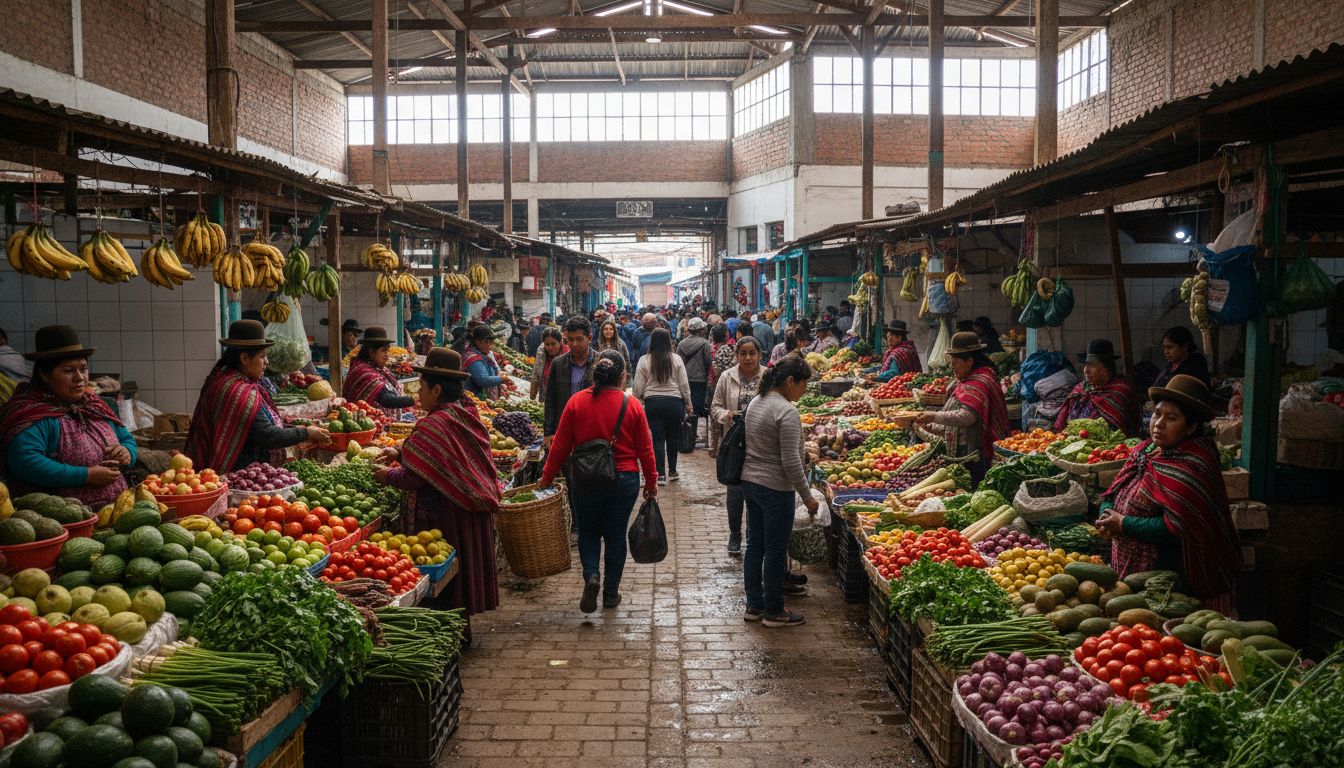
Cuenca’s market vendors broadly support a rewrite of the city’s markets ordinance, while pressing for five specific changes before the proposal reaches council debate. The discussion focuses on rules many see as overdue for modernization, since the current ordinance dates to 1991.
For now, the reform remains under discussion, not approved. That distinction matters, especially around the most attention-grabbing request from merchants: a 300-meter buffer that would keep large chain businesses away from municipal markets.
Why the ordinance is being revised now
Municipal officials have presented the update as part of a broader effort to align market governance with newer legal and administrative frameworks. The Municipality of Cuenca has also described the process as one shaped through meetings and outreach with merchants, rather than a sudden top-down change.
That means the current debate is not just about updating old language. It is also about how Cuenca wants its public markets to operate amid new forms of commerce, changing administrative rules, and long-standing concerns from stall holders about costs, continuity, and competition.
The five changes vendors want included
Merchant representatives have presented five main requests for the updated ordinance:
- A proposed 300-meter buffer from large chain businesses near municipal markets.
- Stronger regulation of informal commerce around market areas.
- Recognition of family succession when a stall holder dies.
- Clearer rules for lease, rent, or canon charges.
- Guarantees of continuity and permanence for current merchants, along with rules on advertising and marketing inside markets.
Taken together, these requests show that vendors are not rejecting reform. Instead, they want the final text to reflect the practical realities of running family businesses inside the city’s traditional markets.
Why the 300-meter chain buffer stands out
The proposed 300-meter restriction on large chains is likely to draw the most attention because it goes beyond internal market administration and touches the wider competitive landscape. Vendors have framed it as a protective measure, arguing that larger commercial players can affect the viability of traditional market businesses.
Even so, this remains a merchant proposal ahead of debate, not approved city policy. Reporting by Crónica Cuenca and Expreso suggests the issue reflects a broader tension: how public markets can remain economically viable while cities also make room for new retail formats and investment.
What is at stake for market families and current stall holders
Several of the requested changes are closely tied to family continuity. Recognition of succession when a stall holder dies would matter for households that have depended on a market post for years, possibly across generations. Many vendors appear to see that recognition as essential to preserving the family character of market commerce.
Likewise, requests for permanence and continuity protections suggest concern about whether current merchants could lose stability during a legal transition. Clearer rules on lease or canon charges would also have a direct day-to-day impact, since predictable costs can shape inventory decisions, staffing, and whether a stall remains financially sustainable. The Municipality of Cuenca has separately reported on technical review of market lease fees, underscoring how important the issue is to merchants.
Advertising and marketing rules may sound secondary, but they point to another practical concern: how markets present themselves to shoppers and how merchants compete inside a shared public-commercial space.
What happens next
The ordinance update is still moving through the municipal process. Reporting on the proposal indicated that, at the time of coverage, a date for first council debate had not yet been set. That leaves room for the text to keep evolving before any final vote.
For vendors and shoppers alike, the main takeaway is that Cuenca’s market debate is about more than technical wording. It is about continuity for existing merchants, the role of informal and formal competition around market spaces, and the kinds of protections the city may or may not include in a modern ordinance.
Until council acts, the five changes remain requests from merchants rather than settled law.