Cotacachi's Fiesta de la Jora Fills September With 20 Events Around a Sacred Corn Beer Brewed Over Eleven Days
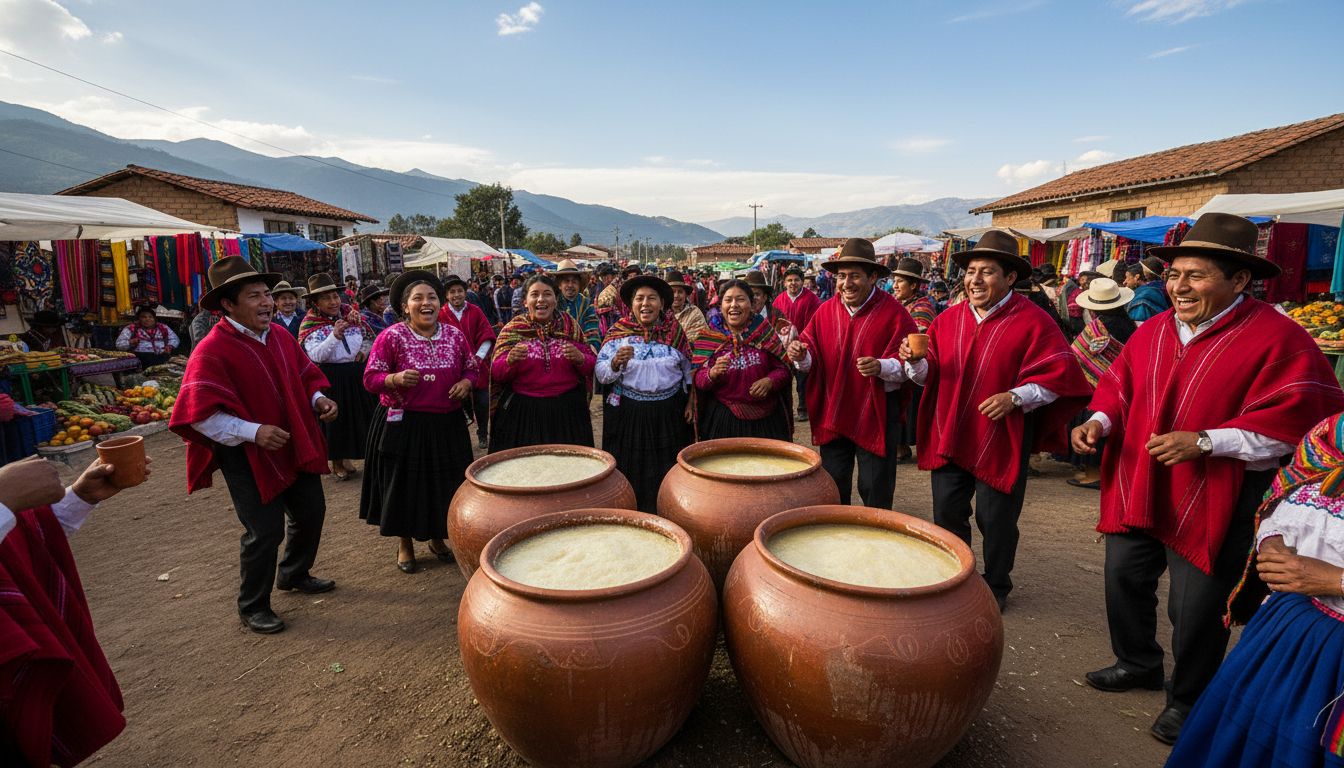
Cotacachi's Fiesta de la Jora Fills September With 20 Events Around a Sacred Corn Beer Brewed Over Eleven Days
Cotacachi's Fiesta de la Jora returns this September for its 67th edition, one of Ecuador's most enduring cultural celebrations. Organizers have filled the month with roughly 20 events, ranging from traditional processions to contemporary entertainment. At the center of it all sits chicha de jora, a fermented corn beverage that many consider sacred, with roots tracing back to pre-Inca times.
Cotacachi's Fiesta de la Jora Returns for a 67th Year
The 2026 celebration marks nearly seven decades of continuous tradition for the canton. Local coverage frames the festival as a defining marker of Cotacachi's identity, built around the ritual preparation and communal enjoyment of chicha de jora. The roughly 20-event calendar spans the month of September, blending music, food, and cultural programming anchored by the corn beverage itself.
A Festival Under Financial Strain
This year's festival proceeds under noticeably tighter finances. According to local reporting, Ecuador's public procurement authority, Sercop, declared the festival's contracting process void, or "desierto," leaving the municipality without its usual mechanism for securing festival funding. As a result, the 2026 budget is reported at approximately $50,000, down sharply from around $200,000 in 2025.
To bridge that gap, municipal officials have turned to private business sponsorship to keep the festival running. Municipal official Diego Guzmán has discussed the funding shortfall and the shift toward private-sector support, framing the contributions as essential to preserving what he and others describe as a beautiful tradition.
What's Missing From the 2026 Lineup
The reduced budget has reshaped this year's programming. Several satellite events that appeared in previous years, including Cota Rock Fest, Cota Chicha Fest, Cota Urban Fest, and Sentimiento Fest, have reportedly been canceled for 2026. Local coverage also notes the absence of international artists, a contrast with prior editions of the festival.
Even with these cuts, organizers have preserved a packed schedule of roughly 20 events, suggesting that while the scale of individual productions may have narrowed, the overall breadth of the celebration remains largely intact.
The Eleven-Day Ritual: How Chicha de Jora Is Made
The beverage that gives the festival its name is the product of a lengthy, hands-on process. Regional reporting describes corn kernels germinating over roughly three to four days before being sun-dried for another three to four days. The germinated, dried corn is then cooked for several hours, and the resulting mixture ferments for approximately three additional days, a timeline that adds up to the eleven days referenced in the festival's name.
Local and heritage sources frame this process as more than a recipe, describing it as a ceremonial act tied to community identity and ancestral memory. Some accounts trace the beverage's origins to the pre-Inca era, with local legend attributing its discovery to the time of Túpac Yupanqui, when fermented corn malt is said to have formed after rain damaged grain storage. These origin stories are presented in regional sources as tradition and legend rather than settled historical fact.
A recurring theme in coverage of chicha de jora is the belief that moderate consumption carries health benefits, including claims about probiotics and effects on cardiovascular health or mood. These claims circulate widely in cultural and folk accounts of the beverage, but they are not supported by cited clinical or regulatory sources, and readers should treat them as traditional belief rather than verified medical fact.
Civic Pride Amid the Cutbacks
Alongside the festival's financial challenges, Cotacachi received a "Municipio Saludable," or Healthy Municipality, certification in July 2026. Local reporting connects this recognition to a broader narrative of civic resilience, suggesting that even as festival organizers navigate a leaner budget, the canton is highlighting other markers of community wellbeing and pride.
What to Expect at the 2026 Events
Across the month, Cotacachi's roughly 20 scheduled events are expected to mix traditional elements, such as ceremonies and gatherings centered on chicha de jora, with more contemporary entertainment offerings. The festival's reliance on private sponsorship this year may preview a funding model that other local celebrations in the region could face if public procurement processes continue to fall through.
Despite the reduced scale, the Fiesta de la Jora's return for a 67th consecutive year underscores its role as a lasting symbol of Cotacachi's cultural identity, one that organizers and the community appear determined to sustain regardless of budget constraints.