Cocoa rebound lifts Ecuador buying prices to as much as $230 a quintal
Cocoa prices are back in focus after New York futures rebounded toward $5,900 per metric ton in early October. The move appears to reflect more than a routine daily swing. Traders are once again watching the risk that global supplies could tighten if weather problems in West Africa continue.
Why cocoa prices are rising again
The rebound follows an earlier stretch of weakness, but market sentiment seems to have shifted as attention returns to supply risk. Coverage from Reuters, Yahoo Finance, and commodity-market outlets points to a mix of heavy rain disruptions, crop-quality concerns, and broader uncertainty around the coming harvest cycle.
That does not mean the rally will continue at the same pace. Even so, the latest move is a reminder that cocoa prices can change quickly when weather and harvest expectations dominate the market narrative.
West Africa supply worries are driving the market
One recurring concern is Ivory Coast. Reuters and other commodity coverage report that heavy rains disrupted transport in some areas and slowed bean deliveries. The same reporting has also highlighted uneven rainfall, quality risks, and mixed crop conditions that continue to unsettle traders.
Ghana remains another pressure point. Reuters has reported expectations for lower output in the next crop season, reinforcing the view that global cocoa supplies could remain tight if production disappoints across key West African producers.
For now, the market is reacting to warning signs rather than a single confirmed shortage. In a volatile commodity like cocoa, that distinction matters.
What Ecuador farmers are reportedly being paid
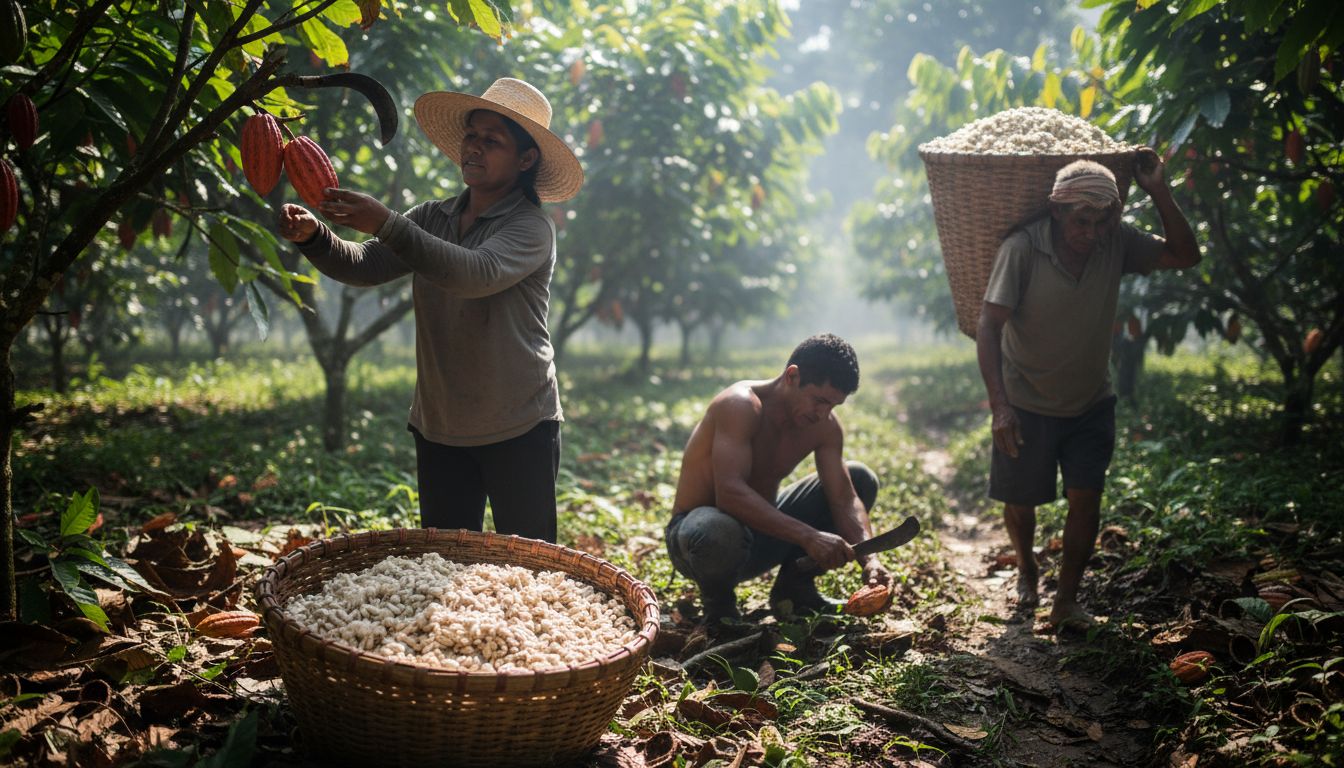
In Ecuador, local reporting suggests some buying points were paying roughly $212 to $230 per quintal, depending on the region and local conditions. Those figures are better understood as spot references than as a uniform national benchmark.
Domestic prices do not always move in step with New York futures. Quality differences, transport costs, local demand, exporter activity, and intermediary margins can all affect what farmers actually receive at collection points.
Even so, the reported upper end of the range shows how international market tension can filter through to prices being discussed inside Ecuador's cocoa sector.
Why this matters beyond the farm
For restaurants, bakeries, dessert shops, and chocolate makers, cocoa volatility is not just an agricultural story. When raw ingredient markets stay elevated, businesses across the food chain often start watching margins more closely, especially if they rely on imported chocolate, couverture, or cocoa-based ingredients.
That does not guarantee an immediate jump in menu prices. But sustained pressure in cocoa can influence sourcing decisions, portion sizes, recipe planning, and the timing of price adjustments for sweets and desserts.
For Dining-Out businesses, this is the kind of upstream cost pressure operators usually track well before diners notice any visible change on a menu.
What to watch next
The next question is whether weather-related disruptions in Ivory Coast ease or worsen in the coming weeks. Traders will also be watching for updated crop expectations from Ghana and for any evidence that current supply fears are overstated.
Until then, volatility remains the main theme. That is likely to keep cocoa growers, exporters, chocolate businesses, and food-service operators paying close attention.