Cacao Fell From $12,000 a Ton to $4,235 — Ecuadorian Growers Say It's Still Worth Planting
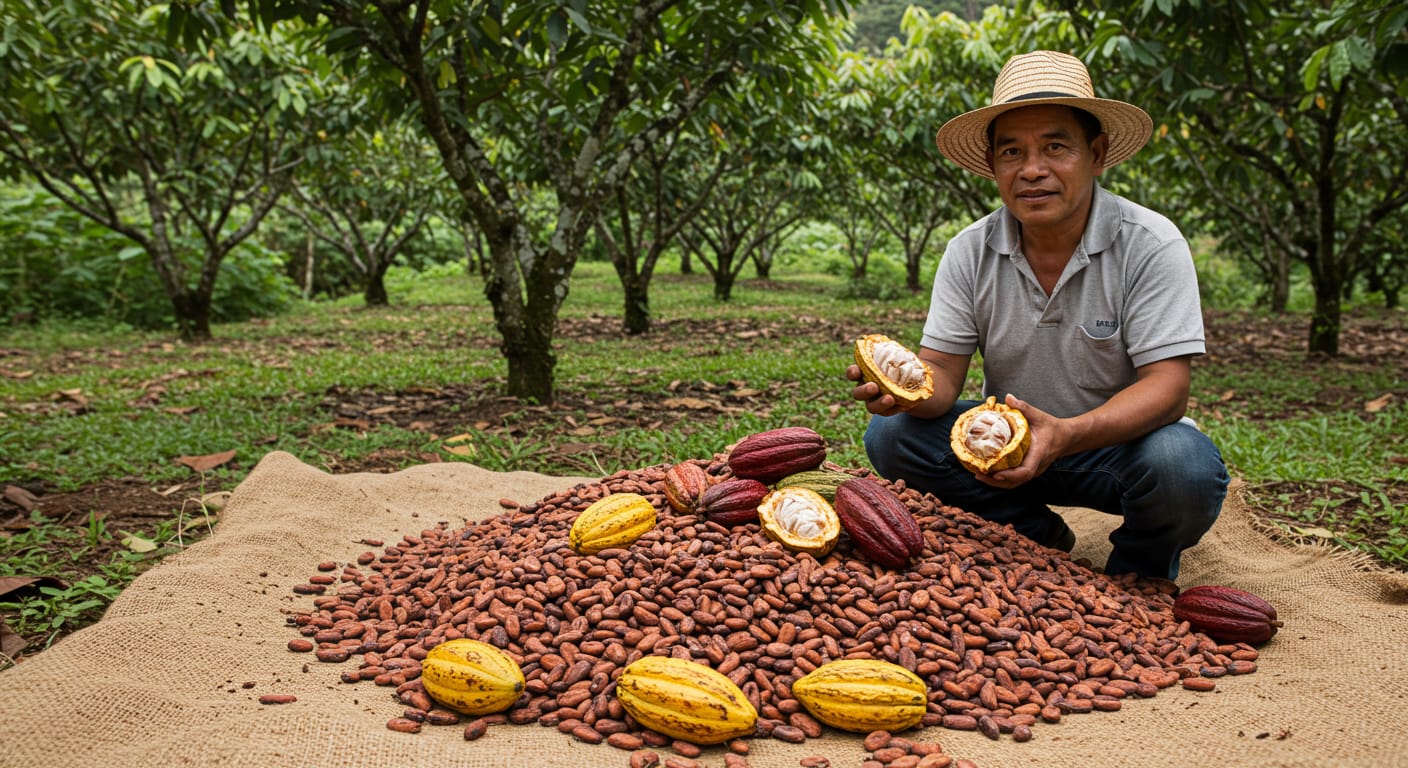
Cocoa has been on one of the wildest price rides of any global commodity in recent memory. After peaking near $12,000 a ton in December 2024, prices have since corrected sharply, landing around $4,235 a ton by June 2026. Some market reports point to further stabilization closer to $3,000 a ton. For Ecuadorian cacao growers and exporters, the swing has been dramatic — but many in the sector say the current price environment, while far below the historic peak, is still worth planting for.
Cocoa's Price Rollercoaster: From $12,000 to $4,235 a Ton
The record run to $12,000 per ton in late 2024 followed years of tightening global supply, and the subsequent pullback has been just as steep. By mid-2026, prices had settled near $4,235 a ton, though some accounts suggest an even lower stabilization point close to $3,000. Either way, the scale of the correction reflects just how extreme the preceding boom was, driven largely by years of undersupply out of West Africa.
Why Prices Spiked and Why They're Falling Now
Ghana and Ivory Coast, which together dominate global cocoa production, were hit hard by crop disease, aging tree stock, and erratic weather — the core drivers behind the historic price spike. Recovery in that region remains uneven: Ghana is projecting a 16% output decline for the 2026-2027 season, and Ivory Coast anticipates a crop drop of more than 10% tied to heavy rains. Even so, signs of gradual West African recovery appear to be easing the acute supply pressure that pushed prices to record highs, contributing to the broader downward correction.
The Hit to Ecuador's Cacao Economy
The price correction has landed hard on Ecuador's cacao sector. Export revenue fell 59% in value and 16% in volume between January and April 2026 compared with the same period in 2025 — a drop from $1,623 million to $668 million. That contraction was significant enough to drag Ecuador's overall non-oil, non-mining exports down by 4% for the period. The picture elsewhere in Ecuador's export economy looked notably different: shrimp exports grew 14%, and total exports rose 3%, underscoring how concentrated the impact has been within cacao specifically.
Why Ecuadorian Growers Still See Opportunity
Despite the steep revenue decline, industry bodies including the National Association of Cacao Exporters of Ecuador, known as Anecacao, and the Ecuadorian Federation of Exporters, or Fedexpor, continue to frame current price levels as attractive when measured against longer historical norms rather than only against the 2024 peak. Ecuador's cacao export volume is projected to exceed 623,000 metric tons in 2026, and some estimates suggest the country could overtake Ghana to become the world's second-largest cacao producer. A policy decree eliminating a 15% tariff on cacao bean exports has also been cited as a supportive measure for the sector during this adjustment period.
Shifting Global Demand: Who's Buying Ecuadorian Cacao
Demand patterns for Ecuadorian cacao are diverging by region. Exports to the United States have held roughly flat, while demand from the European Union has fallen sharply, down around 16%. In contrast, China and Russia have emerged as fast-growing markets, with exports to those destinations reportedly up 100%. Many observers note that this diversification could help offset softness in traditional Western markets, though it remains to be seen how durable that shift proves over time.
What This Means Going Forward
Ecuador's cacao sector now faces a balancing act between falling per-ton prices and rising production volume. The strategy emerging from industry statements appears to favor scale and market diversification over chasing the kind of peak pricing seen in 2024. A recurring consumer and industry concern is how sustainable grower confidence will be if prices continue drifting toward the $3,000 level some reports describe. For now, Ecuadorian producers and trade groups appear to be betting that expanding volume and reaching new markets will offset a lower per-ton price — a wager that will likely be tested further as West African supply continues to stabilize.