As Peru Marks Ceviche Day, Cuenca Makes Room for a Coastal Classic at 2,500 Meters
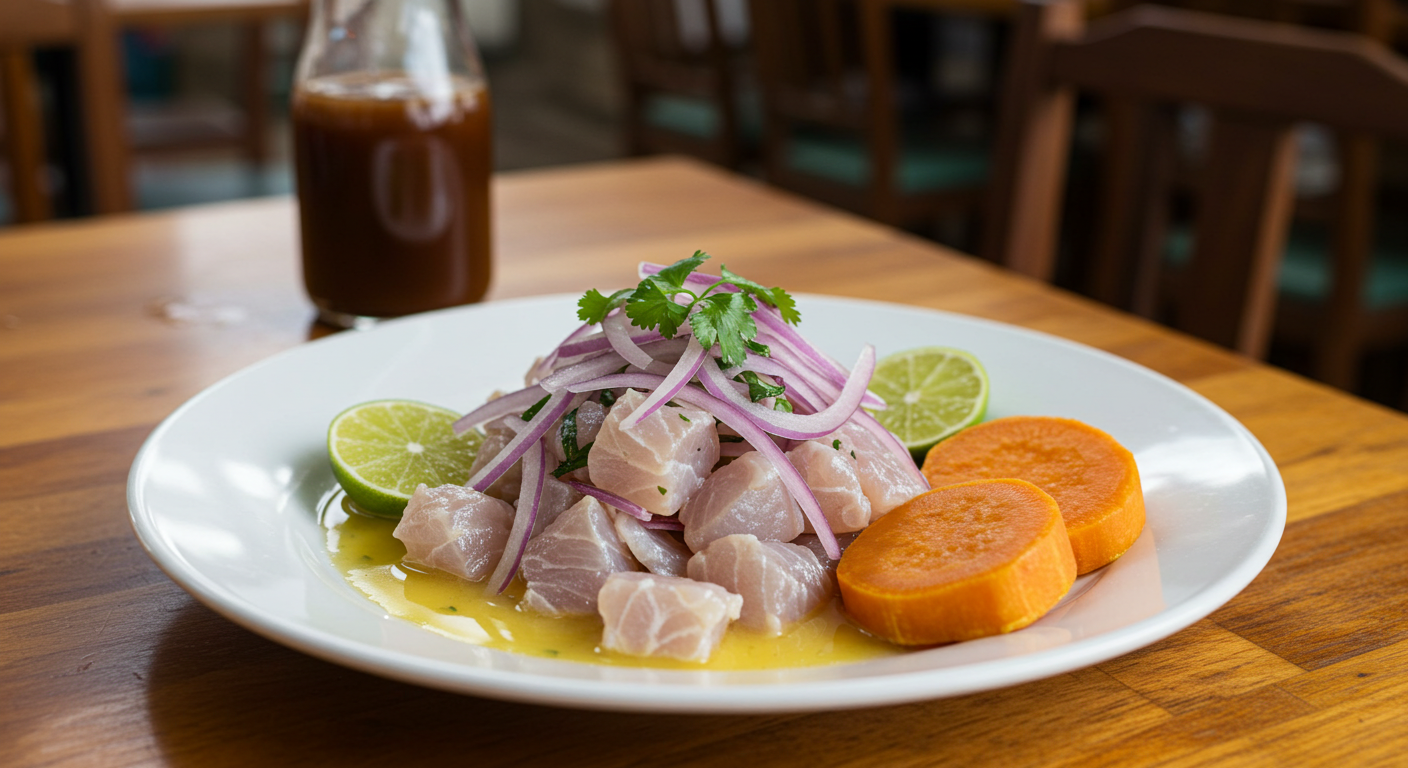
June 28 is officially recognized in Peru as Día del Ceviche, a national tribute to one of the country’s most emblematic dishes. That makes it a fitting moment to look beyond Peru’s coastline and ask how ceviche lives elsewhere in the Andes, including in Cuenca, a highland city more than 2,500 meters above sea level and far from the Pacific.
That distance is part of what makes the dish so interesting here. Ceviche is closely associated with the coast, freshness, citrus, and maritime identity, so its place in inland dining culture says something about how widely it resonates. In Cuenca, the story is not about claiming ceviche as a local invention. It is about how restaurants and diners have made room for it anyway.
Why Ceviche Day Matters Beyond Peru
Peru’s Ceviche Day puts the dish in a formal cultural spotlight, but the conversation it sparks is regional. Across western South America, ceviche has evolved into distinct forms shaped by local seafood, seasoning preferences, serving styles, and culinary memory. A holiday dedicated to the dish in Peru naturally spills into neighboring food scenes where diners already know ceviche as both everyday comfort and a special-occasion order.
For Cuenca, that matters because the city’s restaurant culture is curious, adaptive, and increasingly comfortable borrowing from coastal and cross-border traditions. The holiday is the news peg. The local story is how a famously coastal preparation continues to earn menu space and customer interest in an inland market.
What It Means to Talk About Ceviche in Cuenca
There is an obvious tension in the idea of Cuenca “staking its claim” to ceviche. The city is not a port, and the dish’s deepest roots are tied to coastal foodways, especially in Peru. But that is also what makes Cuenca’s embrace of ceviche worth noticing. Its presence here reflects appetite, accessibility, and adaptation more than origin.
In practical terms, ceviche in Cuenca can feel like a small act of transport. It brings a cold, bright, seafood-centered dish into a mountain city better known for soups, hornado, and traditional highland fare. That contrast gives ceviche extra personality on the local dining scene. It is refreshing, expressive, and often just different enough from the surrounding menu landscape to stand out.
How Ecuadorian and Peruvian Ceviche Traditions Diverge
Diners in Cuenca may encounter more than one ceviche tradition, and that is part of the appeal. Broadly speaking, Peruvian-style ceviche often centers on firmer pieces of fish, assertive citrus, onion, ají, and the intensely flavored liquid known as leche de tigre. It can feel sharp, bright, and direct, with the seafood and marinade doing most of the work.
Ecuadorian ceviche often moves in a different direction, sometimes with a more abundant liquid base, a gentler acidic profile, and a wider range of seafood choices such as shrimp, fish, shellfish, or mixed combinations. Depending on the kitchen, it may arrive with chifles, popcorn, tostado, crackers, or other sides that make the plate feel more like a full composition than a minimalist seafood preparation.
None of these distinctions should be treated as rigid rules. Ceviche changes from city to city, restaurant to restaurant, and cook to cook. In Cuenca, that means one menu may lean clearly Peruvian, another may reflect Ecuadorian coastal habits, and a third may split the difference with a house style designed for local taste.
Where Cuenca’s Ceviche Identity Shows Up
Cuenca’s ceviche culture tends to show up in a few predictable places: seafood specialists, marisquerías, Peruvian restaurants, and broader Latin or fusion menus that want a cold seafood option with broad appeal. That does not mean every restaurant treats ceviche as a signature dish, but it does suggest the preparation has become a familiar part of the city’s dining vocabulary.
That is notable in an inland city. Restaurants do not need to be on the coast to adopt coastal classics, especially when those dishes carry strong regional recognition. In Cuenca, ceviche works because it meets several restaurant needs at once: it is recognizable, shareable, refreshing, and flexible enough to be interpreted through different culinary lenses.
Rather than naming one neighborhood or one venue as the city’s definitive ceviche capital, it is more accurate to say that Cuenca offers enough variety for diners to explore styles. Some kitchens may serve a straightforward shrimp ceviche with classic Ecuadorian sides. Others may foreground fish, ají, red onion, and a more Peruvian profile. The local identity is found in that range.
What Diners Should Look For on the Plate
If you are ordering ceviche in Cuenca for Ceviche Day, start with the seafood itself. Is the focus on fish, shrimp, shellfish, or a mixed combination? Different proteins change the entire experience, from texture and salinity to how assertively the citrus can be used.
Next, pay attention to the liquid. A tighter, sharper marinade may suggest Peruvian inspiration, while a fuller, more spoonable preparation can point toward an Ecuadorian approach. Neither is automatically better. The real question is whether the balance works: enough acidity to brighten the seafood, enough seasoning to create depth, and enough restraint to keep the dish tasting fresh rather than muddled.
Garnishes and sides also reveal a lot. Red onion, ají, sweet potato, cancha, chifles, popcorn, tostado, and avocado all push the plate in slightly different cultural or stylistic directions. Asking the server how the house prepares its ceviche can be as useful as reading the menu description. It quickly reveals whether the kitchen is thinking in Peruvian, Ecuadorian, or simply house-style terms.
A Sensible Guide to Celebrating Ceviche Day in Cuenca
The easiest way to mark June 28 locally is not to hunt for a single “best” ceviche, but to treat the day as a prompt to taste and compare. Visit a seafood-focused restaurant, ask which ceviche style they serve, and notice how the plate reflects either Peruvian influence, Ecuadorian habit, or a local adaptation of both.
If you are especially curious, compare two versions instead of one. Try a shrimp ceviche in one place and a fish-forward or Peruvian-inspired version in another. Look for differences in acidity, temperature, garnish, and texture. The comparison will likely tell you more about Cuenca’s dining identity than any one superlative could.
Peru’s Día del Ceviche is, first of all, a celebration of a dish with deep national meaning, as recognized by the Gobierno del Perú. But it is also a reminder that some foods travel far without losing their character. In Cuenca, ceviche remains a coastal classic seen from the mountains: adapted, appreciated, and still compelling at altitude.