AgroAzuay Opens Second Tienda Campesina in Downtown Cuenca, Linking 150 Farming Families to City Shoppers
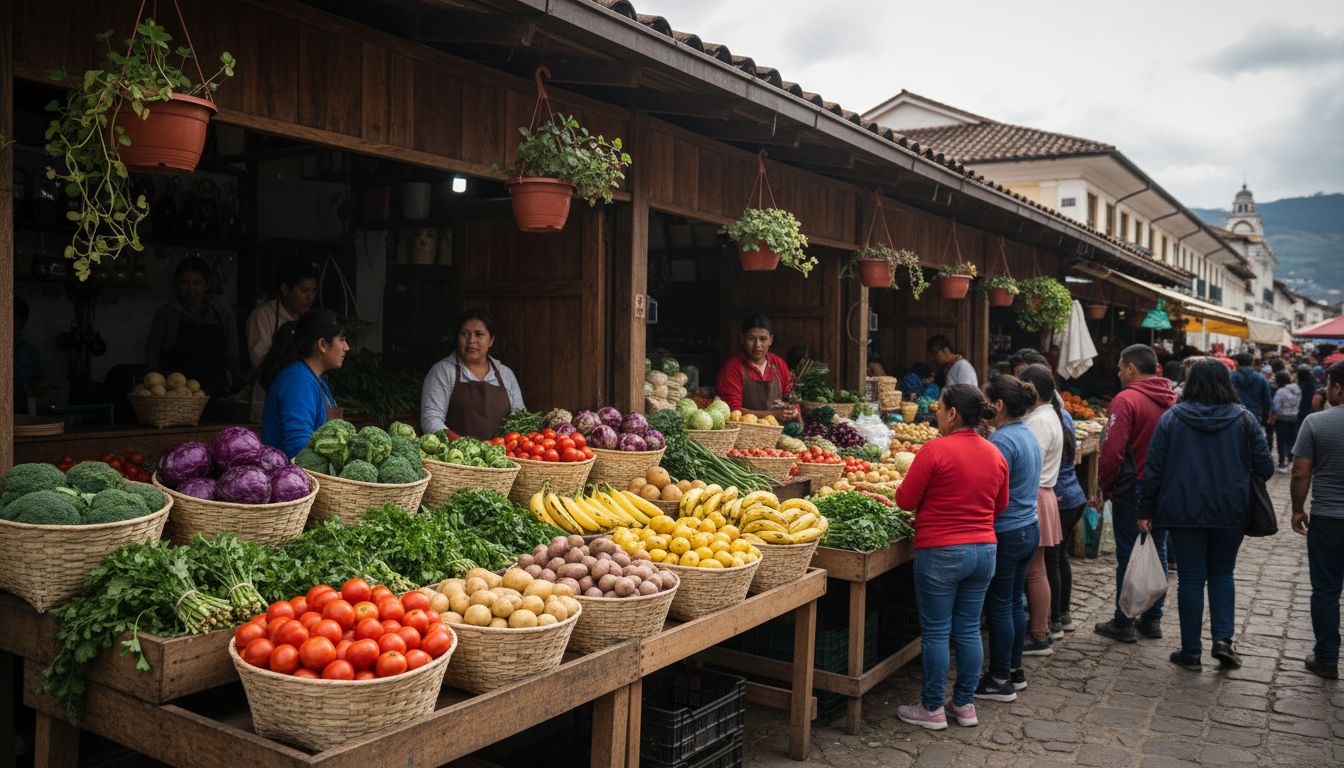
AgroAzuay Opens Second Tienda Campesina in Downtown Cuenca, Linking 150 Farming Families to City Shoppers
A new storefront has appeared just a block from Cuenca's central shopping district, and it comes with a distinctly rural pedigree. AgroAzuay, the provincial agricultural agency tied to the Prefecture of Azuay, has opened its second Tienda Campesina location at Simón Bolívar 4-30 and Vargas Machuca. The move brings agroecological products from more than 150 farming families directly into the path of downtown shoppers.
A New Storefront Brings Farm Country to Cuenca's Center
The new location, reported to have opened around September 10th, extends the Tienda Campesina model that AgroAzuay has been building in the region. With this opening, the initiative now has two physical storefronts in Cuenca, expanding its footprint beyond its original site.
According to AgroAzuay, the store keeps accessible hours for city residents: Monday through Friday from 10:00 to 18:00, and Saturdays from 10:00 to 16:00. Its central location, a short walk from the historic downtown core, appears designed to put rural producers within easy reach of everyday shoppers rather than requiring a trip to a farmers' market or rural fair.
Who's Behind the Counter: AgroAzuay and the Prefecture of Azuay
AgroAzuay operates as a "Compañía de Economía Mixta," a mixed-economy company under the Prefecture of Azuay. It positions its work within a wider "Precio Justo," or Fair Price, framework intended to connect rural producers more directly with urban buyers, reducing the number of intermediaries between farm and table.
Provincial officials have framed the new store as part of a broader economic reactivation effort, with public statements connecting the initiative to pandemic-era hardships faced by rural producers. This kind of institutional framing is common for government-backed programs, and the economic reactivation narrative should be understood as the stated goal of the Prefecture rather than an independently measured outcome.
What's on the Shelves
Shoppers visiting the new location can expect a range of goods, including coffee, chocolate, horchatas, tomatoes, potatoes, chicken, bread, and dairy products. AgroAzuay ties many of these items to specific parishes and cantons within Azuay province, an approach that emphasizes traceability and local origin over generic sourcing.
The store's agroecological positioning is presented as a point of differentiation from conventional retail options, appealing to shoppers interested in provenance and more direct farm-to-consumer relationships.
The 150 Families: What's Claimed and What's Verified
Central to AgroAzuay's announcement is the claim that more than 150 farming families and small entrepreneurs supply the new store. This figure, along with broader statements about economic impact on participating families, originates primarily from AgroAzuay officials and affiliated government sources.
A recurring consideration in coverage of programs like this is the absence of independent verification. No independent financial audit or third-party economic analysis of the Tienda Campesina model was found among available sources. That does not mean the claims are inaccurate, but it does mean shoppers and observers are largely relying on institutional self-reporting rather than externally validated data.
The initiative also sits within a wider provincial context. Ecuador's Ministry of Agriculture has separately reported supporting dozens of farmers' fairs across Azuay, along with training programs and agroecological basket initiatives for participating families. These parallel efforts suggest a broader institutional push toward similar goals, even though each program appears to be reported and measured independently.
Local Reaction and Coverage
Local outlets including El Nuevo Tiempo have covered the store's opening, adding regional press attention to AgroAzuay's own announcements. Antena Uno also featured an interview with AgroAzuay's subgerente, Ing. José Vintimilla, offering an official perspective on the store's goals and operations.
For shoppers curious about visiting, the practical takeaway is straightforward: the new Tienda Campesina sits within easy walking distance of Cuenca's historic center, keeps weekday and Saturday hours, and offers a chance to buy directly from producers whose goods are tied to named localities across the province. This kind of storefront can serve as a convenient entry point for those interested in supporting regional agriculture, even as questions about scale and measurable impact remain primarily documented by the program's own institutional sources.