Will AI Eventually Replace Human Teachers?
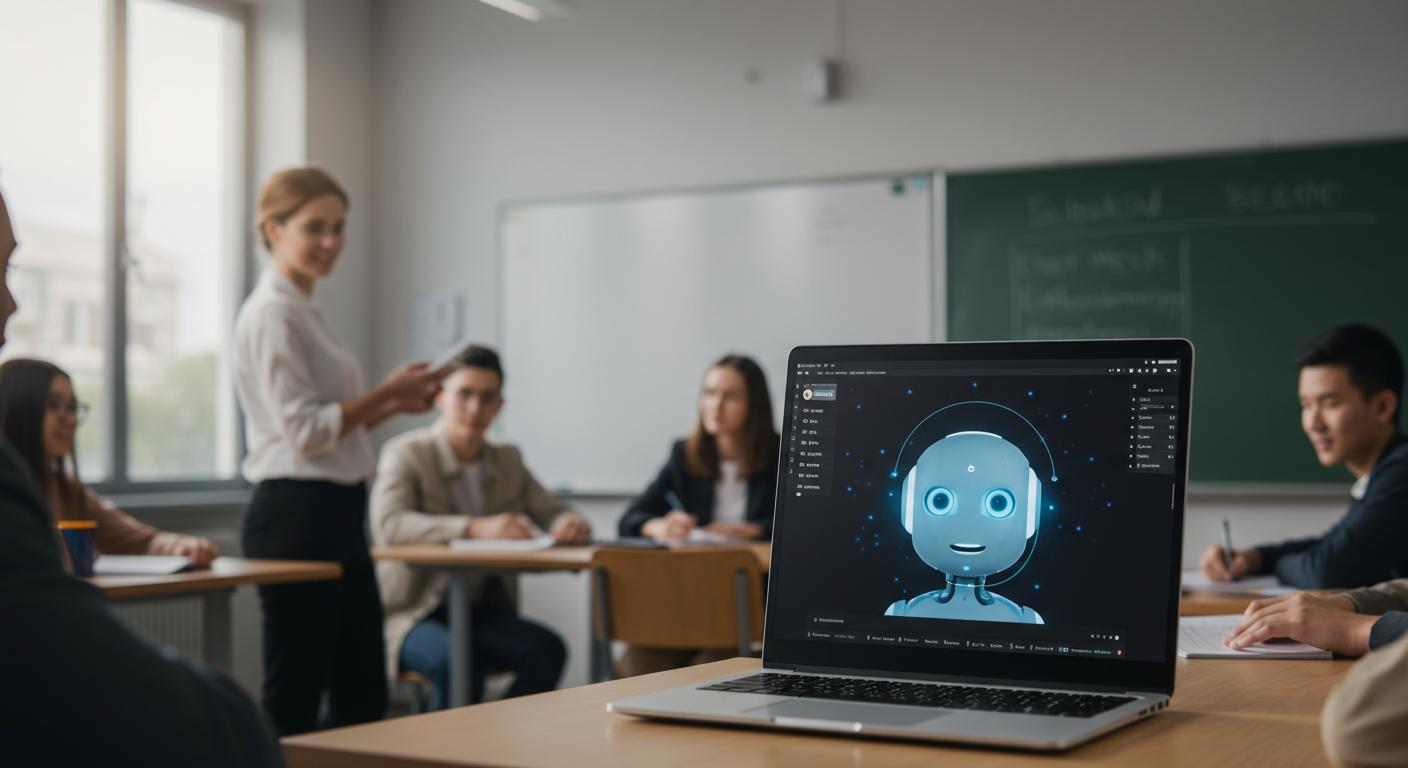
The debate over whether artificial intelligence will replace human teachers is often framed too simply. A better question is which parts of teaching AI can take over, which parts it can improve, and which parts still depend on human judgment, relationships, and trust.
So far, the evidence points far more toward augmentation than full replacement. AI can already assist with structured, repetitive, and data-heavy tasks. But teaching is not just information delivery. It also involves motivation, interpretation, social awareness, classroom leadership, and ethical decision-making. That broader role is much harder to automate.
The Better Question Is Not Whether AI Replaces Teachers, but What Parts of Teaching It Can Take Over
When people ask whether AI will replace teachers, they often imagine a simple yes-or-no outcome. In reality, teaching is a bundle of different tasks. Some are routine and predictable. Others are deeply human and highly sensitive to context.
That distinction matters. An AI system may be good at generating practice questions, summarizing student progress, or recommending lesson materials. None of that means it can fully take over the work of building trust with a struggling student, calming a tense classroom, or understanding why one child has suddenly stopped participating.
The most credible education and policy analysis today treats AI as a tool that can reshape teacher workflows rather than eliminate the profession. Organizations such as UNESCO and the OECD generally describe AI in education as something that can support instruction, improve efficiency, and expand access under human oversight. That does not mean the job will remain unchanged. It means the likely transformation is uneven, with some functions becoming more automated while the core social role of teaching remains.
Where AI Is Already Capable: Grading, Tutoring, Planning, and Administrative Support
AI is already useful in several parts of education. Teachers can use it to draft lesson plans, generate quizzes, produce differentiated reading materials, summarize writing, and organize feedback. Schools and software vendors are also developing systems that can help with attendance patterns, performance dashboards, and routine communications.
One of the strongest arguments for AI in education is scale. AI tutoring systems and adaptive practice tools can offer instant feedback and personalized exercises to many students at once. In settings where teachers are overburdened, these tools can create more opportunities for practice and review than a single instructor could provide alone.
That efficiency is real, but it should not be confused with full professional substitution. A system that helps students practice algebra, memorize vocabulary, or revise a paragraph may work well within narrow boundaries. The broader work of teaching involves deciding what kind of support is appropriate, when to intervene, and how to respond when learning problems are tied to confidence, behavior, family stress, or peer dynamics.
Why Teaching Is Bigger Than Information Delivery
Education is often discussed as if the teacher’s main role is to transmit knowledge. But in real classrooms, teaching also includes motivation, mentorship, classroom management, conflict resolution, and the constant reading of social cues.
Teachers make judgments every day that are difficult to reduce to rules. They decide when to challenge a student and when to encourage one. They notice when silence signals confusion, boredom, anxiety, or embarrassment. They weigh fairness, discipline, and compassion in ways that depend on context, developmental stage, and community expectations.
They also serve as trusted adults. For many students, a teacher is not just an instructor but a stabilizing presence, an advocate, and sometimes the first person to recognize a problem. That dimension of the job matters especially for younger children and for students who need emotional or behavioral support. Even if AI systems become much better at producing explanations and recommendations, the human responsibilities of care and judgment remain central.
What Institutions and Researchers Actually Predict
Mainstream institutional analysis does not usually predict a near-term world in which teachers disappear. UNESCO, the OECD, and researchers affiliated with institutions such as Stanford Human-Centered Artificial Intelligence have generally framed AI as a tool that can support educators, not remove the need for them.
That is a significant point. The policy conversation is not about whether nothing will change. It is about how the work will be restructured rather than fully replaced. Researchers and education analysts frequently describe AI as a tool that can shift how teachers spend their time, potentially reducing administrative burdens and expanding customized support while increasing the importance of oversight, evaluation, and professional judgment.
Some long-range forecasts about automation and labor do raise the possibility that parts of education work could be reorganized. That is especially plausible in tutoring, test preparation, online learning, and other environments where instruction is already standardized or mediated through software. But those forecasts are not the same as evidence that schools can or should remove human educators from the process.
The Biggest Risks If Schools Treat AI as a Substitute for Human Educators
The biggest risks emerge when institutions treat AI as a replacement strategy instead of a support tool. AI systems can generate false information, offer weak explanations with great confidence, and produce uneven results across students and subjects. In education, those weaknesses are not minor. They can affect grading, feedback, discipline, and access to support.
There are also concerns about bias, privacy, and opaque decision-making. As reporting from Education Week and policy research from Brookings have noted, heavy reliance on systems that schools do not fully understand can weaken accountability. When something goes wrong, it may be unclear whether the problem came from the software, the data, the procurement process, or the way the tool was deployed.
Cost pressures make this more than a technical issue. Under-resourced systems may be tempted to use AI to reduce staffing or increase student-to-teacher ratios. That could create a two-tier future in which some students get AI plus strong human support, while others get AI instead of strong human support. For vulnerable students, that tradeoff could be especially damaging.
Equity May Determine Whether AI Helps Education or Harms It
AI in education will not produce the same results everywhere. Outcomes will depend heavily on access to devices, connectivity, high-quality tools, teacher training, and institutional safeguards. A well-funded school with experienced staff may use AI to free up time for better human teaching. A poorly funded system may use it mainly as a cheaper substitute.
That is why equity is central to this debate. The technology itself does not determine whether students benefit. Governance, procurement standards, training, and public investment matter just as much. If schools adopt AI without clear rules, uneven capacity could widen existing gaps between affluent and disadvantaged communities.
In that sense, the future of AI in education is partly a policy question. The same tool can either support teacher capacity or justify cost-cutting. The difference depends on what institutions value and what safeguards they require.
What the Teacher’s Job May Look Like if AI Keeps Improving
If AI continues to improve, the teaching profession is more likely to change than disappear. Teachers may spend less time on repetitive preparation, basic administrative work, and certain forms of standardized feedback. They may spend more time on coaching, discussion, critical thinking, student wellbeing, and interpreting AI-generated materials and data.
That could make the job more relational and supervisory in some settings. Teachers may increasingly act as guides who curate content, verify AI outputs, personalize instruction, and help students learn how to use AI responsibly. In other words, part of the future teacher role may involve managing the very tools that were once imagined as replacements.
Still, some segments of the education market could see more direct displacement than others. Highly standardized tutoring, test prep, and large-scale online instruction are more exposed to automation than traditional classroom teaching. Staffing models may shift at the margins even if the profession itself remains essential.
So, Will AI Eventually Replace Human Teachers? Probably Not Entirely, but It Will Redefine the Work
The strongest current evidence does not support the idea that AI will fully replace human teachers in any broad sense. It does support a more practical conclusion: AI is likely to replace specific functions of teaching before it replaces teachers themselves.
That distinction matters because education is not just the transfer of information. It is a social and developmental process shaped by trust, authority, empathy, judgment, and human presence. Those qualities are not side features of teaching. They are part of the job’s foundation.
So the future is unlikely to be teacherless. But it may look very different from the past. The real question is whether schools use AI to strengthen human teaching or to thin it out. That outcome will depend less on technology alone than on policy choices, institutional values, and what education systems decide students truly need.