Why AI Data Centers Are Becoming Major Energy Consumers
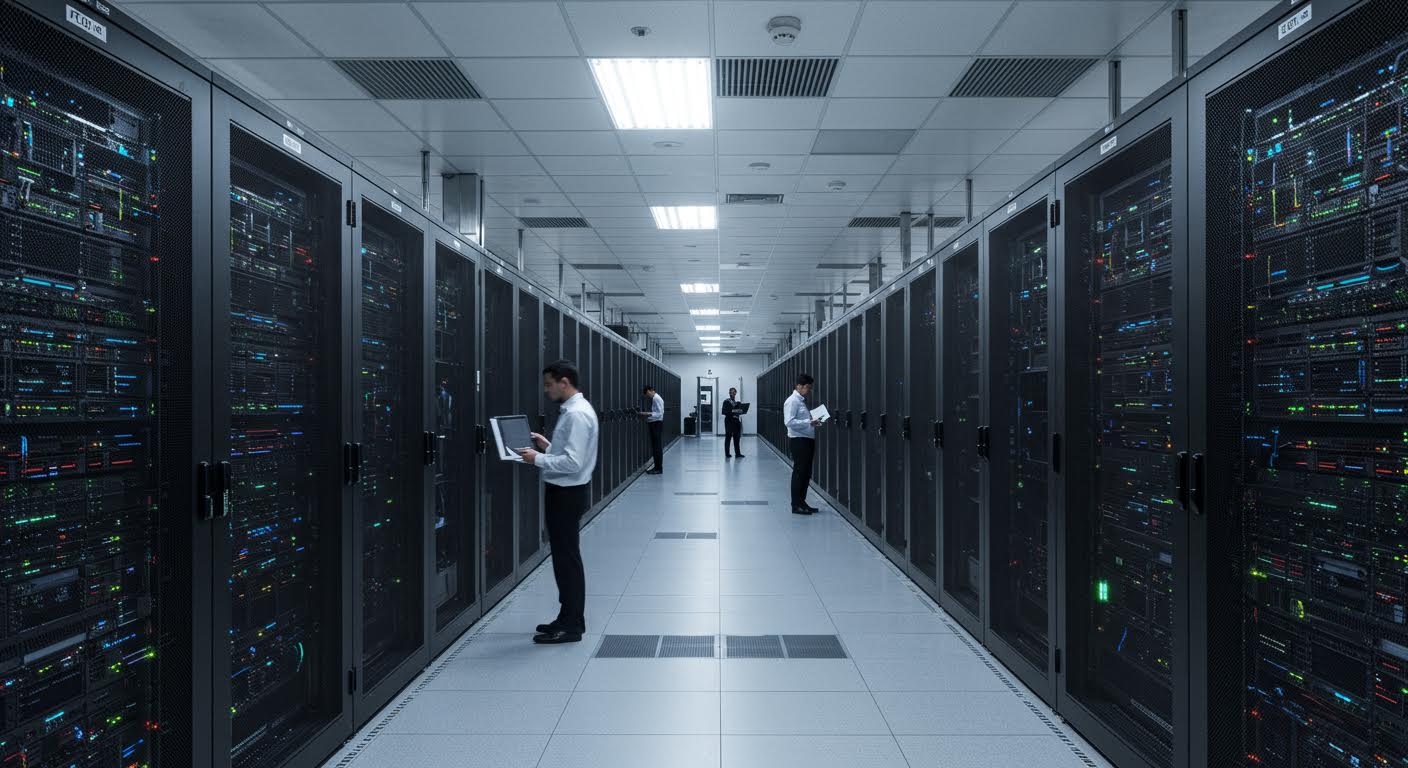
The artificial intelligence revolution is quietly reshaping global energy consumption patterns. As AI systems become more sophisticated and widespread, the data centers that power them are emerging as significant electricity consumers, fundamentally changing how we think about digital infrastructure and energy planning.
Data centers currently account for approximately 1-2% of global electricity consumption according to the International Energy Agency, but this figure is climbing rapidly as AI workloads proliferate. Unlike traditional computing tasks, AI operations require substantially more computational power, creating an energy consumption profile that differs dramatically from conventional data processing.
The Computational Hunger of AI Models
Training large language models and other advanced AI systems requires exponentially more energy than traditional software applications. While a typical web search might consume a fraction of a watt-hour, generating responses through large language models can require 10-50 times more energy per query.
The hardware driving this consumption centers around GPU clusters and specialized AI chips that operate at much higher power densities than conventional processors. A single high-end AI training cluster can consume as much electricity as thousands of homes, running continuously for weeks or months during model training phases.
Research published in Nature demonstrates that the relationship between model capability and energy consumption follows an exponential curve. As AI models grow larger and more capable, their energy requirements increase at an even faster rate, creating a compounding effect on overall consumption.
Infrastructure Challenges Driving Energy Use
AI-optimized data centers face unique infrastructure challenges that amplify energy consumption beyond just computational requirements. The concentration of high-power AI hardware generates substantially more heat than traditional server configurations, requiring more sophisticated and energy-intensive cooling systems.
These facilities must maintain 24/7 operational status to support AI services that users expect to be constantly available. This continuous operation, combined with the need for redundant systems to ensure reliability, creates baseline energy consumption levels that dwarf those of traditional data centers.
The power density requirements of AI hardware also necessitate upgraded electrical infrastructure, with some facilities requiring power delivery systems capable of handling several times the load of conventional data centers.
Industry Scale and Growth Projections
Major technology companies are rapidly expanding their data center footprints to accommodate AI workloads. Meta, Google, Microsoft, and Amazon have announced multi-billion dollar investments in new facilities specifically designed for AI training and inference.
The U.S. Energy Information Administration projects that data center electricity demand could double or triple over the next decade, with AI workloads representing a significant portion of this growth. Some regions are already experiencing strain on electrical grids due to concentrated data center development.
The geographic clustering of AI data centers in certain regions is creating localized energy challenges, with some utility companies reporting that proposed data center projects exceed their current generation capacity.
The Efficiency Paradox
While individual AI chips and systems are becoming more energy-efficient, these improvements are being overwhelmed by the rapid scaling of AI deployment and model size. Modern AI processors can deliver significantly more computational capability per watt than previous generations, yet total energy consumption continues to rise dramatically.
Industry efforts to optimize AI model training through techniques like efficient architectures and improved algorithms show promise, but current efficiency gains are not keeping pace with the exponential growth in AI usage and model complexity.
This creates a paradox where technological advancement in efficiency occurs simultaneously with explosive growth in total energy consumption.
Grid Impact and Energy Planning
Utility companies are grappling with unprecedented demand projections from data center operators. Some regions are seeing data center power demand that exceeds the capacity of existing transmission infrastructure, requiring significant grid upgrades and new generation capacity.
The challenge extends beyond total capacity to include peak load management and grid stability concerns. AI workloads can create sudden spikes in electricity demand that stress grid management systems designed for more predictable consumption patterns.
Regional variations in energy sourcing mean that the environmental impact of AI data centers varies significantly depending on location, with facilities in areas dependent on fossil fuel generation having substantially higher carbon footprints.
Looking Forward: Sustainability vs Scale
The technology industry has made significant commitments to renewable energy sourcing, with major AI companies pledging to power their operations with clean electricity. However, the rapid pace of AI expansion is testing these commitments as demand outpaces renewable energy deployment.
McKinsey research suggests that potential technical solutions on the horizon include more efficient AI architectures, advanced cooling technologies, and specialized processors designed specifically for energy-efficient AI inference. Some companies are also exploring novel approaches like liquid cooling and waste heat recovery.
The tension between AI advancement and energy sustainability is likely to influence both technology development and regulatory policy in coming years. Balancing the benefits of AI progress with environmental responsibility represents one of the defining challenges of the current technological era.
As AI continues to transform industries and society, understanding and managing its energy implications will be crucial for ensuring that technological progress aligns with sustainability goals and grid stability requirements.