What the EU Actually Changed on AI Rules and Synthetic Intimate Imagery
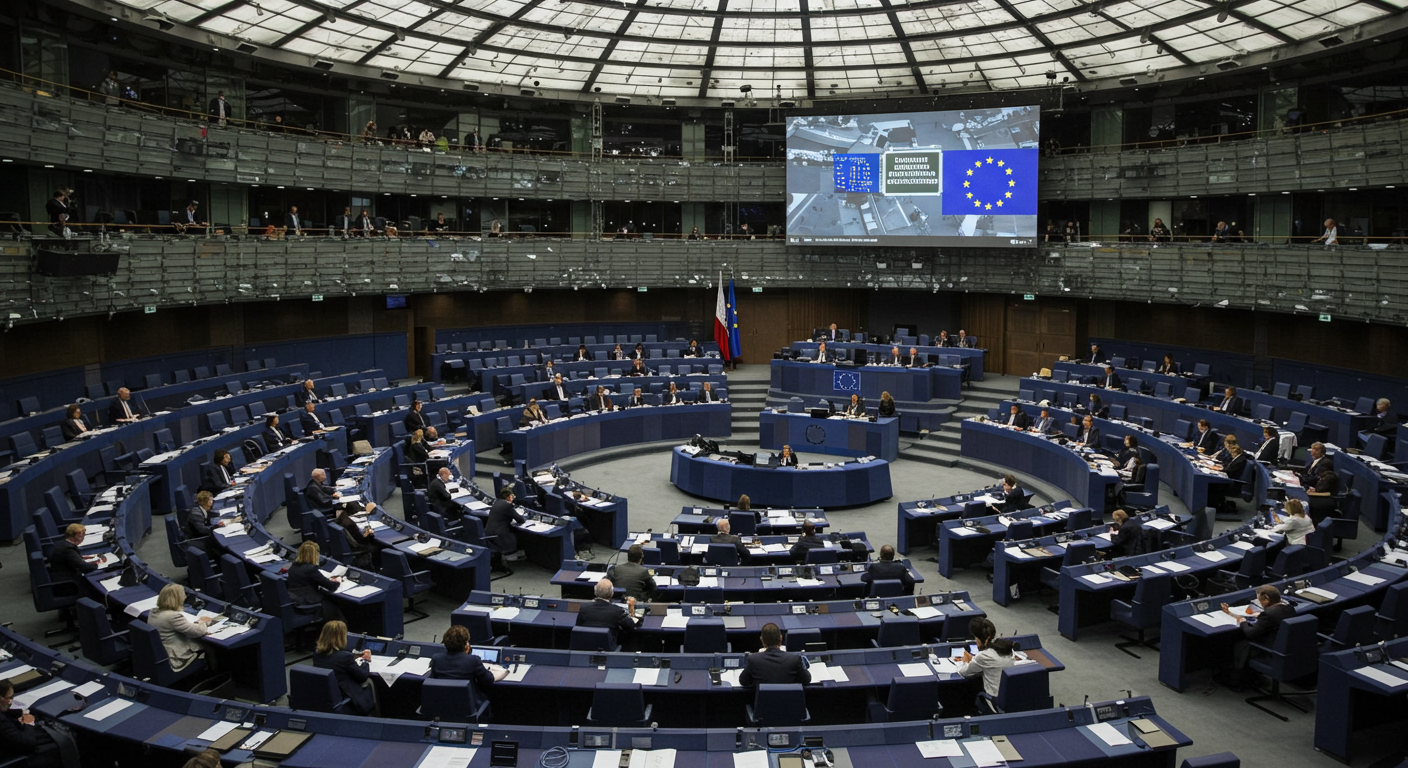
Europe’s AI rulebook is entering a new phase, but the language around it needs precision. The EU AI Act is already adopted law, so references to the bloc agreeing its “first AI Act amendments” should be tied to a specific legal instrument, not treated as a broad rewrite of the regulation itself.
That matters because two separate developments are often blended together in coverage: the phased rollout of the EU AI Act and a distinct EU push to address AI-generated intimate imagery. They are related in the broad sense that both sit within Europe’s expanding digital rulebook, but they do not automatically come from the same law.
Where the AI Act stands now
The AI Act, formally Regulation (EU) 2024/1689, is the EU’s flagship law on artificial intelligence. According to EUR-Lex, it follows a risk-based model that sorts AI uses into categories including prohibited practices, high-risk systems, and transparency obligations for certain applications.
In practical terms, some AI applications are banned outright, some are allowed only under strict compliance rules, and others must meet disclosure requirements so users understand when they are interacting with AI-generated or AI-assisted content.
It is also important to understand what “nearing full force” actually means. The regulation does not switch on all at once. Instead, its provisions apply on a staged timeline, with obligations arriving in waves for developers, deployers, platforms, and other organizations operating in the EU market.
The phased timeline readers should understand
The implementation schedule is one of the main reasons this story can sound more dramatic than it is. The AI Act entered into force after publication, but the application of its rules is phased over time. The European Commission has also described the framework as a gradual rollout rather than a single compliance deadline.
Some of the earliest provisions cover prohibited AI practices. Other obligations, including governance measures, transparency duties, and compliance requirements for high-risk systems, arrive later. That staggered approach gives regulators time to build oversight structures and gives affected companies time to adapt products, documentation, and internal controls.
For businesses, the phased timeline is not a technical footnote. It affects product design, procurement, legal review, training, and market access. For the public, it explains why Europe can have an AI law on the books while many of its most consequential requirements are still moving toward full application.
Did the EU really make its “first AI Act amendments”?
This is where precision matters most. The base AI Act has already been adopted, so any claim about “first amendments” should identify whether the change is a formal amendment to Regulation (EU) 2024/1689, an implementing measure, a delegated act, interpretive guidance, or a separate piece of legislation that affects AI-related conduct.
Without that distinction, readers may be left with the impression that the EU has reopened the AI Act itself in a sweeping way. In many cases, what is actually happening is narrower: institutions may be clarifying how the law will work, coordinating enforcement, or passing adjacent rules that address AI-enabled harms without changing the core architecture of the AI Act.
That is why attribution to the right EU body matters. A move by the European Commission, the European Parliament, or the Council of the European Union can each signal a different stage of the legal process and a different type of legal effect.
What changed on AI-generated intimate imagery
AI-generated intimate imagery should be treated separately unless a source directly shows that the AI Act itself was amended to cover it with new language. The more supportable reading is that the EU has been using adjacent legal instruments to address non-consensual synthetic sexual imagery and to close gaps around deepfakes, consent, online harm, and enforcement.
The policy rationale is straightforward. Synthetic intimate imagery can be created and distributed quickly, often without the subject’s knowledge or consent, and the harm can spread across platforms before victims have meaningful remedies. European lawmakers have increasingly focused on making sure these abuses are captured clearly by criminal law or digital-safety frameworks rather than left in a gray area.
That does not mean every such development is an AI Act amendment. In some cases, the relevant legal change may come through criminal law updates or other digital legislation instead of the EU’s core AI regulation.
Why this distinction matters
Blending the AI Act together with separate EU rules may produce a cleaner headline, but it can confuse the public and complicate compliance. A company’s obligations under the AI Act are not identical to its duties under platform rules, criminal law, or other digital safety measures.
This distinction becomes even more important in sensitive areas such as synthetic sexual imagery. Legal accuracy affects victims, platforms, AI developers, and law enforcement alike. If the public is told that one law did everything, it becomes harder to understand where accountability really sits and which authority is responsible for enforcement.
What to watch next
The bigger story is that Europe’s AI regime is taking shape through a mix of core AI law and adjacent legislation. The next milestones are likely to include more guidance from EU institutions, additional compliance frameworks, enforcement structures, and practical interpretation by regulators and courts.
For readers and businesses alike, the key takeaway is simple: the EU AI Act is real, active, and rolling out in stages, but not every new AI-related restriction should be described as a fresh amendment to that law. On synthetic intimate imagery in particular, the strongest reporting separates the AI Act from other EU measures unless the legal text clearly connects them.