The Hidden Environmental Cost of Training Large AI Models
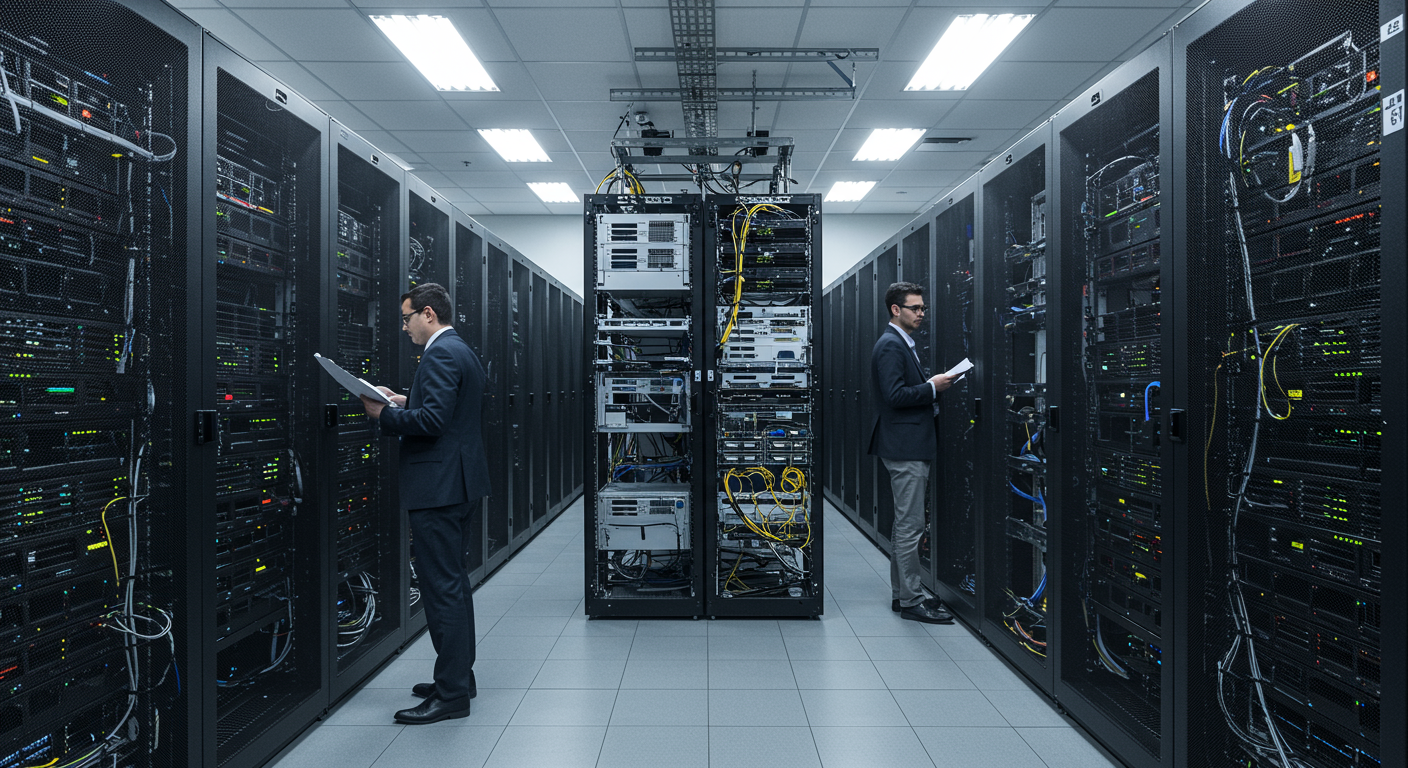
Large AI models are often discussed in terms of performance, capability, and competition. Increasingly, they are also being examined for the resources required to train them. That scrutiny is warranted, but the issue is often reduced to a single dramatic statistic. In reality, the environmental cost of AI training is real, measurable, and highly dependent on context.
A training run for a large model can require enormous amounts of computation over long periods, using specialized hardware in power-hungry datacenters. But not every model has the same footprint, and not every training job produces the same emissions. The total impact varies with model size, dataset scale, training duration, hardware efficiency, facility design, and the carbon intensity of the electricity supply.
Why the environmental cost of AI training is getting attention
As AI systems have grown larger, the compute needed to develop them has grown as well. That trend has pushed environmental questions beyond academic circles and into mainstream technology coverage. Researchers and policymakers are no longer asking only what a model can do. They are also asking what it takes to build it.
Part of the reason is scale. Modern model development does not involve just one clean training run. It can include repeated experiments, tuning passes, architecture comparisons, failed attempts, and retraining cycles. When those layers are added together, the environmental footprint can be much larger than the final published result suggests.
That does not mean every headline estimate should be accepted at face value. Some widely shared numbers are based on specific assumptions about hardware, datacenter performance, and electricity sources. Those assumptions matter. A careful discussion separates broad concern from what can actually be measured.
What environmental cost actually includes
When people talk about the environmental cost of training AI, they often combine several different issues. The first is electricity use: how much energy is required to run the computing hardware and supporting systems. The second is carbon emissions: the climate impact associated with that electricity, which depends heavily on the local grid. The third is water consumption, especially for cooling in some datacenter systems. A fourth layer includes infrastructure impacts such as chip manufacturing, server replacement, and datacenter construction.
Training is only one part of the overall picture. Fine-tuning, serving models to users, and large-scale inference can also consume major resources. In some cases, inference over time may rival or exceed the footprint of the original training run. That is one reason environmental reporting around AI can become confusing. A number that refers only to training should not be treated as the total lifecycle cost of an AI system.
Keeping those categories separate is important. Electricity, carbon, water, and lifecycle impacts are related, but they are not interchangeable. A system can become more energy efficient while still increasing water demand in a particular region, or reduce per-run emissions while overall usage continues to rise.
What makes training large models so resource-intensive
The most obvious driver is scale. Bigger models typically require more parameters to optimize, larger datasets to process, and longer training times across many accelerators working in parallel. That means more power draw over more hours.
But a significant share of the hidden cost comes from the work surrounding the final run. Researchers and companies may test multiple architectures, tune hyperparameters, adjust data pipelines, and discard unsuccessful experiments. Those steps are part of model development, yet they are often left out of simplified public discussions. As a result, the visible training run may represent only a portion of the total compute used.
Specialized hardware such as GPUs and other accelerators has improved performance per unit of work, which helps. More efficient chips can reduce the energy required for a given task. Still, efficiency gains do not eliminate overall demand when model ambitions keep expanding. Faster hardware can also enable larger runs that would not have been practical before.
Why headline carbon estimates can be misleading
Some of the most cited research on machine learning's carbon cost helped draw attention to the issue, but those figures were never meant to serve as universal labels for all AI training. Carbon estimates depend on assumptions about what hardware was used, how long systems ran, how efficient the datacenter was, and what electricity mix powered the facility.
Change any of those variables and the final number can shift substantially. A model trained in a highly efficient datacenter supplied by low-carbon electricity may have a much smaller emissions profile than a comparable workload run on a dirtier grid with less efficient facility overhead. Likewise, estimates based on older hardware may not map neatly onto newer systems.
That is why broad claims such as “AI model training emits X amount” should be treated cautiously unless they are tied to a specific study and methodology. The best use of these estimates is comparative and contextual, not universal. They show that the problem exists and can be significant, but they do not support one-size-fits-all conclusions.
The importance of grid and datacenter context
Where a model is trained matters almost as much as how it is trained. The same computational workload can result in very different emissions depending on the regional electricity mix. A grid dominated by coal or gas will usually produce higher emissions than one with more nuclear, hydro, wind, or solar generation.
Datacenter design matters too. Power usage effectiveness, often shortened to PUE, is a common measure of how much extra energy a facility uses beyond the computing equipment itself. Lower overhead for cooling and power management means more of the electricity goes directly to computation rather than supporting systems. That can materially change the environmental profile of the same training job.
This matters in a broader industry context because datacenters are becoming an increasingly important part of electricity demand. AI is not the only driver, but it is contributing to renewed attention on how quickly digital infrastructure is expanding and where that energy will come from. The International Energy Agency has pointed to rising electricity demand from datacenters as an important trend to watch.
Beyond carbon: water use and infrastructure impacts
Carbon emissions are only part of the story. Research published in Nature Machine Intelligence and other venues has highlighted the water demands associated with datacenter cooling and electricity generation. That issue can be especially sensitive in regions already facing water stress. Still, water use should be discussed carefully. It is often a property of the wider datacenter and energy system, not of model training in isolation.
There are also upstream and downstream impacts that rarely appear in public summaries. Manufacturing advanced chips is resource intensive. Servers are replaced on relatively short cycles in high-performance environments. New datacenters require land, materials, and construction. Those effects are part of AI infrastructure more broadly, even when they cannot be assigned neatly to a single model.
Being precise about attribution improves the conversation. Training large AI models can be environmentally intensive on its own, but the full footprint of AI also includes the physical systems that make large-scale computing possible.
How researchers are pushing for better AI carbon accounting
One of the clearest themes in the research is that transparency remains limited. Scholars writing in venues such as arXiv and Environmental Data Science have argued that model reporting should include computational cost, energy use, and emissions context alongside accuracy and benchmark performance. Without that information, comparing systems on environmental grounds is difficult.
There is also a push to distinguish among training, tuning, and inference rather than treating AI as a single black box. That kind of disclosure would make it easier to understand which stages create the biggest impacts and where efficiency improvements matter most. It would also help prevent selective reporting that highlights technical gains while obscuring resource costs.
Better accounting would not solve the environmental problem by itself, but it would make public debate more grounded. It is hard to manage what is not consistently measured.
What would make AI training more sustainable
Several practical levers could reduce the environmental burden of training large models. More efficient hardware can lower energy use per computation. Better model design can achieve similar results with less training. Smarter scheduling can shift workloads toward times and places where electricity is cleaner. Reusing existing models through fine-tuning or distillation can sometimes avoid repeating the most expensive stages from scratch.
Cleaner electricity is another major factor. A training run powered by low-carbon energy can have a very different emissions profile from the same run on a fossil-heavy grid. Datacenter operators can also improve cooling systems and facility efficiency to reduce overhead.
Still, there is an important caveat. Efficiency improvements do not automatically reduce total environmental impact if demand grows faster than those gains. AI may become less resource intensive per task while becoming more resource intensive overall because it is used more widely and trained at larger scales.
The environmental cost of training large AI models is therefore neither trivial nor simple. It is not captured by one viral estimate, but it is also not too vague to analyze. The real challenge is to treat AI development the way other major industrial and digital systems are treated: with better measurement, clearer reporting, and more serious attention to the tradeoffs behind technical progress.