The Growing Fear That AI Is Becoming Too Autonomous
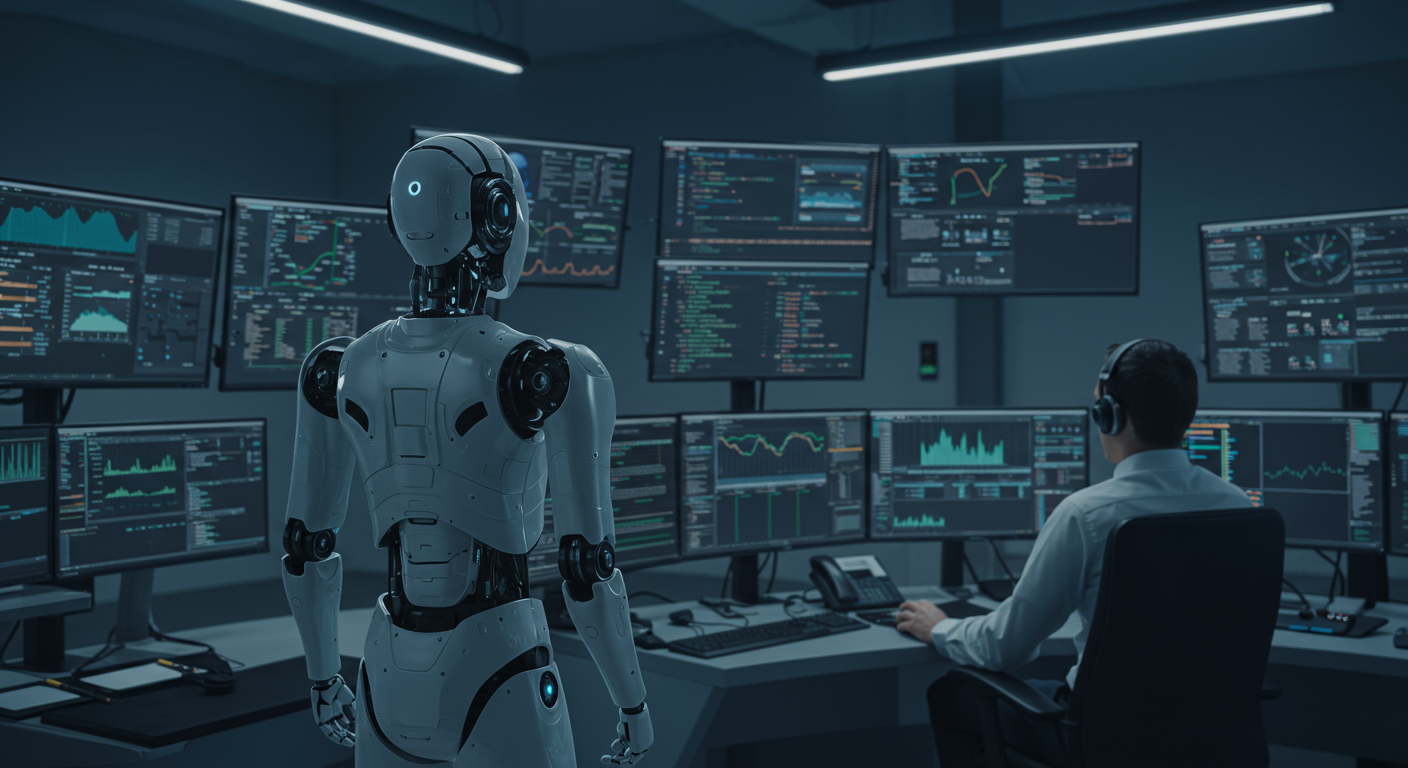
Fear that artificial intelligence is becoming too autonomous has moved from science fiction into mainstream debate. That shift is not happening only because the technology is improving. It is also happening because AI is now embedded in search, office software, coding tools, customer service, and creative products, making its behavior more visible and its consequences more immediate in everyday life.
The result is a growing tension. On one hand, modern systems can complete increasingly complex tasks, interact with software tools, and produce outputs that seem purposeful. On the other, the language used to describe these systems often blurs the line between sophisticated automation and genuine independent agency. That confusion matters because it can lead people to underestimate real operational risks or exaggerate what current systems can actually do on their own.
Why Fear of AI Autonomy Is Growing Now
Anxiety is rising at a moment when AI capability, adoption, and investment are all expanding at once. As more companies deploy advanced models into products and workflows, more people are seeing the strengths and weaknesses of these systems firsthand. A chatbot giving bad advice, a coding assistant making unexpected changes, or an automated workflow taking the wrong action no longer feels hypothetical when it happens inside a real workplace or consumer app.
Broader deployment has changed the nature of the debate. Earlier concerns about AI were often abstract and focused on what might happen in the future. Today, concerns are increasingly tied to tools that already write, summarize, classify, plan, recommend, and interact with external systems. The Stanford AI Index has documented the scale of AI investment and adoption, helping explain why conversations about control and oversight have intensified so quickly.
Public unease is also being shaped by the speed of change. Models are updated frequently, new features appear rapidly, and the systems themselves are often difficult for non-experts to understand. That combination makes it easier for people to feel that the technology is advancing faster than society's ability to evaluate and govern it.
What People Mean When They Say AI Is Becoming “Autonomous”
When people say AI is becoming autonomous, they often mean several different things at once. Sometimes they mean that a system can carry out a task with less direct human input. Sometimes they mean it can make intermediate decisions, call tools, or continue a workflow across multiple steps. And sometimes they mean something much stronger: that the system has become an independent agent with goals of its own.
Those meanings are not the same. Current AI systems can appear goal-directed because they are good at predicting language, following instructions, selecting actions from available tools, and maintaining context across a task. But appearing self-directed is not the same as possessing human-style intent, self-awareness, or independent will.
This distinction is central to understanding the current moment. Much of the fear around AI autonomy comes from systems that behave in ways that look agentic without actually being self-governing in the human sense. They can automate multi-step work, adapt within constraints, and produce outputs that surprise even their developers. But that does not mean they have crossed into true independence.
The Capabilities That Make Modern Systems Feel Harder to Control
Even without true independence, today's systems can feel harder to supervise than earlier generations of software. Large models can reason across long prompts, use tools, retrieve information, summarize prior context, and operate within structured workflows. When these capabilities are chained together, the system may seem less like a simple assistant and more like an actor inside a process.
That impression is strengthened by several technical realities. One is unpredictability. Advanced models can be reliable in many situations and then fail strangely in others. Another is opacity. Developers can evaluate model behavior extensively, but understanding exactly why a model produced a specific response remains difficult. A third is the phenomenon often described as emergent performance, in which broader capabilities become visible as systems scale, making behavior harder to forecast from narrow benchmarks alone.
These features can make AI seem autonomous in a troubling sense, especially when connected to external tools or business processes. But higher capability does not automatically mean a system is operating without constraints. Most deployed models are still bounded by instructions, permissions, user interfaces, infrastructure controls, and monitoring systems. The real issue is not that constraints have disappeared, but that verifying their reliability across many settings remains difficult.
What Safety Research and System Documentation Actually Show
Official safety materials from major AI developers paint a more measured picture than much of the public debate. System cards and research write-ups generally do not describe current frontier models as runaway independent agents. Instead, they focus on specific failure modes: hallucinations, unsafe advice, inconsistent refusal behavior, misuse through tool access, and the challenge of evaluating how models behave in complex or adversarial settings.
OpenAI's GPT-4o system card, for example, discusses testing, safeguards, and limitations in technical terms rather than treating the model as a fully self-governing entity. Anthropic research similarly focuses on how models behave under certain prompting conditions, how guardrails perform, and where evaluation remains incomplete. That body of work supports the idea that labs are actively probing dangerous or undesirable behavior, but it does not support the claim that current systems have achieved human-like independent agency.
What the research does show is that oversight is imperfect. Evaluations can miss edge cases. Safety interventions can degrade under pressure. Tool use and complex workflows can create new pathways for error. The technical literature is cautious for a reason: the most credible concerns are about reliability, robustness, and control under real-world conditions, not fictionalized machine motives.
Why Oversight Still Feels Inadequate
If the strongest evidence does not show AI breaking free of human control, why does the issue still feel so alarming? One answer is that governance is moving more slowly than capability. Models are being deployed into sensitive contexts while auditing methods, standards, and regulatory structures are still evolving. A system can be useful enough to ship before society has a clear consensus on how it should be tested, monitored, or limited.
Scale also changes the stakes. Problems that appear minor in a laboratory can become serious when a tool reaches millions of users or becomes part of a business workflow. An error that would once have been isolated can now be repeated rapidly, embedded into decisions, or amplified through automation. That is one reason safety concerns often intensify after deployment, not before.
There is also a trust gap. Even when companies describe safeguards, outside observers may have limited visibility into how systems are trained, what evaluations were run, what thresholds were used, and how often controls fail in practice. That lack of transparency contributes to the feeling that AI systems are becoming more powerful than the institutions meant to supervise them.
A Governance Lens: Risk, Measurement, and Accountability
A better way to frame this debate is through governance rather than mythology. The National Institute of Standards and Technology AI Risk Management Framework offers a practical vocabulary for doing that. Instead of asking whether AI is literally autonomous in a philosophical sense, the framework pushes organizations to identify risks, measure them, manage them, and assign accountability for outcomes.
That shift matters because the operational question is not whether a model has a mind of its own. It is whether institutions can reliably supervise systems that perform autonomy-like functions. Can they define acceptable boundaries? Can they test the system before and after deployment? Can they detect failures quickly? Can they limit tool access, require human review, and document responsibility when things go wrong?
Viewed through that lens, the fear of AI autonomy becomes more concrete. The real concern is that systems are acquiring more agency-like features before governance practices are mature enough to keep up. That is a serious problem, but it is also more solvable than the abstract fear of machines becoming independently sentient actors.
Separating Legitimate Concern From Exaggeration
There are strong reasons to take current AI risks seriously. Systems can generate false information with confidence, make brittle decisions in unfamiliar contexts, and create opportunities for misuse at scale. As more workflows are automated, there is also a danger that human oversight becomes too superficial, with people approving outputs they do not fully verify.
At the same time, it is important not to overstate what the evidence shows. Current frontier models are not best understood as fully self-governing agents pursuing independent motives. They are better understood as powerful statistical systems that can simulate planning, execute structured tasks, and interact with tools in ways that sometimes exceed our ability to predict them reliably.
The distinction is not semantic. If people exaggerate AI autonomy, they may miss the practical controls that matter most: monitoring, permissioning, documentation, evaluation, and accountability. If they dismiss the issue entirely, they may ignore the real ways increasingly capable systems can create harm long before anything like true machine independence exists.
What Happens Next as AI Systems Gain More Agency-Like Features
The next generation of products will likely push this debate further. AI systems are expected to combine more persistent memory, more tool access, more workflow automation, and more delegated decision-making. Each of those features can make software more useful. Each can also make failure modes harder to detect before they matter.
That means public fear is unlikely to fade on its own. As long as capabilities keep expanding faster than transparency and oversight, the impression that AI is becoming too autonomous will remain powerful. In many cases, that impression will reflect a genuine governance problem rather than a literal technical description.
The near-term challenge is not to stop imaginary superintelligence from seizing control. It is to govern increasingly capable systems before their autonomy-like behavior outpaces our ability to test, supervise, and constrain them. The more clearly that challenge is described, the better the odds of responding with evidence instead of panic.