The First Time an AI Diagnosed a Disease Without Human Help
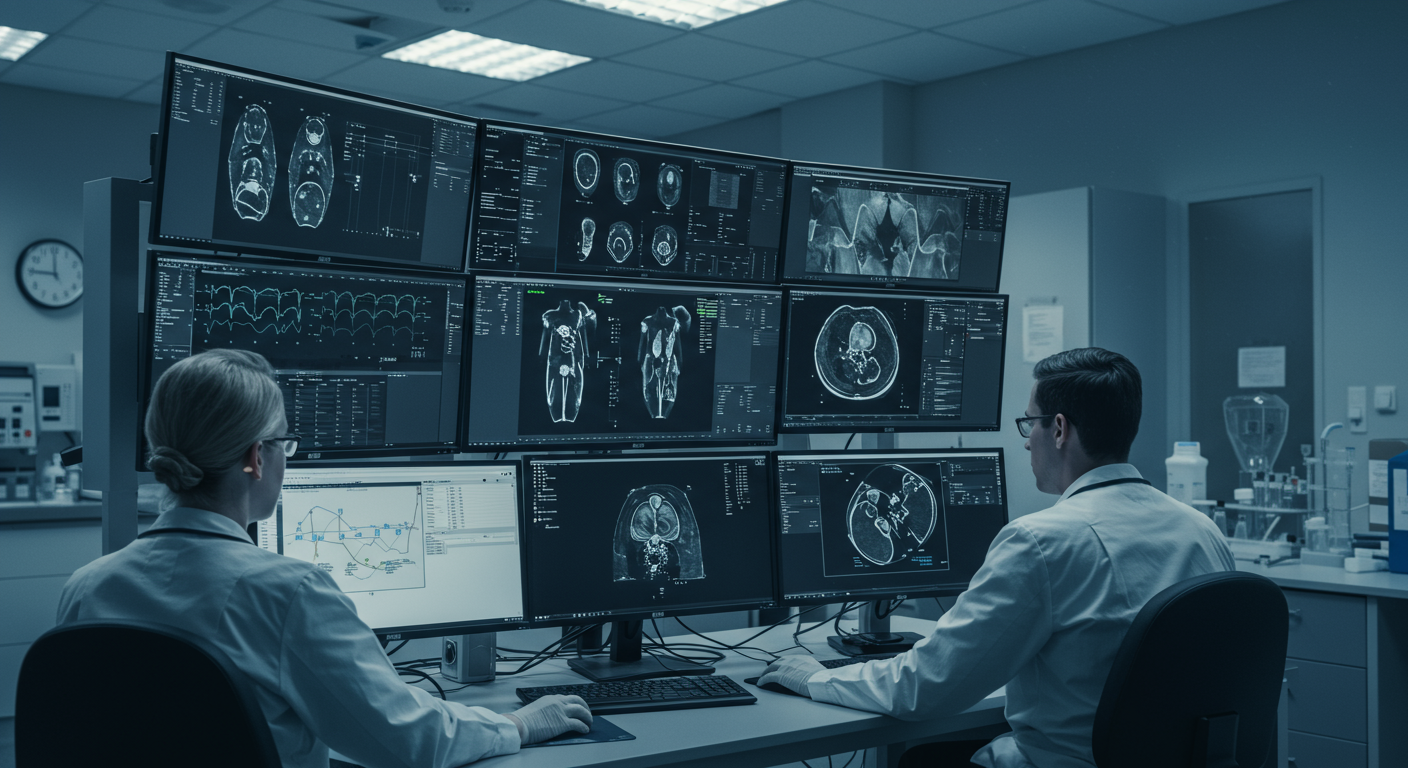
For decades, artificial intelligence in medicine has played a supporting role—assisting doctors, flagging potential issues, and providing second opinions. But in April 2018, the medical world witnessed a historic first: the FDA approved an AI system that could diagnose a disease completely on its own, without any human specialist review required.
That groundbreaking system was IDx-DR, an AI diagnostic tool for diabetic retinopathy, a serious eye condition that can lead to blindness if left untreated. For the first time in medical history, a machine was granted the authority to make autonomous diagnostic decisions that could directly impact patient care.
The Historic Milestone: IDx-DR's FDA Approval
The Food and Drug Administration's approval of IDx-DR represented more than just another medical device hitting the market—it marked a fundamental shift in how we think about AI's role in healthcare. Unlike AI-assisted tools that require human oversight, IDx-DR received designation as an autonomous diagnostic system, meaning it could analyze retinal photographs and make diagnostic recommendations without a specialist reviewing its findings.
Clinical trials published in Nature Medicine demonstrated that the system achieved diagnostic accuracy comparable to human ophthalmologists, with sensitivity rates that met rigorous FDA standards for detecting more-than-mild diabetic retinopathy. The system's performance in pivotal studies showed it could reliably identify patients who needed referral to eye care specialists while avoiding unnecessary referrals for those with healthy retinas.
This autonomous designation set IDx-DR apart from other AI medical tools of its era, which typically functioned as decision support systems requiring human validation before clinical action could be taken.
How the Technology Works
At its core, IDx-DR employs deep learning algorithms to analyze digital photographs of the retina, the light-sensitive tissue at the back of the eye. The system examines these images for specific patterns associated with diabetic retinopathy, including changes in blood vessels, the presence of lesions, and other structural abnormalities that indicate disease progression.
The AI processes the retinal images through neural networks trained on thousands of annotated photographs, learning to recognize the subtle visual markers that human specialists use to diagnose the condition. Rather than providing a detailed analysis, the system makes a binary decision: either the patient needs referral to an eye care specialist for suspected diabetic retinopathy, or no referral is necessary at the current time.
This simplified decision-making process was intentionally designed to integrate seamlessly into primary care workflows, where non-specialist physicians could use the technology during routine diabetes care visits without requiring extensive training in ophthalmology.
Clinical Validation and Performance Metrics
The path to FDA approval required extensive clinical validation demonstrating that IDx-DR could match the diagnostic performance of human experts. In pivotal trials, the system showed sensitivity rates exceeding 87% for detecting more-than-mild diabetic retinopathy, while maintaining specificity rates above 90% to minimize false positive results.
These performance metrics were particularly impressive given the diversity of the patient population studied, which included individuals with varying degrees of diabetes severity and different demographic backgrounds. The trials were conducted across multiple clinical sites to ensure the system's reliability in real-world conditions rather than controlled laboratory environments.
However, the system does have built-in limitations and safeguards. In cases where image quality is insufficient or when certain edge cases are detected, IDx-DR defers to human judgment rather than attempting a diagnosis. This fail-safe approach ensures that autonomous operation only occurs when the system has high confidence in its analytical capabilities.
Regulatory Breakthrough and Implications
The FDA's approval of IDx-DR utilized the De Novo pathway, a regulatory route designed for novel medical devices that don't have existing predicate devices for comparison. This regulatory approach was necessary because no previous medical device had sought approval for truly autonomous diagnostic decision-making.
The approval established important precedents for evaluating autonomous AI systems, including requirements for clinical validation, safety protocols, and quality assurance measures. The FDA's framework distinguished between AI systems that assist healthcare providers and those that operate autonomously, setting different standards for each category.
This regulatory breakthrough opened the door for other autonomous AI diagnostic systems while establishing the rigorous evidence standards required for such approvals. The precedent created a pathway for future AI systems seeking similar autonomous designation in other medical specialties.
Real-World Impact and Deployment
Following FDA approval, IDx-DR began deployment in primary care settings and community health centers, particularly targeting areas with limited access to eye care specialists. The system's ability to provide specialist-level screening in non-specialist settings addressed a significant healthcare access gap, especially in rural and underserved communities.
Implementation challenges included workflow integration, staff training, and ensuring proper imaging equipment was available. However, early adopters reported that the system successfully identified patients requiring specialist referral who might otherwise have gone undiagnosed until more advanced stages of disease.
Research published in the New England Journal of Medicine suggested that autonomous AI screening could reduce healthcare costs by enabling earlier detection and treatment while reducing the burden on specialist practices. Patient and physician acceptance rates were generally positive, though some providers initially expressed concerns about ceding diagnostic authority to an AI system.
Beyond Diabetic Retinopathy: The Expanding Frontier
The success of IDx-DR has inspired development of autonomous AI systems for other medical conditions. Researchers have made significant progress in areas such as sepsis prediction, where AI systems can analyze patient data in real-time to identify early warning signs of this life-threatening condition.
Major breakthroughs in protein structure prediction, exemplified by systems like DeepMind's AlphaFold, demonstrate AI's potential to solve complex biological problems that have challenged scientists for decades. While not direct diagnostic applications, these advances showcase AI's growing capability to make autonomous scientific discoveries.
However, extending autonomous AI diagnosis to more complex medical conditions faces significant technical and regulatory hurdles. Conditions requiring integration of multiple data sources, consideration of patient history, and nuanced clinical judgment remain challenging for current AI systems.
The trajectory toward fully autonomous medical AI continues to evolve, with IDx-DR serving as proof that machines can be trusted to make certain medical decisions independently. As AI technology advances and regulatory frameworks mature, we may see autonomous systems tackle increasingly sophisticated diagnostic challenges, fundamentally changing how healthcare is delivered in the coming decades.