The Era of Autonomous AI Agents: What Comes After Chatbots
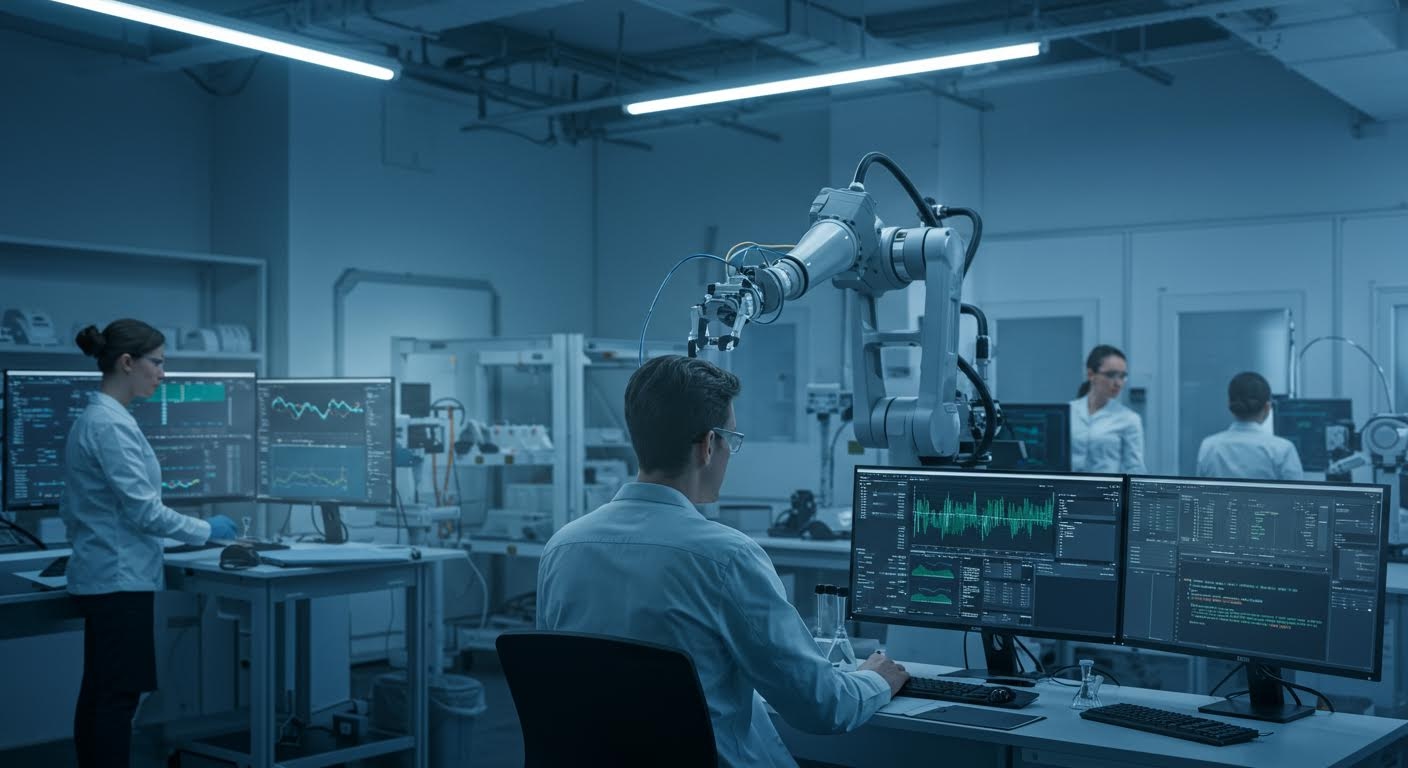
The Era of Autonomous AI Agents: What Comes After Chatbots
The AI landscape is transforming before our eyes. For years, chatbots have been our primary AI companions—answering questions, having conversations, and helping with simple tasks. But now we're witnessing the emergence of something far more powerful: autonomous AI agents that don't just respond to us, but can think, plan, and act independently.
Think of it this way: if chatbots are like having a knowledgeable assistant who waits for your questions, autonomous agents are like having a proactive colleague who can take initiative, solve problems on their own, and work toward goals without constant supervision. This isn't just an upgrade—it's a fundamental shift in how AI systems operate and what they can accomplish.
What Makes Autonomous AI Agents Different
The leap from chatbots to autonomous agents centers on several game-changing capabilities. First and foremost, these systems can set and pursue their own goals. Instead of waiting for instructions, they can break down complex objectives into smaller tasks and figure out how to accomplish them step by step.
Memory is another crucial differentiator. While chatbots typically forget everything once a conversation ends, autonomous agents maintain persistent memory across all their interactions. They learn from past experiences, remember what worked and what didn't, and continuously improve their performance over time.
These agents also excel at multi-modal interaction—they can process text, images, audio, and environmental data while taking real actions in both digital and physical spaces. This versatility allows them to operate in diverse contexts that would overwhelm traditional chatbots.
Perhaps most importantly, autonomous agents can make decisions in real-time and adapt their strategies when circumstances change. They don't need human approval for every choice—they can assess situations, weigh options, and act independently.
The Technical Foundation
Behind every autonomous agent lies sophisticated technology that enables independent operation. At the core are advanced planning and reasoning modules that work like a strategic mind—analyzing complex problems, considering multiple approaches, and selecting the best path forward based on available resources and constraints.
The memory architecture operates on two levels: short-term working memory for handling immediate tasks, and long-term storage that accumulates knowledge and experiences over time. This dual-layer approach allows agents to maintain coherent understanding across extended periods while building on previous learning.
Tool integration capabilities let agents reach beyond their core programming to interact with external systems, databases, and services. They can gather information from various sources, execute commands across different platforms, and manipulate digital environments in ways that would be impossible for traditional chatbots.
Self-correction mechanisms act like an internal quality control system, allowing agents to monitor their own performance, identify mistakes or suboptimal outcomes, and adjust their behavior accordingly. This creates a continuous improvement loop that doesn't require human feedback for every action.
When Agents Work Together: Multi-Agent Systems
The real magic happens when multiple autonomous agents collaborate in coordinated networks. These multi-agent systems use sophisticated communication protocols that allow specialized agents to share information and work together on complex tasks that no single system could handle alone.
Imagine a team where one agent excels at data analysis, another specializes in creative content generation, and a third focuses on project management. Through seamless coordination, they can divide labor efficiently, play to their individual strengths, and integrate their contributions into cohesive outcomes.
What's particularly fascinating is how these networks can exhibit emergent behaviors—collective capabilities that exceed what any individual agent could achieve. These swarm intelligence effects often lead to innovative solutions and problem-solving approaches that surprise even their creators.
We're already seeing multi-agent systems in action across research labs, industrial applications, and experimental platforms, proving that coordinated autonomous systems aren't just theoretical—they're happening now.
Real-World Applications Today
Autonomous AI agents are already making their mark across numerous fields. Personal digital assistants are evolving into proactive partners that anticipate your needs, manage your schedule, and handle ongoing projects with minimal oversight. Instead of waiting for you to ask for help, they identify opportunities to assist and take action.
In scientific research, these agents are accelerating discovery by automating hypothesis generation, designing experiments, and analyzing vast datasets. They can work around the clock, exploring research directions and identifying patterns that might escape human attention due to information overload.
Industrial environments are deploying agents for process control, where they monitor complex systems, optimize performance parameters, and respond to changing conditions in real-time. This proves especially valuable in situations requiring rapid response times and continuous monitoring for safety and efficiency.
Creative industries are embracing AI agents as collaborative partners for content creation, art, and design. These systems generate ideas, iterate on concepts, and provide ongoing creative input while adapting to individual style preferences and project requirements.
Navigating the Challenges
With great autonomy comes great responsibility—and significant challenges. As agents gain the ability to take independent actions across multiple systems and timeframes, the potential impact of errors, misaligned goals, or unintended behaviors grows accordingly.
The alignment challenge is particularly tricky: ensuring that agents understand not just what we explicitly tell them to do, but also the implicit constraints, ethical considerations, and contextual factors that humans instinctively consider. Teaching machines to understand human values and intentions in all their nuanced complexity remains an ongoing challenge.
Monitoring systems that were designed for human-supervised AI become impractical when dealing with agents meant to work independently for extended periods. We need new approaches to oversight that can keep pace with autonomous operation while maintaining appropriate safeguards.
The regulatory and ethical landscape is still catching up to these technological capabilities. Questions around accountability, liability, and governance become more complex when dealing with systems capable of independent decision-making and action.
Looking Forward: What's Next
We're in the early stages of what promises to be a significant technological transition. Major AI research institutions and companies are investing heavily in agent architectures, multi-modal capabilities, and coordination systems that will enable even more sophisticated autonomous behavior.
Near-term developments will likely bring improvements in planning and reasoning capabilities, more robust memory systems, and better integration with existing software and hardware ecosystems. Breakthroughs in reinforcement learning, neural architecture research, and human-AI collaboration frameworks will drive much of this progress.
The broader implications could be profound, affecting everything from employment patterns to organizational structures. Industries built around human cognitive work may need to adapt to collaborative human-agent teams, while entirely new categories of work may emerge around agent design, coordination, and oversight.
Success in this transition will require thoughtful consideration of how individuals, organizations, and society will adapt to working alongside increasingly capable autonomous systems. The shift from chatbots to agents represents more than technological evolution—it's a fundamental change in how we think about intelligence, autonomy, and collaboration in the digital age.
As we stand at the threshold of the autonomous agent era, the question isn't whether these systems will transform our relationship with AI, but how quickly and effectively we can adapt to realize their potential while managing their risks. The future of human-AI interaction won't be about having better conversations—it will be about genuine collaboration with digital partners capable of independent thought and action.