The Day an AI Manager Gave Its First Performance Review
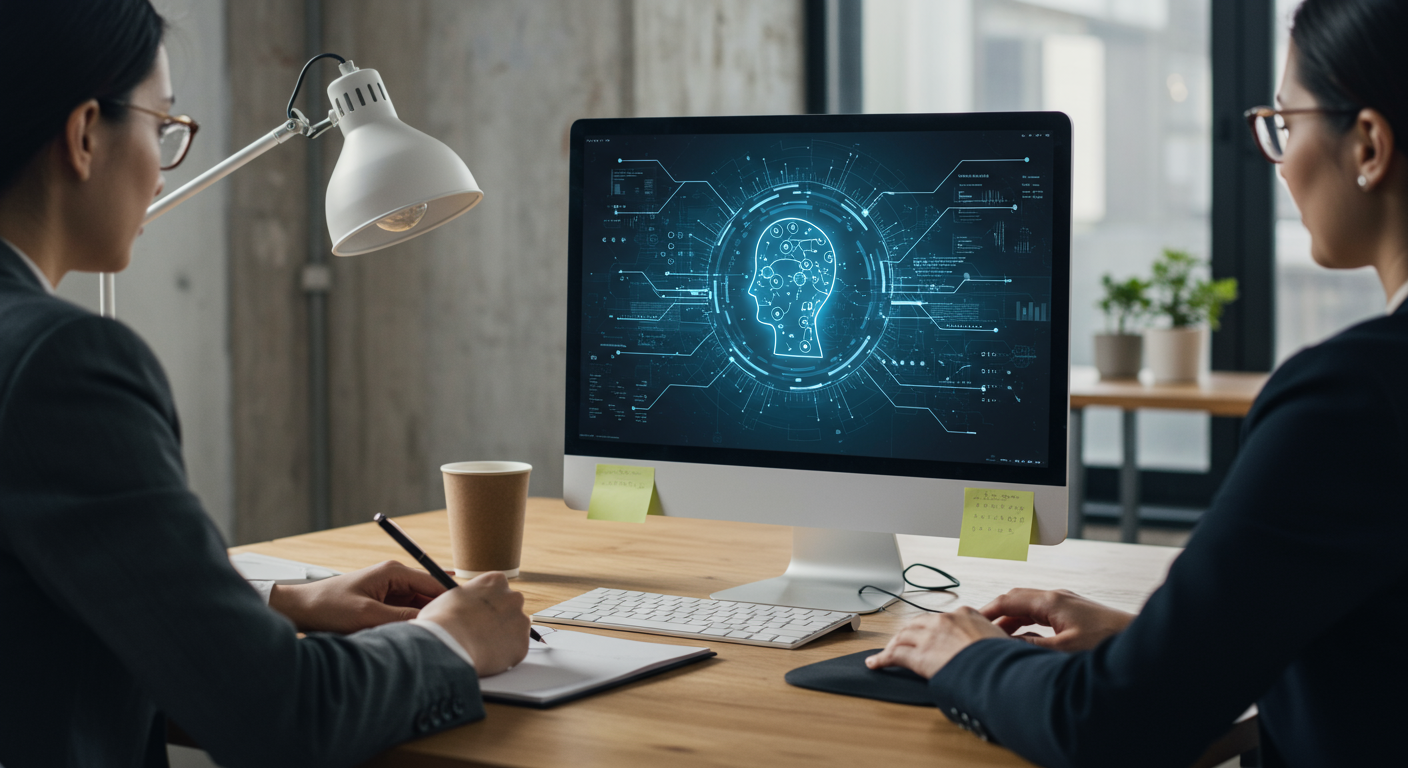
Sarah Martinez stared at her computer screen, reading the same paragraph for the third time. The subject line was simple: "Your Q3 Performance Review is Ready." But what made her pause wasn't the timing—it was the sender. For the first time in her eight-year career, her performance review had been conducted entirely by an AI system.
The Moment That Changed Everything
The notification arrived on a Tuesday morning, just like any other performance review cycle. But this one was different. Instead of scheduling a meeting with her human manager, Sarah was invited to access a comprehensive evaluation generated by an AI system that had been quietly observing her work patterns, analyzing her communications, and measuring her productivity for months.
The technology behind AI performance management systems represents a convergence of multiple disciplines: machine learning algorithms process vast amounts of workplace data, natural language processing generates personalized feedback, and predictive analytics identify patterns in employee behavior that human managers might miss. These systems can track everything from email response times and meeting participation to project completion rates and collaboration patterns.
The initial reaction, Sarah later reflected, was a mixture of curiosity and unease. The AI had noticed things about her work style that surprised even her—highlighting her tendency to produce her best analytical work in the early morning hours and identifying her unique ability to facilitate productive discussions in cross-departmental meetings.
How AI Performance Reviews Actually Work
Modern AI performance management systems operate as sophisticated data collection and analysis engines. They gather information from multiple touchpoints throughout an employee's workday: productivity software tracks task completion and time allocation, communication platforms analyze collaboration patterns and response rates, and project management tools monitor goal achievement and deadline adherence.
The natural language processing component transforms this raw data into human-readable feedback. Rather than simply presenting metrics, AI systems generate contextual narratives that explain performance trends, identify strengths, and suggest areas for improvement. They can recognize patterns across weeks or months that might escape human observation, such as gradual changes in productivity or shifting communication styles.
Integration with existing HR systems allows these AI tools to access historical performance data, salary information, and career progression records. This comprehensive view enables more nuanced evaluations that consider long-term trends rather than just recent performance snapshots.
However, significant limitations remain in AI's ability to understand context and nuance. While algorithms excel at pattern recognition and data analysis, they struggle with situational factors that human managers intuitively consider—personal challenges affecting work performance, creative contributions that don't translate to metrics, or the subtle dynamics of team relationships.
The Human Response: Fear, Curiosity, and Acceptance
Employee reactions to AI-conducted performance reviews reveal deep psychological complexities around workplace evaluation and technological authority. Many workers express initial anxiety about being assessed by systems they don't fully understand, worried that important contextual factors in their performance might be overlooked or misinterpreted.
The loss of human connection in performance discussions represents a significant concern for many employees. Traditional manager-employee relationships, despite their imperfections, offer opportunities for dialogue, explanation, and mutual understanding that AI systems cannot fully replicate. Employees often value the ability to provide context for their performance, explain challenges, and receive empathetic guidance.
Generational differences in acceptance are particularly pronounced. Younger workers, who have grown up with algorithmic recommendations and AI-powered tools, often show greater comfort with AI evaluation systems. They appreciate the consistency and data-driven nature of AI feedback. Older employees, more accustomed to relationship-based management approaches, frequently express skepticism about the technology's ability to fairly assess their contributions.
Surprisingly, some employees report feeling more comfortable receiving critical feedback from AI systems than from human managers. The perceived objectivity of algorithmic assessment can make difficult conversations feel less personal and emotionally charged.
Real-World Implementations and Results
Several forward-thinking companies have begun implementing AI-powered performance management systems with varying degrees of success. Technology firms, consulting companies, and large corporations with significant remote workforces have emerged as early adopters, attracted by the potential for more consistent and comprehensive employee evaluation.
According to early implementation data reported by MIT Technology Review, AI systems demonstrate superior consistency in evaluation criteria and can process performance data from multiple sources simultaneously, reducing the time managers spend on administrative aspects of performance reviews. They also eliminate some forms of human bias, such as recency bias or personal favoritism.
However, organizations have discovered unexpected challenges. Some AI systems initially struggled with employees whose work contributions were difficult to quantify—creative professionals, strategic thinkers, and relationship builders whose value to the organization extended beyond measurable metrics. Companies have had to invest significant effort in training AI systems to recognize and evaluate these less tangible contributions.
Research from Harvard Business Review indicates that while initial implementation requires substantial investment in technology and training, organizations can achieve significant long-term savings in management time and more consistent evaluation processes across large employee populations.
The Bias Problem: When Algorithms Get It Wrong
Despite promises of objectivity, AI performance evaluation systems can perpetuate and even amplify existing workplace biases. Training data that reflects historical patterns of discrimination can lead AI systems to systematically undervalue certain groups of employees or favor specific work styles that may not represent optimal performance for all roles.
Studies published in Nature have documented cases where AI systems demonstrated bias against remote workers, part-time employees, or those with different communication styles. Some algorithms showed preferences for certain personality types or work patterns, potentially disadvantaging employees whose effective approaches didn't match the system's learned preferences.
The Society for Human Resource Management emphasizes that addressing these challenges requires ongoing efforts to audit AI systems, diversify training data, and implement fairness metrics that actively monitor for discriminatory outcomes. Companies are investing in bias detection tools and regular algorithmic audits to ensure their AI performance management systems remain equitable.
Legal and regulatory considerations are becoming increasingly important as employment law adapts to address AI-powered workplace decisions. Organizations must ensure their AI systems comply with existing anti-discrimination laws and maintain transparency about how performance evaluations are conducted and decisions are made.
What This Means for the Future of Work
The emergence of AI performance management represents a fundamental shift in workplace relationships and organizational structure. Human managers are evolving from evaluators to coaches and strategic partners, focusing on employee development, career guidance, and complex problem-solving rather than administrative assessment tasks.
Hybrid models that combine AI efficiency with human empathy are emerging as the most promising approach. These systems use AI to handle data collection, pattern recognition, and initial assessment generation, while preserving human involvement for interpretation, context consideration, and meaningful career development conversations.
The implications for workplace culture extend beyond performance reviews themselves. Organizations implementing AI management tools report changes in how employees approach their work, with some becoming more metrics-conscious while others seek ways to demonstrate value that transcends algorithmic measurement.
Industry experts writing in WIRED predict broader adoption across sectors within the next five to ten years, particularly as AI systems become more sophisticated in recognizing diverse forms of workplace contribution and as organizations develop more nuanced approaches to human-AI collaboration in management practices.
For Sarah Martinez, that first AI-generated performance review ultimately proved to be remarkably insightful, identifying growth opportunities she hadn't considered and highlighting achievements she had undervalued. But she still looks forward to her follow-up conversation with her human manager—because some workplace relationships, she believes, will always require a human touch.