The Day an AI Manager Gave Its First Performance Review
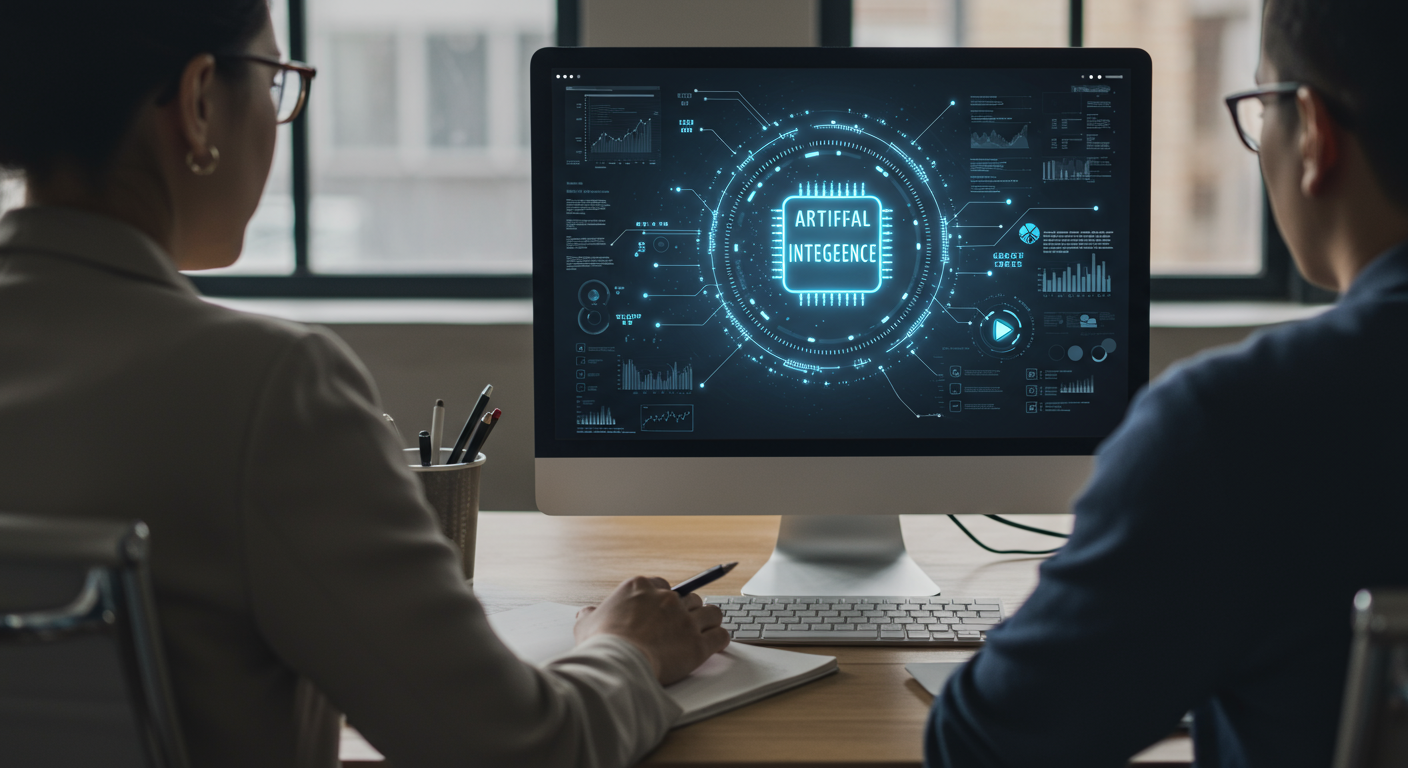
The conference room was quiet except for the soft hum of a computer screen. Sarah Martinez, a marketing analyst at a mid-sized tech company, sat facing what would have traditionally been her manager's chair—now occupied only by a laptop displaying an AI interface. This was the day that would mark a historic shift in workplace evaluation: the first documented AI-conducted performance review.
As the AI system began its assessment, analyzing months of productivity data, communication patterns, and project outcomes, it represented more than technological advancement—it symbolized a fundamental reimagining of the manager-employee relationship that has defined workplaces for generations.
The Historic First: When Silicon Valley Met Performance Reviews
Sarah's AI-driven performance evaluation marked a watershed moment in human resources management. Unlike traditional reviews that rely heavily on subjective impressions and recent memory bias, this algorithmic assessment drew from comprehensive data collected throughout the entire review period.
The experience proved both surreal and surprisingly thorough. The AI system presented detailed analytics on her productivity patterns, collaboration frequency, goal achievement rates, and communication effectiveness. What struck Sarah most was the system's ability to identify performance trends she hadn't recognized herself—periods of peak creativity, optimal collaboration patterns, and skill development trajectories that human managers might have overlooked.
This milestone began a new era where algorithmic precision meets human resource management, challenging fundamental assumptions about who—or what—is qualified to evaluate human performance in the workplace.
How AI Performance Management Actually Works
AI performance management systems rely on sophisticated machine learning algorithms that continuously analyze vast amounts of employee data. These systems process information from multiple sources: project management tools, email communication patterns, calendar utilization, code commits for developers, sales metrics, and even keystroke dynamics.
The AI's decision-making process involves weighted analysis of various performance factors. Unlike human managers who might focus heavily on recent events or personal interactions, AI systems evaluate consistent patterns across extended timeframes. They identify productivity cycles, predict performance trajectories, and flag potential issues before they become critical problems.
Integration with existing HR systems creates seamless workflows where performance data flows automatically from various workplace tools into the evaluation algorithm. This eliminates the traditional burden of manual performance tracking while providing more comprehensive insights than human managers could realistically compile.
The algorithms continuously learn and adapt, refining their assessment criteria based on outcomes and feedback, creating increasingly sophisticated evaluation models tailored to specific roles and organizational contexts.
What AI Sees That Humans Miss (And Vice Versa)
AI's analytical advantages in performance evaluation are significant. Pattern recognition capabilities allow these systems to identify subtle correlations between different performance indicators that human managers might never notice. They detect productivity patterns across time zones, optimal collaboration configurations, and even predict when employees might be at risk of burnout based on work pattern analysis.
Perhaps most importantly, AI systems can significantly reduce certain types of bias that plague human performance reviews—favoritism, recency bias, and unconscious demographic prejudices. The algorithmic approach focuses purely on measurable outcomes and behaviors rather than personal relationships or subjective impressions.
However, AI systems have notable blind spots that human managers excel at addressing. Contextual understanding remains a significant challenge—AI might flag decreased productivity without recognizing that an employee was mentoring new team members or dealing with a personal crisis. Creative contributions, innovative thinking, and complex interpersonal dynamics often resist quantification.
The human element of empathy, motivation, and personalized development planning remains irreplaceable. While AI can identify what happened and when, human managers better understand why it happened and how to inspire future improvement.
The Employee Experience: Fear, Curiosity, and Adaptation
Initial employee reactions to AI management range from anxiety to fascination. Many workers express concern about being reduced to data points, worried that algorithmic assessment cannot capture the full scope of their contributions. The fear of surveillance and constant monitoring creates psychological pressure that can initially impact performance.
Trust and transparency emerge as critical factors in successful AI performance management implementation. Employees who understand how the AI system works and what data it considers tend to adapt more successfully than those left in the dark about the evaluation process.
The psychological impact varies significantly among individuals. Some employees find AI management liberating—free from personality conflicts and subjective judgments that may have limited their advancement. Others miss the human connection and personalized feedback that traditional management relationships provide.
Successful employees under AI management often develop new strategies: focusing more heavily on measurable outcomes, improving their digital communication skills, and learning to interpret and respond to algorithmic feedback. The most adaptable workers begin treating the AI system as a performance coach rather than a judge.
Organizational Readiness and Implementation Challenges
Leading technology companies, consulting firms, and progressive organizations across various industries are spearheading AI performance management adoption. These early adopters typically have robust technical infrastructures and cultures already comfortable with data-driven decision making.
The technical requirements are substantial: comprehensive data collection systems, powerful analytics platforms, integration capabilities across multiple software tools, and sophisticated algorithms capable of making nuanced performance assessments. The initial investment can be significant, though costs are decreasing as AI technologies mature.
Change management represents perhaps the greatest challenge. Preparing teams for AI-driven evaluations requires extensive communication, training, and cultural adjustment. Organizations must address employee concerns while retraining human managers for new roles in an AI-assisted environment.
Legal and compliance considerations add complexity. Organizations must navigate privacy regulations, ensure algorithmic fairness, maintain audit trails for performance decisions, and establish appeal processes for AI-generated evaluations.
The Ethics of Algorithmic Performance Assessment
Fairness and bias concerns dominate ethical discussions around AI performance management. While these systems can reduce human bias, they can also perpetuate or amplify existing biases present in historical performance data or system design. Ensuring algorithmic fairness across different demographic groups requires ongoing vigilance and adjustment.
Privacy implications are significant. Comprehensive employee monitoring raises questions about workplace surveillance, data ownership, and the psychological impact of constant algorithmic observation. Organizations must balance performance insight with employee privacy rights.
The right to explanation becomes crucial when AI systems make performance decisions that affect careers and compensation. Employees deserve to understand how algorithmic assessments are generated and have mechanisms to challenge or appeal AI-driven conclusions.
Regulatory responses are emerging globally, with various jurisdictions developing frameworks for algorithmic accountability in employment decisions. Industry standards are evolving to address ethical AI implementation in performance management contexts.
The Future of AI in Performance Management
The future likely lies in hybrid models where AI assists rather than replaces human managers. These systems can provide data-driven insights while human managers handle relationship building, career development, and contextual decision making. This combination leverages the strengths of both artificial and human intelligence.
Industry-specific applications are emerging, with customized AI systems designed for different professional contexts—from software development teams to sales organizations to creative agencies. Each implementation reflects the unique performance indicators and success metrics relevant to specific roles.
AI management capabilities continue evolving toward more sophisticated understanding of human performance factors. Future systems may incorporate emotional intelligence indicators, predict optimal career development paths, and provide personalized recommendations for skill development and performance improvement.
Preparing the workforce for an AI-managed future requires new skills: data literacy, digital communication proficiency, and comfort with algorithmic feedback. Educational institutions and professional development programs are beginning to address these emerging competency requirements.
As Sarah Martinez reflected on her groundbreaking performance review experience, she realized she had participated in a historic moment that would reshape workplace relationships for generations to come. The day an AI manager gave its first performance review marked not just a technological milestone, but the beginning of a new chapter in how we understand, measure, and develop human potential in professional environments.