Olix Raises $312 Million at $3.3 Billion Valuation to Build AI Chips That Run on Light
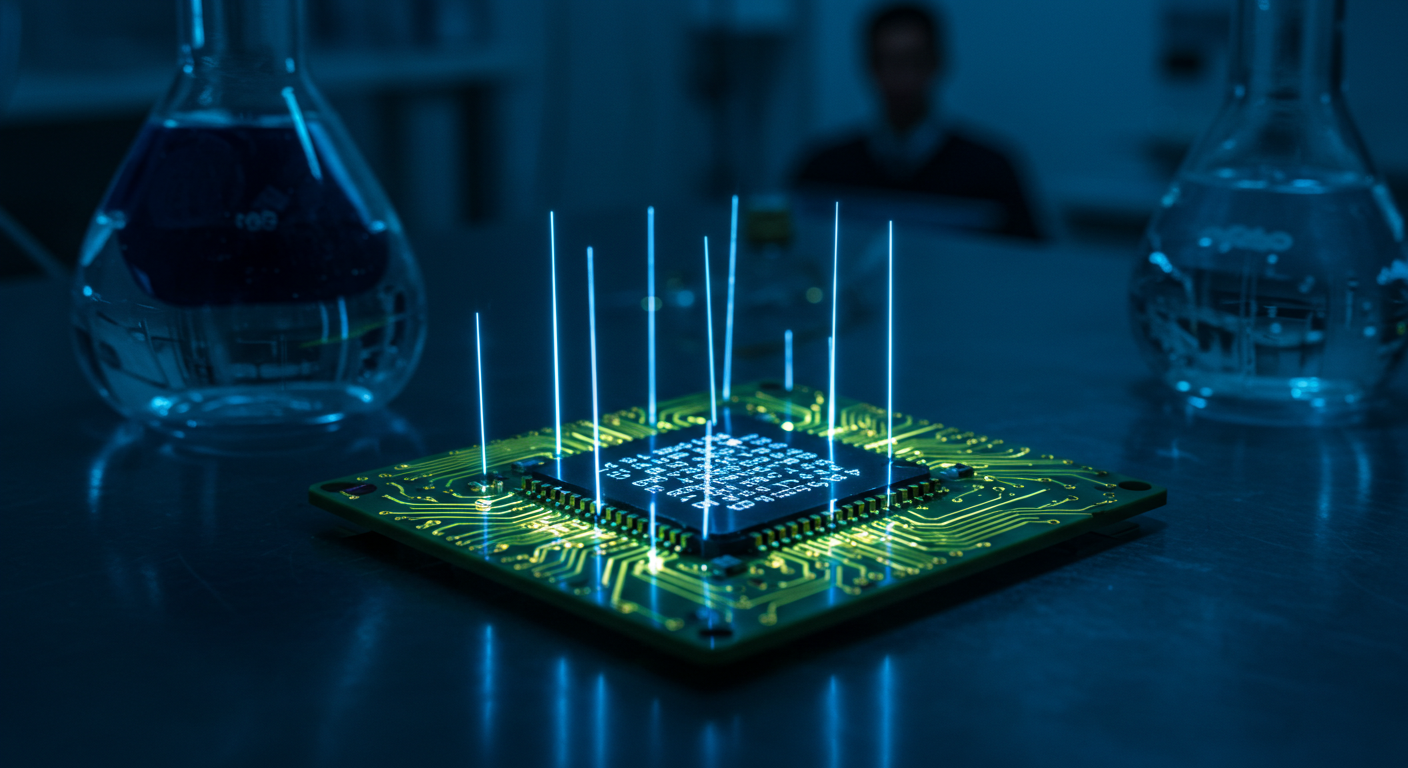
Olix, a London-based AI chip startup, has raised $312 million in a Series B funding round at a $3.3 billion valuation. The round is reportedly the largest semiconductor venture capital raise ever completed by a European company, coming roughly six months after a $220 million round valued the company at $1 billion — a tripling of valuation in a short window.
The round was led by Fundomo, with participation from chip designer Arm, trading firm Hudson River Trading, Netflix co-founder Reed Hastings, and the UK government's Sovereign AI venture fund. A government minister publicly framed the investment as a strategic move to build sovereign AI capability, language that several observers have noted reads as much like political positioning as financial analysis.
The Pitch: Running AI on Light Instead of Electricity
Olix is developing an inference chip, referred to as DX-1 or X-1, that uses photonic — optical — interconnects to link multiple chips together. The design is intended to sidestep a bottleneck common in high-bandwidth memory architectures used in large language model inference, where data transfer between memory and processing can limit performance.
The company says its approach could exceed 10,000 tokens per second per user for 100-billion-parameter models. It's worth noting that these figures are self-reported by Olix and have not been independently verified. A recurring concern among industry watchers is that headline performance claims from pre-product chip startups often do not hold up once real-world manufacturing and deployment begin.
Who's Behind It: Founder, Board, and New Hires
Olix was founded in 2024 by James Dacombe, who was 25 at the time of this raise, and the company rebranded in January 2026. Nick McKeown, known for earlier work in software-defined networking, has joined the board, and Matt Briers has been hired as chief financial officer. Coverage of the round has frequently highlighted Dacombe's age and McKeown's résumé as markers of credibility and novelty, a common pattern in funding-round reporting for early-stage deep-tech companies.
Still Vaporware? The Case for Skepticism
No product has shipped yet. Tape-out is expected later in 2026, with first customer deliveries targeted for the second half of 2027. Many observers note that photonic computing has a long history of being described as a near-term breakthrough — sometimes for two decades — without commercial products materializing at scale.
Several structural challenges remain unresolved, according to industry analysis: manufacturing yield for chips of this complexity has not been demonstrated at volume, converting between optical and electrical signals introduces energy losses, thermal management for photonic systems is still maturing, and the software ecosystem needed to support this kind of architecture is comparatively immature. A recurring concern among analysts is that a $3.3 billion valuation achieved before any product exists implies a significant amount of execution risk that investors are effectively betting will be resolved.
Bigger Picture: Bubble Signals in AI Chip Investment
Olix's rapid valuation growth arrives amid a broader divergence: private investment in AI chip startups continues to surge even as some public semiconductor stocks have shown weakness. A recurring theme in commentary on this trend is that the gap between private funding enthusiasm and public market performance may point to speculative dynamics in parts of the AI infrastructure sector, though this remains a matter of ongoing debate rather than settled fact.
The involvement of well-known investors — Arm, Reed Hastings, and a UK government fund among them — is often cited as a signal of legitimacy. Some observers caution, however, that investor pedigree alone does not substitute for independent verification of unproven technology, particularly when a company has yet to ship a working product.