North Korea Says Kim Oversaw Test of 'AI-Guided' Hypersonic Missile — But Can the Claim Be Verified?
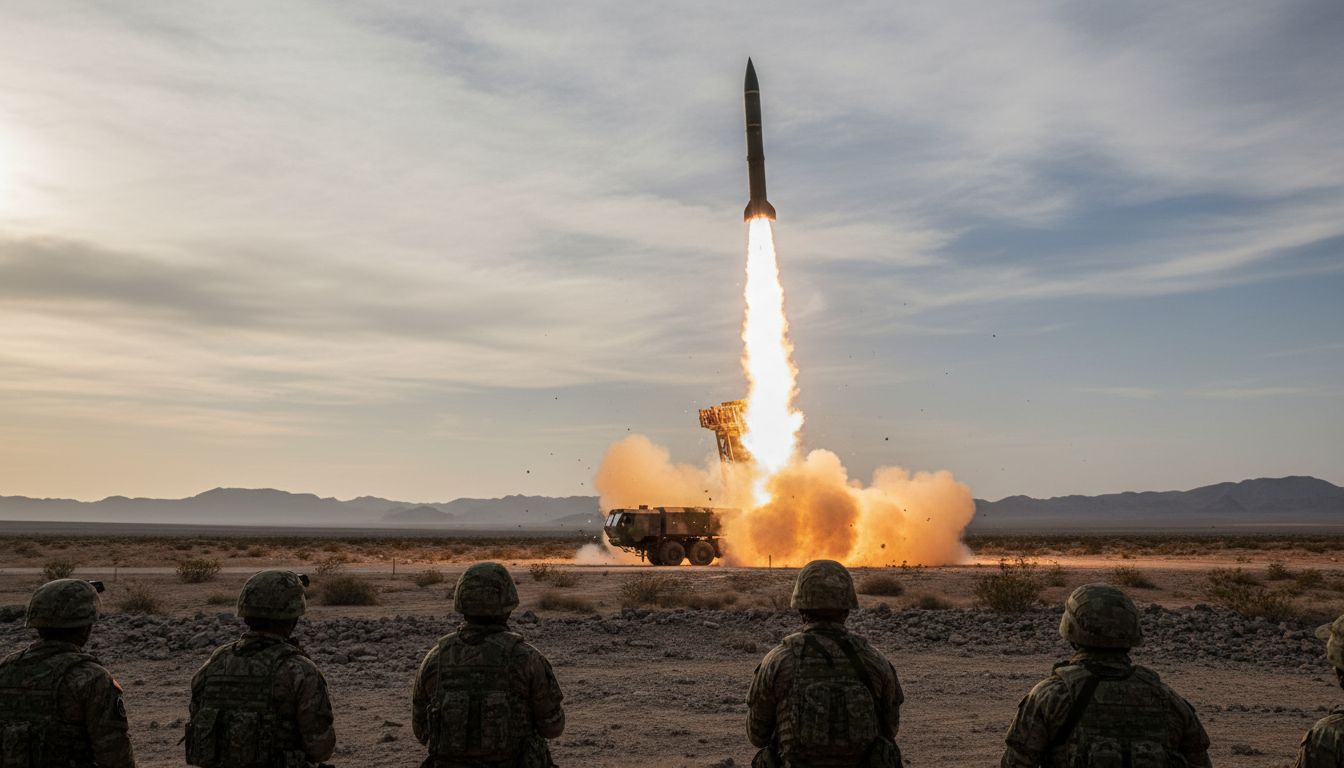
North Korean state media reported that Kim Jong Un personally oversaw a missile test described as a strategic weapons drill, with the launch tied to the country's Hwasong-16B hypersonic missile program. According to the Korean Central News Agency, the missile traveled more than 700 kilometers from the Wonsan area. The test has drawn international attention largely because of a specific claim embedded in the state media account: that the missile used artificial intelligence to alter its flight path mid-flight.
North Korea Claims Successful Test of AI-Guided Hypersonic Missile
State media framed the launch as a demonstration of the reliability of North Korea's strategic offensive weapons systems. KCNA's reporting, relayed through wire and regional outlets, presented the test as part of an ongoing effort to showcase the Hwasong-16B program's hypersonic capabilities. Kim Jong Un's direct oversight of the launch was emphasized heavily in official coverage, consistent with the country's pattern of using high-profile leadership presence to underscore the political significance of weapons tests.
The AI Claim: What North Korea Says vs. What's Verified
The most notable element of North Korea's account is the assertion that the missile used AI to adjust its trajectory mid-flight. State media further claimed this maneuverability makes the missile effectively unavoidable by existing missile defense systems. This is not the first time North Korean state media has attached advanced technical language to weapons announcements, and analysts have repeatedly noted the difficulty of separating genuine technical advances from propaganda framing.
No independent technical authority has confirmed the existence or nature of the AI-based guidance system described by North Korean state media. It remains unclear, based on publicly available reporting, what specifically is meant by "AI" in this context — whether it refers to an onboard adaptive guidance algorithm, pre-programmed maneuverability options, or a broader marketing term applied to existing missile technology. Given this ambiguity, the AI-guidance claim is best treated as an assertion made by a single state actor rather than a verified technical fact.
South Korea Pushes Back on North Korea's Claims
South Korea's Ministry of National Defense disputed North Korea's characterization of the missile as unavoidable. Officials stated that the missile remained within the detection and interception range of allied missile defense systems, directly contradicting Pyongyang's framing. This divergence illustrates a familiar dynamic in North Korean weapons announcements: a pattern of competing narratives in which North Korean state claims are met with more measured, and often contradictory, assessments from South Korean and allied military officials.
Context: Hwasong-16B and North Korea's Hypersonic Ambitions
This test fits within a multi-year trajectory of development associated with the Hwasong-16B program, part of North Korea's broader push toward hypersonic weapons capability. Kim Yo Jong, Kim Jong Un's sister, has previously made public statements emphasizing the reliability of North Korea's strategic weapons, a messaging pattern that analysts say is consistent with the state's broader propaganda strategy. The launch adds to a series of North Korean missile tests that international observers have flagged as inconsistent with United Nations Security Council resolutions restricting the country's ballistic missile activity.
Why Independent Verification Matters
The claim that this missile used AI-assisted guidance originates exclusively from North Korean state media. While multiple wire services and regional outlets have corroborated the basic facts of the launch — including its distance, general location, and Kim Jong Un's oversight — none have independently verified the specific mechanism behind the missile's claimed maneuverability. This gap between confirmed facts and unverified technical claims is a recurring challenge when evaluating adversarial statements about emerging military applications of artificial intelligence.
Analysts have raised a recurring concern: attaching AI terminology to weapons systems can serve a signaling purpose independent of the underlying technical reality, making it important to treat such claims as possibilities rather than established capabilities until independently assessed. As of now, the available record supports confirmation of the missile test and North Korea's framing of its purpose, but the specific AI-guidance claim remains unverified by outside sources.