Multimodal AI: When Machines See, Hear, and Understand Together
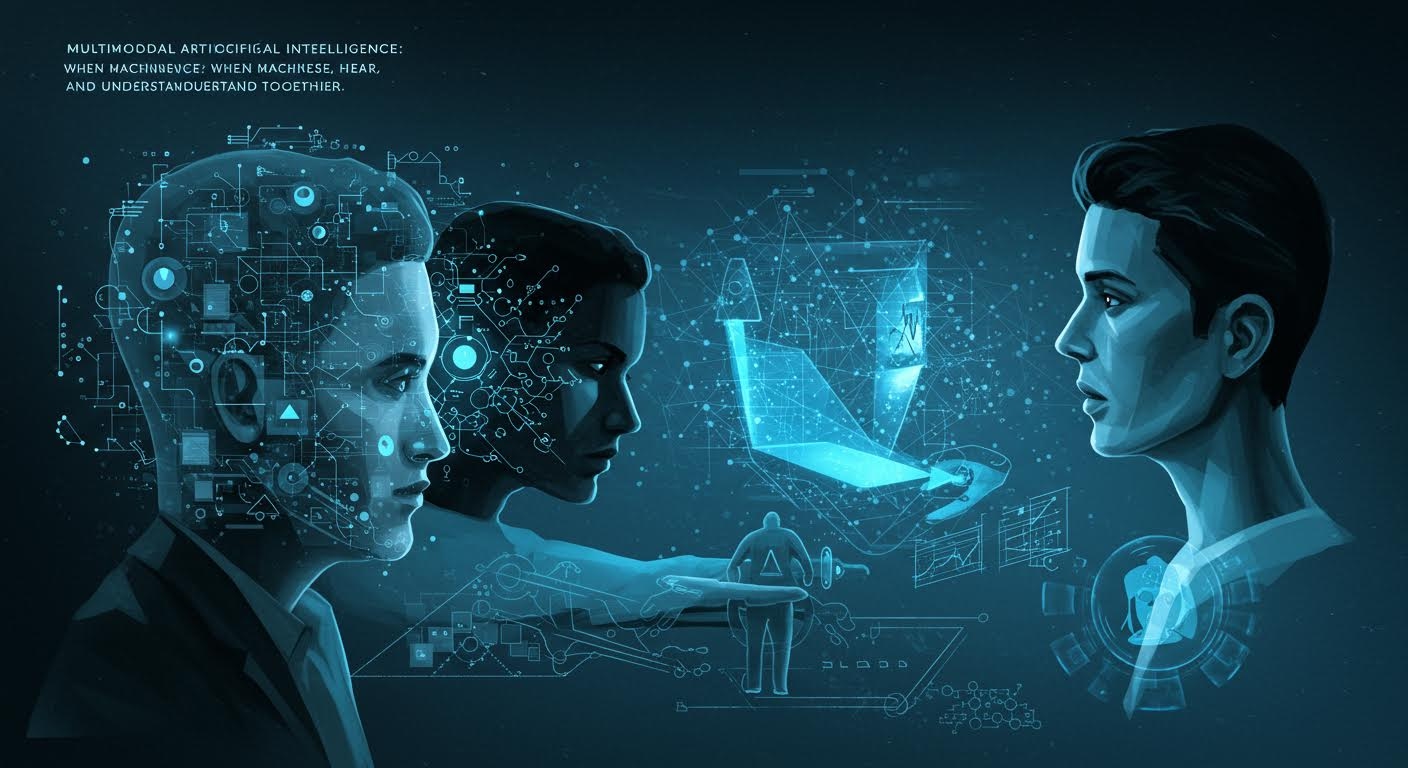
For decades, artificial intelligence operated like a specialist with tunnel vision—processing text, images, or audio in isolation. Today's multimodal AI systems are shattering these barriers, creating machines that can see, hear, and understand language simultaneously, much like human cognition naturally operates.
Beyond Single-Modal Limitations
Traditional AI systems excelled within narrow domains: computer vision models analyzed images, natural language processors handled text, and audio recognition systems focused solely on sound. This compartmentalized approach created significant bottlenecks when real-world applications demanded integrated understanding across multiple information types.
Consider how humans naturally process information. When watching someone speak, we simultaneously process their words, facial expressions, gestures, and environmental context. Recent breakthroughs in transformer architectures and cross-modal learning have finally made similar capabilities technically feasible for artificial systems.
This convergence emerged through three key advances: deep learning architectures capable of handling different data types, computational power enabling simultaneous processing of multiple data streams, and vast datasets containing aligned multimodal information for training.
How Multimodal Systems Actually Work
Multimodal AI systems build upon transformer architectures, adapting attention mechanisms to bridge different types of information. The real challenge lies in data alignment—synchronizing vision, audio, and text inputs that arrive at different frequencies and formats.
Cross-modal attention mechanisms enable these systems to identify relationships between visual elements and corresponding text descriptions, or between spoken words and accompanying gestures. Training involves exposing models to massive datasets where multiple modalities are temporally or semantically aligned.
The technical foundation relies on shared representation spaces where information from different modalities can be compared and combined. This requires careful architectural design to ensure visual features, textual embeddings, and audio representations can interact meaningfully within unified processing frameworks.
Real-World Applications Driving Change
Autonomous vehicles showcase the most demanding multimodal AI applications, combining camera feeds, lidar data, GPS information, and sensor inputs to navigate complex environments. These systems must process visual road conditions, interpret traffic signs, respond to audio cues like sirens, and integrate real-time mapping data—all simultaneously.
Healthcare applications are emerging rapidly, with diagnostic systems analyzing medical imaging alongside patient records, symptom descriptions, and audio recordings of breathing or heartbeat patterns. This integrated approach identifies patterns that single-modal analysis might miss entirely.
Content creation platforms now offer AI systems that generate coordinated multimedia experiences—creating images that match textual descriptions while producing accompanying audio or music that fits the overall theme and mood.
Human-computer interaction is becoming more intuitive through interfaces that respond to voice commands, recognize gestures, interpret facial expressions, and understand contextual visual information all at once.
The Major Players and Current Progress
Leading technology companies are heavily investing in multimodal capabilities. Google's Gemini models demonstrate sophisticated vision-language understanding, while OpenAI's GPT-4V combines text generation with visual comprehension. Microsoft's research initiatives focus on cross-modal learning applications across their product ecosystem.
Academic institutions contribute fundamental research through projects exploring novel architectures, training methodologies, and theoretical frameworks for multimodal understanding. They're also tackling challenges like data efficiency and model interpretability.
Open-source initiatives are democratizing access to multimodal technologies, with research communities sharing datasets, model architectures, and training techniques. This collaborative approach accelerates development while making advanced capabilities accessible to smaller organizations.
Current Challenges and Limitations
Computational efficiency remains a major hurdle. Processing multiple data streams simultaneously demands substantial processing power and memory resources. Real-time applications must balance comprehensive understanding with acceptable response times—a difficult trade-off.
Performance consistency across different modalities presents ongoing difficulties. A system might excel at visual understanding while struggling with audio processing, creating uneven user experiences and limiting practical deployment scenarios.
Training robust multimodal systems requires high-quality datasets where multiple modalities are properly aligned and annotated. Creating such datasets is expensive and time-consuming, particularly for specialized domains or underrepresented languages.
Interpretability becomes increasingly complex when AI systems make decisions based on multiple information sources. Understanding why a multimodal system reached a particular conclusion requires analyzing intricate interactions between different types of input data.
What's Coming Next
Next-generation applications are expanding toward embodied AI systems that interact with physical environments through multiple sensory channels. These systems could revolutionize robotics, smart home technologies, and augmented reality experiences.
The societal implications include more natural human-machine collaboration, enhanced accessibility technologies for individuals with disabilities, and new forms of creative expression that seamlessly blend multiple media types.
Research directions are exploring embodied AI that combines multimodal understanding with physical interaction capabilities, real-world reasoning that goes beyond pattern recognition to genuine comprehension, and few-shot learning approaches that quickly adapt to new domains.
Mainstream adoption timelines vary by sector. Consumer applications will likely appear first, followed by specialized professional tools, and eventually broader integration across industries as computational costs decrease and model efficiency improves.