How Artificial Intelligence Is Quietly Changing Everyday Life
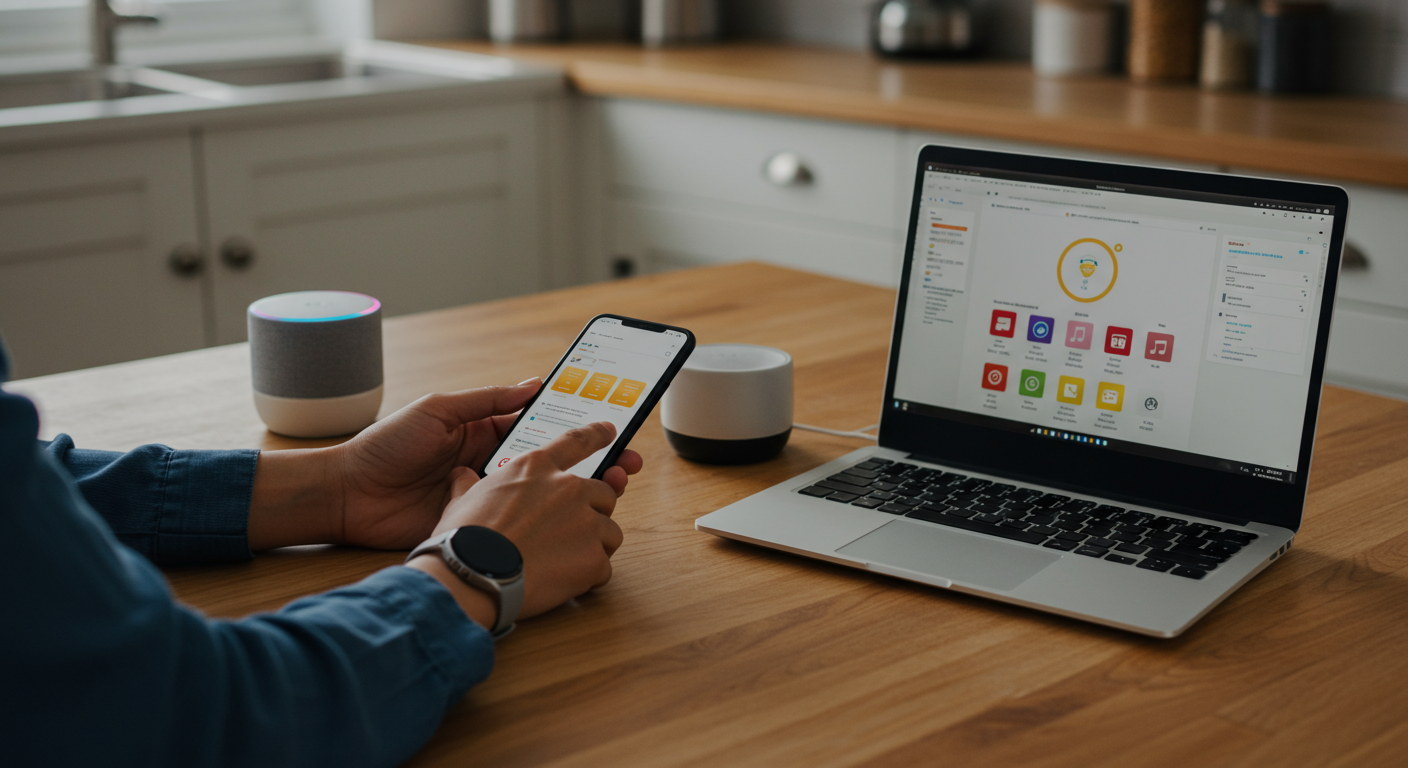
Artificial intelligence is often discussed as if it still belongs to the future. For most people, though, it is already part of everyday life. It appears less as a humanoid robot or a dramatic science-fiction breakthrough and more as software that predicts, ranks, detects, recommends, and automates. In practice, that means AI is often working behind the scenes in tools and services people use every day without thinking much about it.
That broader view matters. Definitions vary by institution, but frameworks from organizations such as the National Institute of Standards and Technology generally describe AI as computer systems designed to perform tasks that usually require human judgment, including recognizing patterns, making predictions, classifying information, or supporting decisions. Most of the AI people encounter today is narrow and task-specific. It is built to do particular jobs well, not to think broadly about the world.
The real story, then, is not simply that AI is advancing. It is that AI has already been woven into common digital experiences, consumer products, and institutional systems in ways that are easy to overlook.
AI Is Already in Daily Life, Even When You Do Not Notice It
One reason AI can feel abstract is that it often functions as infrastructure rather than as a standalone product. A person may never open an app labeled artificial intelligence, yet still interact with AI-powered systems many times a day. When a platform recommends a song, a store suggests a product, an inbox filters spam, or a map predicts the fastest route, software is often using pattern recognition and prediction to shape the result.
This quiet integration has changed how people experience technology. Instead of asking users to sort through everything manually, many services now try to anticipate what matters most. They rank search results, organize feeds, flag unusual activity, and personalize content. These systems are not necessarily making grand decisions, but they do influence what people see first, what gets hidden, and what feels most relevant.
That is why AI is best understood as a layer inside modern services rather than only as a visible tool. In many cases, it is not replacing the product people use. It is becoming part of how that product works.
Where Most People Encounter AI Every Day
Recommendation systems are among the most familiar examples. Streaming platforms suggest what to watch next. Shopping sites predict what customers may want to buy. News feeds and social platforms decide which posts appear first. Music apps learn listening habits and build personalized mixes. As Consumer Reports notes in its coverage of everyday tech, these systems are designed to increase convenience, but they also shape attention and choice in subtle ways.
AI also supports functions that feel routine enough to disappear into the background. Search engines use ranking systems to decide which results seem most useful. Email services identify spam, phishing attempts, and priority messages. Translation tools predict likely wording across languages. Voice assistants rely on speech recognition and language processing to respond to requests. Navigation apps combine location data, historical patterns, and live conditions to estimate travel times and suggest routes.
On personal devices, AI-enabled features have become common as well. Smartphones sort and group photos, improve images, power autocorrect, surface reminders, and personalize settings. Smart home products can automate lighting, temperature, and routines based on user behavior. Even when these features feel simple, they often depend on software trained to identify patterns and adapt responses over time.
Not all of these tools use the same methods, and not every smart feature is the same kind of AI. But taken together, they show how widely predictive and pattern-based systems have spread through everyday consumer technology.
The Invisible Work: Ranking, Detection, and Automation
Some of the most consequential uses of AI are the least visible. Instead of generating text or images, many systems handle back-end tasks such as detection, scoring, triage, and routing. Banks and payment networks use automated models to flag suspicious transactions. Email providers block junk and malicious messages before users ever see them. Security systems monitor for anomalies. Customer service platforms route requests based on urgency or likely topic.
These uses rarely attract the same attention as headline-grabbing generative AI tools, but they can have a direct effect on daily life. They can influence whether a purchase goes through smoothly, whether a login attempt is blocked, whether a message reaches an inbox, or how quickly a customer gets help. In that sense, AI often acts less like a digital companion and more like a quiet gatekeeper.
It is also important not to blur all automation together. A spam filter, fraud detector, and chatbot may all be discussed under the AI umbrella, but they do different things. As the National Institute of Standards and Technology and other major frameworks make clear, many widely deployed systems are not creating new content. They are sorting, classifying, predicting, and prioritizing based on large amounts of data. Understanding that distinction helps cut through the hype and keeps expectations grounded.
Health Care Shows Both the Promise and the Unease
Health care offers one of the clearest examples of AI moving into everyday life while also raising deeper concerns. AI-related tools can support scheduling, documentation, imaging review, risk scoring, and clinical decision support. In many cases, the goal is not to replace doctors or nurses but to help professionals work more efficiently, catch patterns faster, or reduce administrative burdens.
That promise helps explain why AI is gaining traction in medical settings. A tool that helps organize records, assist with image analysis, or flag possible issues can save time and support clinical judgment. Used well, such systems may improve workflow and help professionals focus more attention where it is needed most.
At the same time, people tend to be more cautious when AI touches their own care. Pew Research Center found that 60 percent of Americans would be uncomfortable if their health care provider relied on AI in their own medical care. That finding highlights a broader pattern in public attitudes: people may welcome AI when it improves convenience, but become far more hesitant when the stakes feel personal, serious, and difficult to evaluate.
Health care brings that tension into sharp focus. The potential benefits are substantial, but so are the expectations around accuracy, accountability, and human oversight.
Convenience Comes With Privacy and Transparency Tradeoffs
Many everyday AI systems depend on collecting and analyzing information about users. That can include browsing behavior, purchase history, location, voice inputs, images, device usage, and other signals that help software personalize results. The better a system can identify patterns, the more precisely it can tailor recommendations or automate responses.
For consumers, the tradeoff is often convenience in exchange for data. A phone that organizes photos automatically or a platform that reliably suggests useful content may feel helpful. But those benefits can also make it harder to notice how much information is being gathered and how extensively it is being processed.
Transparency is another challenge. People may not always know when an automated system is shaping what they see, filtering what reaches them, or making a low-level decision about their account or activity. In some situations, that lack of visibility is merely confusing. In others, it matters more. If a transaction is flagged, a recommendation system narrows options, or an automated score influences a service decision, users may want to know what happened and whether they can challenge it.
That is one reason discussions about AI increasingly focus not just on innovation, but also on disclosure, data practices, and accountability. The question is no longer only what AI can do, but how openly and fairly it is being used.
Why People Accept Some Uses of AI More Than Others
Public comfort with AI usually depends on context. People are often more relaxed about lower-stakes uses such as playlist suggestions, photo organization, or predictive text. These features can save time, and mistakes tend to be minor or easy to ignore. If a recommendation is bad, the cost is usually small.
Higher-stakes uses feel different. When AI plays a role in health care, financial services, security, or other decisions with meaningful consequences, trust tends to fall. People may worry about errors, bias, lack of explanation, or the possibility that there is no clear path to appeal a bad outcome. The more personal and opaque the decision feels, the less comfortable many users become.
Human involvement also matters. People are often more willing to accept AI as an assistant than as a final authority. A system that helps a professional review information may feel more acceptable than one that appears to decide alone. That distinction can shape whether AI is seen as a useful tool or an unaccountable force.
In other words, acceptance is rarely about AI in the abstract. It is about what task the system is performing, how much is at stake, what benefits are visible, and whether someone remains responsible when things go wrong.
How to Think About Everyday AI Without the Hype
A practical way to evaluate AI in daily life is to ask a few simple questions. What task is the system actually performing? What data does it rely on? Is it merely recommending, or is it affecting an important decision? And if the output is wrong, who is accountable?
Those questions help cut through inflated claims. Today’s AI is often impressive, but it is usually specialized rather than general. As explanations from McKinsey and IBM also emphasize, it can classify images, detect suspicious activity, suggest content, summarize information, or support a workflow. That is significant enough on its own. There is no need to pretend every automated feature is a step toward a machine that manages human life independently.
The most important takeaway is also the simplest: AI is not just arriving someday. It is already embedded in the services, devices, and systems people use constantly. The quiet nature of that change is exactly why it deserves more attention. The better people understand where AI is operating, what it is doing, and what tradeoffs come with it, the better equipped they will be to decide which uses feel helpful, which deserve caution, and which demand clearer accountability.