How AI Is Transforming Medical Imaging and Early Disease Detection
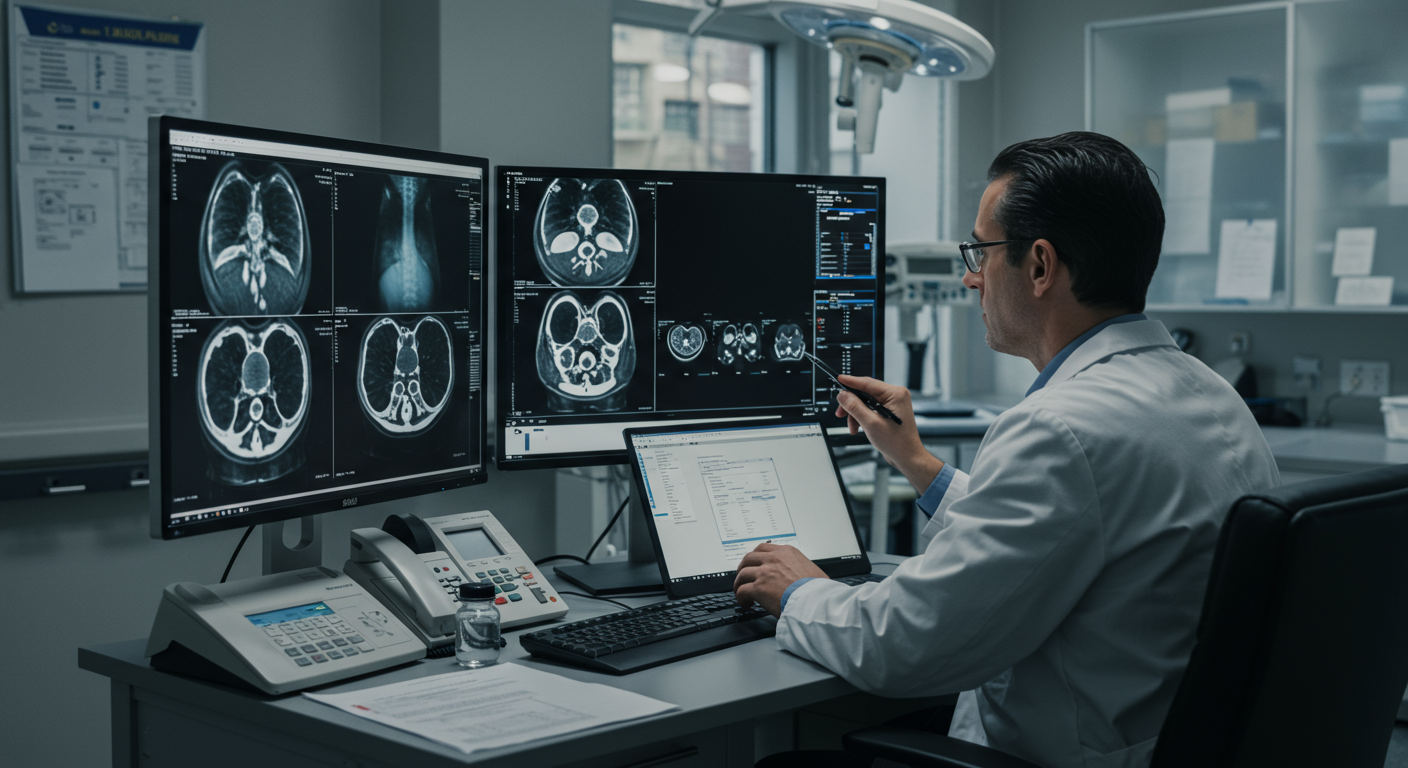
How AI Is Transforming Medical Imaging and Early Disease Detection
The AI Revolution in Medical Imaging
Traditional medical imaging faces significant challenges in diagnostic accuracy and efficiency. Radiologists analyze countless images daily under tight time constraints, which can impact diagnostic precision. Human interpretation, while skilled, varies between practitioners and sometimes leads to missed diagnoses or delayed treatment.
Artificial intelligence is fundamentally transforming this landscape by introducing unprecedented pattern recognition and data analysis capabilities. Machine learning algorithms process vast amounts of imaging data with consistent precision, identifying subtle patterns that may escape human detection. This technological revolution enhances diagnostic accuracy while reducing the burden on healthcare professionals.
AI breakthrough applications span multiple medical specialties, from early cancer detection to cardiovascular risk assessment, representing one of the most significant advances in modern healthcare diagnostics.
Deep Learning Breakthroughs in Diagnostic Imaging
Deep learning algorithms have demonstrated superior performance compared to traditional image analysis methods across numerous medical imaging applications. These neural networks excel at identifying complex patterns within medical images, often achieving diagnostic accuracy that matches or exceeds experienced radiologists.
Machine learning models are particularly effective at improving diagnostic accuracy across various imaging modalities, including X-rays, CT scans, MRIs, and ultrasounds. The technology leverages convolutional neural networks that automatically extract relevant features from medical images without requiring manual programming of specific detection criteria.
The technical foundation relies on neural networks trained on massive datasets of medical images, enabling pattern recognition capabilities that continue improving as more data becomes available. This approach allows AI systems to identify subtle abnormalities that might be overlooked in traditional analysis, particularly in early-stage diseases where visual cues are minimal.
AI Applications Across Medical Specialties
Cancer detection represents one of the most promising applications of AI in medical imaging. Early screening programs now utilize machine learning algorithms to identify potential tumors in mammography, lung CT scans, and colonoscopy images. These systems detect cancerous lesions at earlier stages when treatment outcomes are typically more favorable.
In cardiovascular medicine, AI analysis of cardiac imaging has revolutionized risk assessment capabilities. Machine learning algorithms evaluate echocardiograms, cardiac CT scans, and angiograms to predict cardiovascular events and identify patients at high risk for heart disease. This enables more targeted preventive interventions and personalized treatment approaches.
Neurological applications include brain imaging analysis for stroke detection, dementia diagnosis, and other neurological disorders. AI systems can rapidly identify stroke patterns in CT scans, potentially reducing critical treatment delays. Additionally, machine learning models show promise in detecting early signs of Alzheimer's disease and other neurodegenerative conditions.
Emerging applications extend to ophthalmology, where AI analyzes retinal images to detect diabetic retinopathy and macular degeneration. In pathology, digital image analysis assists in cancer diagnosis and prognosis prediction. Emergency medicine benefits from rapid AI-assisted triage and critical finding detection.
Regulatory Framework and Clinical Validation
The Food and Drug Administration has established specific pathways for AI and machine learning-enabled medical devices, recognizing the unique characteristics of continuously learning systems. These regulatory frameworks address the challenge of validating algorithms that may evolve over time as they process new data.
Clinical validation requirements demand rigorous evidence standards, including demonstration of safety and efficacy through well-designed clinical studies. AI diagnostic tools must prove their performance across diverse patient populations and clinical settings before receiving regulatory approval.
Integration challenges with existing healthcare workflows and electronic health records remain significant hurdles. Healthcare institutions must adapt their processes to incorporate AI recommendations while maintaining physician oversight and ensuring seamless integration with established clinical protocols.
Global Implementation and Ethical Considerations
The World Health Organization has developed comprehensive guidelines for ethical AI deployment in healthcare systems, emphasizing transparency, accountability, and patient safety. These guidelines address concerns about algorithmic bias, data privacy, and the need for human oversight in AI-assisted decision-making.
Healthcare cost reduction potential is substantial, as AI can improve diagnostic efficiency and reduce unnecessary procedures. The technology also significantly impacts physician workload by automating routine image analysis tasks, allowing healthcare professionals to focus on complex cases and patient care.
Addressing bias remains a critical concern, as AI systems may perpetuate or amplify existing healthcare disparities if training data lacks diversity. Ensuring transparency in AI decision-making processes and protecting patient privacy while enabling beneficial AI applications requires careful balance and ongoing oversight.
Future Outlook and Remaining Challenges
Emerging technologies promise next-generation AI diagnostic capabilities, including more sophisticated pattern recognition, real-time analysis, and integration with other clinical data sources. Future systems may provide comprehensive risk assessment by combining imaging data with genetic information, laboratory results, and patient history.
Barriers to widespread adoption include the need for extensive training programs for healthcare professionals, infrastructure investments, and ongoing regulatory challenges. Many healthcare institutions lack the technical infrastructure necessary to implement advanced AI systems effectively.
Long-term implications for healthcare delivery suggest a future where AI-assisted diagnostics become standard practice, potentially improving patient outcomes through earlier detection and more precise treatment planning. However, realizing this potential requires continued collaboration between technology developers, healthcare providers, and regulatory bodies to ensure safe and effective implementation.