How AI Is Helping Patients Better Understand Their Health
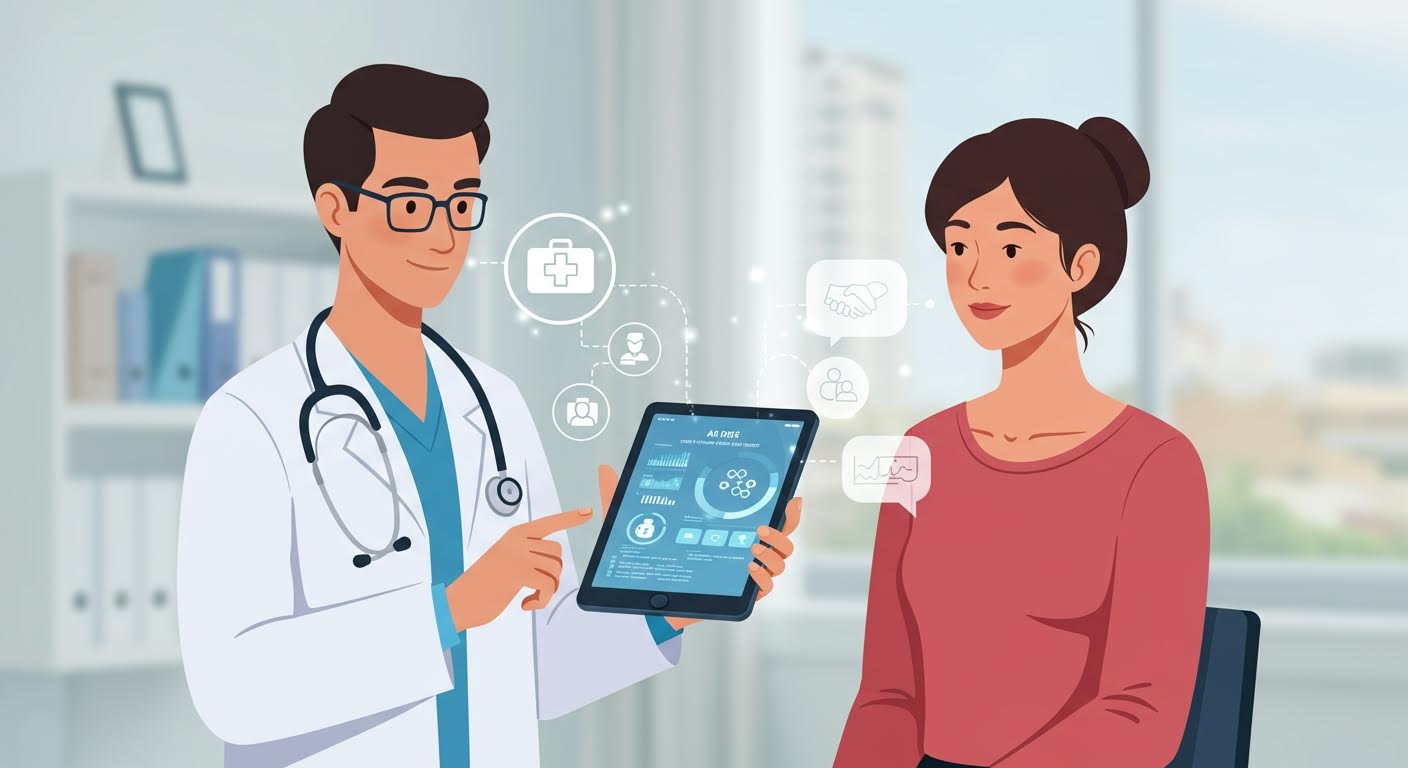
Healthcare has long struggled with a fundamental communication gap: the complex medical information that drives treatment decisions often remains incomprehensible to the patients it affects most. Now, artificial intelligence is bridging this divide, transforming how patients understand and engage with their health information.
Studies reveal that nearly 90 million American adults have limited health literacy, struggling to understand basic medical concepts that influence their care decisions. AI-powered tools are addressing this challenge by making medical data more interpretable, accessible, and actionable for patients across diverse healthcare settings.
Making Medical Imaging Results Accessible
Traditional medical imaging results—from X-rays to MRIs—have historically required specialized training to interpret. AI is changing this by using automated annotation systems that highlight key findings for patients in plain language.
Advanced machine learning algorithms can now analyze radiological images and generate patient-friendly explanations alongside visual markers that identify areas of concern or normalcy. These tools help patients understand what their scans reveal, reducing anxiety about unclear results and improving their ability to participate in treatment discussions.
Clinical implementations show that patients who receive AI-enhanced imaging explanations demonstrate better treatment compliance and report feeling more confident about their healthcare decisions. The visual nature of these tools particularly benefits patients with varying literacy levels.
Translating Medical Jargon into Plain Language
Natural language processing systems are revolutionizing how medical information reaches patients. These AI tools automatically translate complex medical terminology in lab reports, discharge summaries, and treatment plans into accessible language that patients can understand.
Healthcare systems are integrating these translation tools into patient portals, where AI algorithms analyze medical documents and provide simplified explanations alongside the original clinical text. The technology can adapt its explanations based on individual patient profiles, considering factors like education level and previous medical history.
Successful implementations have shown significant improvements in patient comprehension rates. Some healthcare networks report that patients who receive AI-translated medical information are more likely to follow treatment recommendations and ask informed questions during medical appointments.
Personalized Risk Assessment and Predictions
Machine learning algorithms are enabling more personalized approaches to health risk communication. These systems analyze individual patient data to generate tailored risk assessments that help patients understand their specific health scenarios and treatment options.
AI-driven prediction models can explain why certain treatments are recommended, what outcomes patients might expect, and how lifestyle changes could impact their health trajectories. These tools move beyond generic health information to provide insights relevant to each patient's unique circumstances.
AI-powered medication adherence tools help patients understand the importance of their prescribed treatments by explaining how medications work, potential side effects, and the consequences of missed doses in terms relevant to their specific conditions.
24/7 AI Health Assistants and Support
Conversational AI systems are providing round-the-clock support for patient questions and health concerns. These virtual assistants can access electronic health records to provide personalized responses about test results, medication schedules, and care instructions.
Advanced chatbot systems help patients navigate complex healthcare information, offering symptom checking capabilities and appropriate triage guidance. Unlike static educational materials, these AI assistants can engage in dynamic conversations that address specific patient concerns and provide immediate clarification.
Healthcare organizations implementing AI assistants report improved patient satisfaction scores and reduced calls to clinical staff for routine information requests, allowing healthcare teams to focus on more complex patient care needs.
Regulatory Framework and Safety Considerations
The FDA has established comprehensive guidelines for AI-enabled medical devices, requiring rigorous testing and validation before deployment in clinical settings. These regulations ensure that AI tools used for patient education and health communication meet safety and efficacy standards.
The World Health Organization has published ethical guidelines for AI implementation in healthcare, emphasizing the importance of transparency, accountability, and patient consent in AI-powered health communication tools. These frameworks address concerns about algorithmic decision-making in healthcare contexts.
Data privacy protections remain paramount, with healthcare organizations required to implement robust security measures for AI systems that process patient health information. Quality assurance protocols ensure that AI-generated health explanations remain accurate and up-to-date with current medical knowledge.
Challenges and Limitations
Despite promising developments, AI health communication tools face significant challenges. Algorithmic bias remains a concern, with some AI systems showing varying accuracy across different demographic groups, potentially exacerbating existing healthcare disparities.
The digital divide creates access barriers for underserved populations who may lack the technology or internet connectivity needed to benefit from AI-powered health tools. Healthcare organizations must consider these equity issues when implementing AI systems.
Accuracy limitations pose ongoing risks, as AI systems can sometimes generate misleading or outdated health information. Healthcare providers must maintain oversight to ensure AI tools complement rather than replace human medical judgment.
Integration challenges include the need for extensive healthcare provider training and the complexity of incorporating AI tools into existing clinical workflows without disrupting patient care.
Looking Ahead: The Future of AI-Powered Health Understanding
Emerging technologies promise even more sophisticated approaches to patient health communication. Integration with wearable devices and continuous monitoring systems could enable real-time, personalized health insights that help patients understand their health status as it changes.
Research developments in multimodal AI systems suggest future tools that could combine visual, audio, and text-based explanations tailored to individual learning preferences. These advances could further improve health literacy across diverse patient populations.
Early evidence suggests that widespread adoption of AI health communication tools could lead to improved health outcomes and reduced healthcare costs through better patient engagement and treatment compliance.
For patients, the key is to view AI tools as supplements to, not replacements for, healthcare provider communication. For healthcare systems, success requires thoughtful implementation that prioritizes accuracy, accessibility, and equity in AI-powered patient education initiatives.