How AI Is Accelerating Medical Research and Drug Discovery
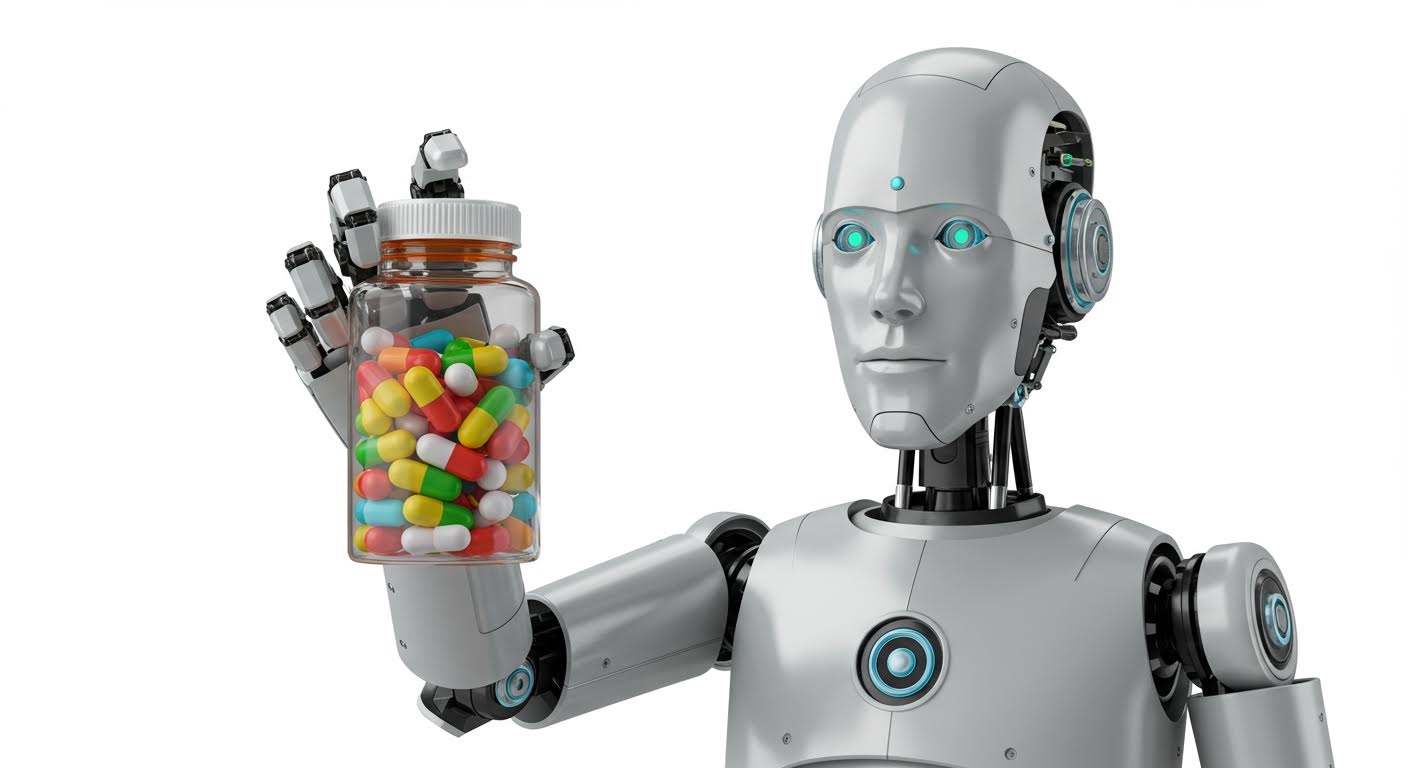
How AI Is Accelerating Medical Research and Drug Discovery
The journey from laboratory discovery to pharmacy shelf has traditionally been a marathon of 10 to 15 years, costing billions of dollars with failure rates exceeding 90%. This lengthy timeline has left countless patients waiting for treatments while researchers navigate complex biological puzzles through painstaking trial and error. But artificial intelligence is fundamentally reshaping this landscape, transforming medical research from a slow, intuitive process into a data-driven powerhouse that can analyze millions of possibilities in hours.
AI applications in medicine now span every stage of drug development—from initial target identification to final clinical validation. Machine learning algorithms predict protein structures, screen vast molecular libraries, optimize clinical trial designs, and enable personalized treatment approaches that were unimaginable just a decade ago.
Protein Structure Prediction: AlphaFold's Revolutionary Impact
No single AI advancement has captured the scientific community's attention quite like DeepMind's AlphaFold system. This revolutionary tool solved a 50-year-old challenge in biology by accurately predicting protein structures from amino acid sequences. Understanding how proteins fold into their three-dimensional shapes is crucial because structure determines function—and misfolded proteins are implicated in diseases from Alzheimer's to cancer.
AlphaFold's database now contains structure predictions for over 200 million proteins, effectively mapping the entire known protein universe. This treasure trove of structural data is accelerating research on multiple fronts. Researchers can now identify potential drug binding sites on disease-causing proteins within days rather than years, dramatically speeding up the early stages of drug discovery.
The practical impact extends beyond speed to entirely new possibilities. Scientists are using AlphaFold predictions to understand rare diseases caused by protein mutations, design more effective enzymes for biotechnology, and develop new approaches to antibiotic resistance by targeting previously unknown bacterial protein structures.
Accelerated Drug Compound Discovery and Screening
Traditional drug screening involves testing thousands of compounds against biological targets through labor-intensive laboratory experiments. AI is revolutionizing this process by analyzing millions of molecular compounds virtually before any physical testing begins. Machine learning models can predict how different molecules will interact with specific proteins, identifying the most promising candidates for further development.
These AI-powered screening systems consider molecular shape, chemical properties, potential toxicity, and bioavailability simultaneously. Companies like Atomwise, Benevolent AI, and Exscientia have developed platforms that can screen over 10 billion compounds in silico within weeks, compared to the months or years required for traditional methods.
The results speak for themselves: AI-discovered drug candidates are reaching clinical trials in 2-4 years compared to the traditional 6-8 year timeline. Exscientia made headlines when their AI-designed drug for obsessive-compulsive disorder became the first AI-discovered molecule to enter human clinical trials, requiring just 12 months from initial design to clinical testing.
Optimizing Clinical Trials Through Machine Learning
Clinical trials represent the most expensive and time-consuming phase of drug development, often accounting for 60-70% of total development costs. AI is transforming multiple aspects of this process, starting with patient recruitment. Machine learning algorithms can analyze electronic health records to identify suitable trial participants more efficiently, reducing recruitment time from months to weeks.
Predictive models are also improving trial design by analyzing historical data to identify which protocols are most likely to succeed. These systems can recommend optimal dosing strategies, predict potential side effects, and suggest biomarkers for monitoring treatment response. Some AI platforms can even simulate virtual clinical trials, testing different scenarios before committing resources to actual human studies.
Adaptive trial protocols powered by AI are particularly promising. These systems continuously analyze incoming data and can modify trial parameters in real-time, potentially stopping ineffective treatments early or adjusting dosing based on patient response patterns. This approach not only reduces costs but also minimizes patient exposure to ineffective or harmful treatments.
Personalized Medicine and Precision Treatment
AI's ability to analyze vast amounts of patient-specific data is ushering in an era of truly personalized medicine. Machine learning algorithms can process genomic data, medical histories, lifestyle factors, and biomarker profiles to predict how individual patients will respond to specific treatments. This represents a fundamental shift from the traditional one-size-fits-all approach to medicine.
Cancer treatment has seen some of the most dramatic advances. AI systems can analyze tumor genetics, immune system profiles, and treatment histories to recommend personalized therapy combinations. Platforms like IBM Watson for Oncology assist oncologists in selecting optimal treatment protocols based on individual patient characteristics and the latest research findings.
The integration of AI with electronic health records is creating comprehensive patient profiles that consider not just current symptoms but also genetic predispositions, environmental factors, and treatment response patterns. This holistic approach enables physicians to prescribe not just the right drug, but the right dose at the right time for each individual patient.
Regulatory Framework and Industry Adoption
Recognizing AI's transformative potential, regulatory agencies are developing new frameworks to evaluate AI-driven drug development. The FDA has published guidance documents addressing the use of artificial intelligence and machine learning in drug development and manufacturing, establishing pathways for companies to incorporate AI tools while maintaining safety and efficacy standards.
The National Institutes of Health has launched the Bridge2AI program, a $130 million initiative designed to generate high-quality, standardized biomedical datasets suitable for AI analysis. This program aims to address one of AI's biggest challenges: the need for large, diverse, and well-annotated datasets to train effective models.
Major pharmaceutical companies are making substantial investments in AI capabilities. Roche has partnered with companies like PathAI for AI-powered diagnostics, while Novartis has established dedicated AI research units. Tech giants including Google, Microsoft, and IBM are also heavily investing in healthcare AI, creating powerful collaborations between traditional pharmaceutical companies and technology innovators.
Future Outlook and Remaining Challenges
The future of AI in medical research appears increasingly promising. Industry analysts project that AI could reduce drug development timelines by 25-50% while improving success rates from the current 10-15% to potentially 25-30%. Emerging technologies like quantum computing could further accelerate molecular simulations, while advances in natural language processing are improving AI's ability to mine insights from scientific literature.
However, significant challenges remain. Data quality and bias issues can lead AI models to make incorrect predictions, potentially resulting in failed drug candidates or missed opportunities. The complexity of biological systems means that even the most sophisticated AI models are approximations of reality, and unexpected interactions or side effects can still occur.
Ethical considerations also demand attention. Questions about data privacy, algorithmic transparency, and equitable access to AI-driven treatments must be addressed as these technologies become more widespread. Additionally, the integration of AI tools into existing research workflows requires significant training and cultural changes within medical institutions.
Despite these challenges, the trajectory is clear: AI is not just supplementing traditional medical research but fundamentally transforming how we discover, develop, and deliver new treatments. As these technologies continue to mature, they promise to bring hope to patients with currently untreatable conditions while making healthcare more precise, effective, and accessible for everyone.