Google's Suncatcher Satellite Is Running AI Workloads in Orbit — Here's What's Confirmed and What's Still Unproven
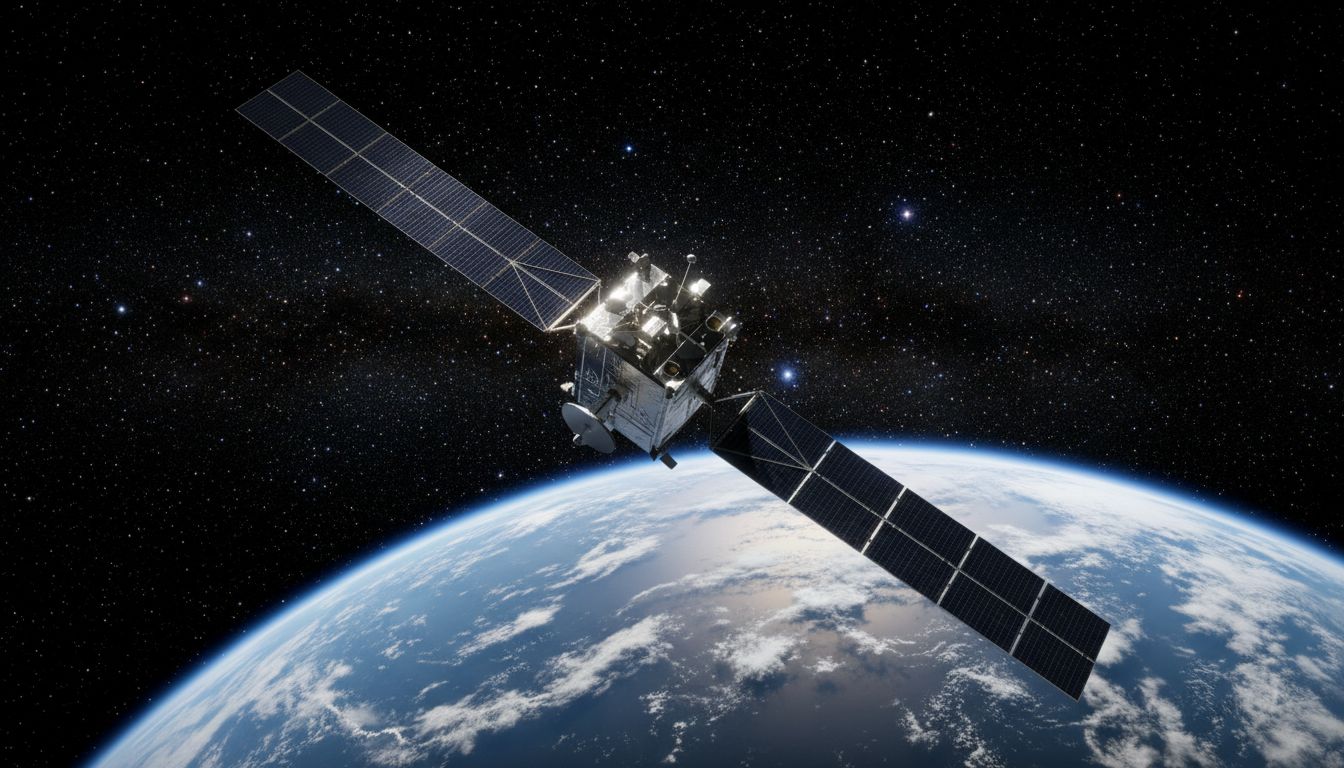
Google's Suncatcher Satellite Reaches Orbit and Runs Its First AI Workload
Google's Project Suncatcher, a research initiative exploring space-based AI data-center infrastructure, has reportedly reached a significant milestone. According to Google's own technical materials, a prototype satellite carrying four Google Tensor Processing Units has been commissioned in orbit and used to execute an AI inference workload — an early but notable step toward testing whether data centers could someday operate in space.
Commissioning the satellite reportedly took about three weeks before the first task was sent to the hardware. Some outlets covering the story, including a widely circulated TechCrunch report, described the workload as running Google DeepMind's "Gemma 4" model, including a demonstration involving AI-generated poetry. It's worth noting that Google's own published materials frame the project primarily around testing TPU viability and system design in orbit, rather than confirming a specific model version. Many observers have repeated the "Gemma 4" detail, but readers should treat that particular claim as reported rather than independently verified.
How the System Works: Power, Thermal, and Operational Limits
The satellite is capable of generating up to 1 kW of electricity, according to Google's technical disclosures. However, power and thermal constraints mean that only one of the four onboard TPUs can operate at a time, and only for sessions of roughly 20 minutes before it must be powered down.
These limitations underscore that this is very much an early-stage engineering test rather than anything resembling a production-scale system. The demonstration appears designed to validate basic feasibility — that a TPU can survive launch, operate in orbit, and complete a workload — rather than to showcase sustained computing capacity.
Why Google Is Betting on Space for AI Infrastructure
Google's stated rationale for exploring orbital data centers centers on two resources that are abundant in space but constrained on Earth: solar power and cooling. In orbit, satellites can potentially access near-continuous sunlight, avoiding the day-night power cycles that limit terrestrial solar generation, while the cold vacuum of space may offer passive cooling advantages for heat-generating hardware like TPUs.
Over the long term, Google has suggested these factors could reduce energy and land costs compared to building ever-larger terrestrial data centers to meet AI compute demand. That said, company materials and independent reporting consistently frame Project Suncatcher as a long-horizon "moonshot" — a speculative research bet rather than a near-term commercial deployment plan.
Open Technical and Economic Challenges
Several significant hurdles remain before space-based AI infrastructure could become practical at scale. One recurring concern is the risk of radiation-induced "bit flips" — a phenomenon in which cosmic radiation alters data stored in computer memory without triggering an obvious error, potentially corrupting results in ways that are difficult to detect.
Scaling beyond a single test satellite would also require networks of satellites communicating via inter-satellite optical links, a technically demanding undertaking that has not yet been proven at the scale envisioned for AI data centers.
Perhaps the most significant dependency is launch cost. Google's broader vision for space-based computing relies heavily on dramatic reductions in launch costs, which in turn depend on SpaceX's Starship vehicle achieving full and rapid reusability — a goal still in active development. One estimate circulating in coverage of the story suggested SpaceX might need roughly 1,800 Starship flights to replicate the kind of cost-reduction learning curve seen in other industries; this figure has been attributed to a specific analysis rather than confirmed as an industry consensus, and readers should treat it as one estimate among others. Broader economic viability for space-based AI infrastructure is not expected, even under optimistic projections, before the 2030s.
Context: Competitive Landscape and Corporate Backdrop
Google is not alone in exploring space-based compute. Other companies and ventures, including Starcloud and Cowboy Space, have signaled interest in similar concepts, suggesting a broader — if still nascent — industry trend toward evaluating orbital infrastructure for computing workloads.
On the financial side, it's worth noting that Alphabet, Google's parent company, holds a significant investment stake in SpaceX, which adds a layer of corporate interdependency to Suncatcher's reliance on Starship's development. Separately, reporting has noted that Alphabet's stock declined around the time of this news, with some observers linking the move to broader concerns about AI's effect on search advertising revenue growth. This context is worth noting as background, though it should not be read as a causal relationship between the satellite milestone and stock performance.
Independent outlets, including NPR and Scientific American, have corroborated key elements of the Suncatcher launch and testing timeline, lending additional credibility to the core milestone beyond Google's own announcements.
What Comes Next for Project Suncatcher
Google has reportedly outlined plans to launch additional satellites equipped with more advanced chips as a next phase of testing. Some coverage has pointed to a potential 2027 timeframe for these follow-up launches; this should be understood as a company projection rather than a firm commitment, as is common with early-stage research timelines in the space and AI sectors.
For now, the operational test described here represents a single, early data point in what Google itself frames as a multi-year experimental trajectory. Whether space-based AI data centers become technically and economically viable will depend on resolving the radiation, networking, and launch-cost challenges outlined above — questions that remain open as the project moves forward.