Giorgia Meloni’s Voice Trademark Filing Shows How Leaders Are Testing New Tools Against AI Deepfakes
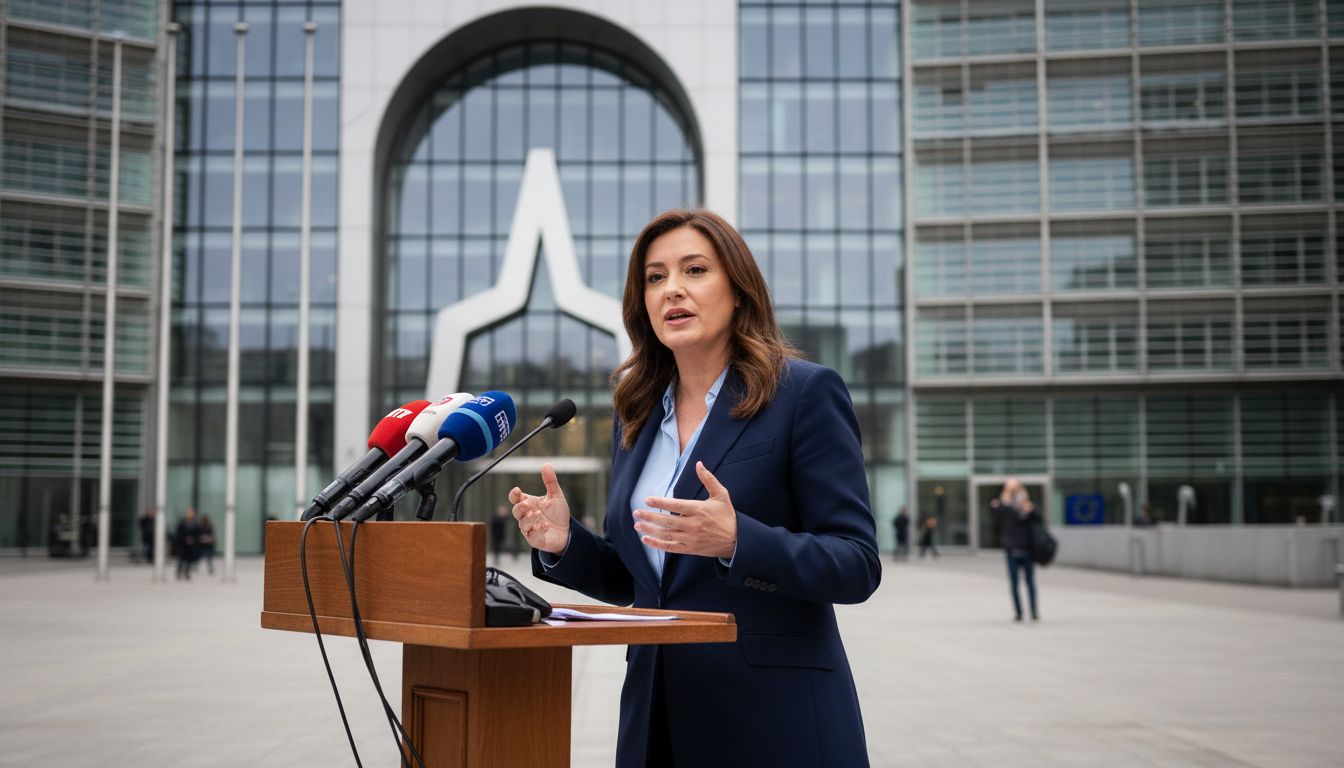
Italian Prime Minister Giorgia Meloni has reportedly filed an application with the European Union Intellectual Property Office to register a short recording of her voice as a sound trademark. At the center of the application is the phrase “Io sono Giorgia Meloni,” a brief audio clip that has become closely associated with her public image.
Many observers see the move as a notable response to the rise of AI-generated impersonation, especially voice deepfakes involving public figures. Rather than relying only on privacy claims, defamation law, or platform rules, the filing appears to test whether trademark law can serve as an additional defensive tool when synthetic media imitates a recognizable public identity.
What Meloni filed and why it matters
The filing has drawn attention because it applies a familiar area of intellectual property law to a newer AI problem. In simple terms, a trademark is meant to identify the source of goods or services. A sound mark can qualify in some cases, but only if it functions as a distinctive identifier rather than as ordinary speech.
That is why this filing matters beyond Italian politics. It suggests that public figures and their advisers are looking for practical legal hooks in a landscape where AI voice-cloning tools are becoming cheaper, faster, and more convincing. If a person’s signature phrase or vocal pattern can be tied to a legally recognized mark, it may create a new argument when someone uses that voice in a misleading or commercially suggestive way.
Still, the application should be understood as a targeted tactic, not a broad answer to deepfakes. Even supporters of this approach generally describe it as one more tool in the legal toolkit, not a complete solution.
What a voice trademark could and could not do
A trademark registration does not create full ownership over a person’s voice. Its role is narrower. Trademark law is mainly concerned with confusion, endorsement, commercial association, and source identification in defined legal contexts.
That means even if the application is approved, it would not automatically stop all AI-generated voice copies, political parody, noncommercial impersonation, or every misleading post circulating online. A cloned voice used in a meme, a manipulated political clip, or a piece of anonymous online content may fall outside the clearest trademark scenarios.
The stronger case for usefulness is more limited. A registered sound mark could potentially support enforcement where a copied voice is used in a way that implies official approval, branding, or association. In that sense, the filing may help create legal friction for certain kinds of misuse, especially when the content appears commercial or falsely suggests authenticity.
That distinction matters. The filing is best viewed as an effort to add legal leverage, not to establish a universal right to block any synthetic imitation of Meloni’s voice.
The legal hurdle: can a short spoken phrase qualify as a sound mark?
The biggest open question is whether the recording is distinctive enough to qualify as a registrable sound mark under EU rules. Not every sound, phrase, or spoken expression meets that threshold. For a mark to succeed, it generally must do more than exist; it must function in a way that tells the public something about source or identity in a trademark sense.
That makes short spoken phrases especially interesting. A phrase may be famous in public discourse yet still face scrutiny if examiners see it as ordinary language rather than as a true mark. European Union Intellectual Property Office guidance on sound marks provides a framework for how these filings are assessed, but each application turns on its particular facts and on how distinctiveness is interpreted.
Because the application is reportedly still under examination, success should not be assumed. The filing may ultimately be accepted, narrowed, or rejected. For now, it stands as an experiment in how far existing trademark categories can stretch to address AI-era impersonation concerns.
Why this reflects a bigger AI governance gap
Meloni’s filing also highlights a broader policy problem. AI-generated impersonation does not fit neatly into a single legal box. Depending on the situation, the harm may look like defamation, identity misuse, unfair competition, privacy invasion, reputational damage, or political deception. Existing laws can sometimes help, but often only partially.
That helps explain why public figures, celebrities, and brands are exploring multiple legal routes at once. Trademark law may offer one path. Publicity rights, where available, may offer another. Privacy, copyright, and platform moderation rules can also matter. But the patchwork nature of those protections is exactly what makes deepfake governance so unsettled.
In that sense, this case is less about one politician than about the legal system’s ongoing attempt to adapt. Many observers note that courts, regulators, and rights holders are still working case by case, using older doctrines to confront synthetic media capabilities that evolved much faster than the rules around them.
What to watch next
The next immediate question is whether the EU Intellectual Property Office accepts the sound mark and on what reasoning. If the application moves forward, legal experts will likely study whether the decision turns on the phrase’s recognizability, the way it is used, or the classes of goods and services claimed in the filing.
It will also be worth watching whether other politicians or other high-profile public figures adopt similar strategies. If more applications appear, that could signal a growing view that sound trademarks, while limited, may serve as a useful layer of protection in an AI-saturated media environment.
More broadly, the story points to a larger unresolved issue: whether lawmakers and courts will move toward clearer, more direct protections against unauthorized voice cloning. Until then, filings like this one may continue to serve as a practical, if incomplete, attempt to close part of the gap.