Eli Lilly Unveils World's First Pharmaceutical AI Supercomputer with 9,000 Petaflops for Drug Discovery
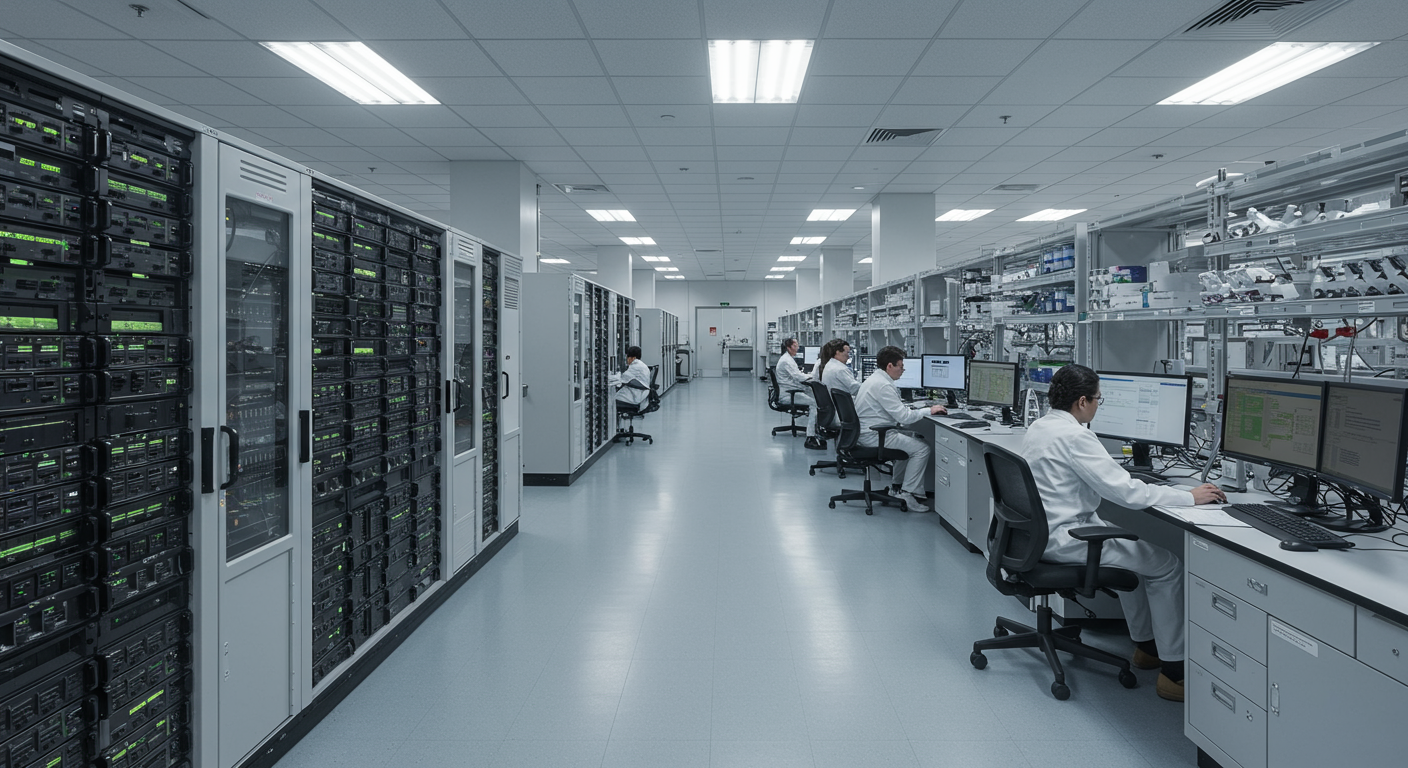
Pharmaceutical giant Eli Lilly has made history by launching what the company claims is the world's first dedicated pharmaceutical AI supercomputer, boasting an unprecedented 9,000 petaflops of computing power specifically designed for drug discovery and development.
This massive investment in AI infrastructure represents a significant leap forward in computational pharmaceutical research, positioning Lilly at the forefront of a potential revolution in how new medications are discovered, tested, and brought to market.
Unprecedented Computing Power for Drug Discovery
The 9,000 petaflops of processing capability puts Lilly's system among the most powerful computational resources in the world. To put this in perspective, a petaflop represents one quadrillion floating-point operations per second, making this supercomputer capable of performing mathematical calculations at a scale previously unimaginable in pharmaceutical research.
Unlike general-purpose supercomputers, Lilly's system has been specifically architected and optimized for AI workloads related to drug discovery. This specialized design allows for more efficient processing of the complex molecular simulations, protein folding predictions, and machine learning algorithms that are becoming increasingly central to modern pharmaceutical research.
The supercomputer integrates seamlessly with Lilly's existing research infrastructure, creating a unified platform that can handle everything from initial compound screening to advanced predictive modeling of drug efficacy and safety profiles.
Revolutionary Applications in Pharmaceutical AI
The supercomputer's primary applications center around several key areas of drug discovery that have traditionally been time-consuming and resource-intensive. Molecular modeling and simulation capabilities allow researchers to predict how potential drug compounds will interact with target proteins at an atomic level, dramatically accelerating the initial screening process.
Protein folding prediction represents another crucial capability. Understanding how proteins fold and misfold is essential for developing treatments for diseases like Alzheimer's, Parkinson's, and various cancers. The supercomputer can process these complex three-dimensional folding patterns far more quickly and accurately than traditional methods.
Machine learning algorithms running on the system can analyze vast datasets of chemical compounds, identifying patterns and relationships that human researchers might miss. This capability extends to predicting drug-target interactions, optimizing compound structures, and even forecasting potential side effects before expensive clinical trials begin.
Transforming Development Timelines and Costs
Traditional drug discovery is notoriously slow and expensive, with the average new medication taking 10-15 years and costing over $1 billion to bring to market. Much of this time and expense occurs in the early research phases, where thousands of potential compounds must be screened and tested.
Lilly's AI supercomputer has the potential to dramatically compress these early-stage timelines by rapidly identifying the most promising drug candidates and eliminating unlikely prospects before they consume significant resources. Computer simulations can replace many physical experiments, reducing both time and costs while potentially improving the success rate of compounds that advance to clinical trials.
The system's predictive modeling capabilities could also help researchers better understand which patient populations are most likely to benefit from specific treatments, enabling more targeted and effective clinical trial designs from the outset.
Industry Leadership and Competitive Implications
By launching the world's first pharmaceutical-specific AI supercomputer, Lilly has established itself as a clear leader in the intersection of artificial intelligence and drug discovery. This move is likely to accelerate competitive responses from other major pharmaceutical companies who will need to make similar investments to remain competitive in an increasingly AI-driven industry.
According to Reuters analysis, the announcement has significant implications for partnerships and collaborations within the pharmaceutical ecosystem. Technology companies specializing in AI hardware and software may find new opportunities to work with pharmaceutical giants, while academic research institutions could benefit from access to computational resources that would otherwise be prohibitively expensive.
The success of Lilly's initiative could catalyze industry-wide transformation, potentially leading to the emergence of AI-first pharmaceutical companies and fundamentally changing how the entire sector approaches drug discovery and development.
Challenges and Future Outlook
Despite the enormous potential, significant challenges remain for AI-driven drug discovery. Regulatory agencies like the Food and Drug Administration are still developing frameworks for evaluating AI-discovered drugs, and the pharmaceutical industry must navigate complex questions about data quality, algorithm transparency, and validation of AI-generated insights.
The quality and availability of training data represents another critical challenge. Machine learning algorithms are only as good as the data they're trained on, and pharmaceutical companies must ensure they have access to comprehensive, high-quality datasets while maintaining patient privacy and competitive advantages.
As reported by STAT News, while the supercomputer represents a major technological achievement, it will likely take several years before its impact becomes visible in the form of new medications reaching patients. The pharmaceutical development process, even when accelerated by AI, still requires rigorous clinical testing and regulatory approval.
However, if successful, Lilly's investment could herald a new era of pharmaceutical innovation, potentially leading to faster development of treatments for currently incurable diseases and more personalized medications tailored to individual patient characteristics.
The launch of this AI supercomputer marks not just a milestone for Eli Lilly, but potentially a turning point for the entire pharmaceutical industry as it embraces the transformative potential of artificial intelligence in the quest to develop life-saving medications.