Can AI Reduce Medical Errors or Create New Ones?
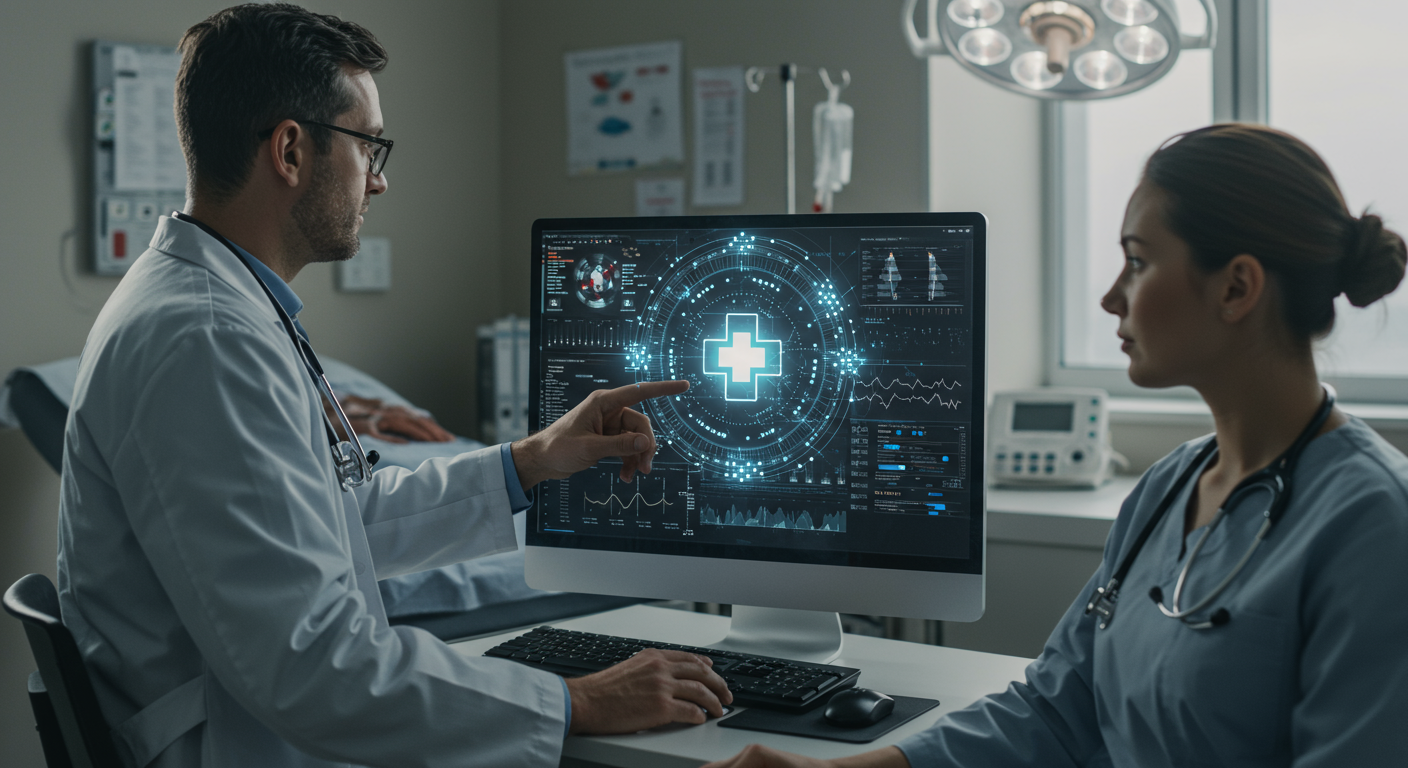
Medical error is already a major source of patient harm worldwide, which is why the rise of artificial intelligence in healthcare matters far beyond the technology sector. According to the World Health Organization, patient safety failures remain a major global concern. If AI can help clinicians catch subtle findings, flag deterioration earlier, or reduce preventable workflow mistakes, it could improve patient safety in meaningful ways. But if it is poorly designed, weakly validated, or used too broadly, it can also create new kinds of mistakes that are harder to detect until harm has already occurred.
That makes the central question a practical one: not whether AI is inherently safe or dangerous, but when it lowers risk and when it introduces new failure modes. In healthcare, medical errors can include diagnostic misses, treatment mistakes, delayed care, communication breakdowns, medication problems, and workflow failures that contribute to patient harm.
Where AI could reduce medical errors
AI shows the most promise in focused tasks where pattern recognition matters and important signals are easy for humans to miss. In medical imaging, pathology, and physiologic monitoring, machine-learning systems can be trained to detect patterns associated with disease, deterioration, or urgent abnormalities. In the best cases, this gives clinicians a second set of eyes and helps them spot findings they might otherwise overlook.
Decision-support tools are another area of potential benefit. Hospitals and clinics are testing AI systems for sepsis alerts, triage support, medication review, early warning scores, and risk prediction. Research published in JAMA and the New England Journal of Medicine has highlighted both the promise and the limits of these tools in clinical care. They can help surface patients who need faster attention, flag missing information, or prompt an extra review before a problem escalates. AI may also reduce some administrative and workflow-related errors by standardizing routine checks and helping teams prioritize urgent cases.
Still, the strongest evidence tends to be task-specific. A model may perform well for one narrow use, such as identifying a certain abnormality on a scan or supporting a specific screening workflow, without proving that AI broadly makes all of medicine safer. That distinction matters. Success in a tightly defined role is not the same as a general safety upgrade across the healthcare system.
Why promising results do not automatically translate to safer care
Many AI systems look impressive on curated datasets, benchmark tests, or controlled studies. But clinical care is messy. Patient populations differ across hospitals, data may be incomplete or inconsistent, and clinicians work under time pressure in environments full of interruptions. As studies in Nature and other journals have shown, a model that performs well in development can behave quite differently once it is exposed to real-world variation.
That gap between technical performance and patient-safety benefit is one of the biggest reasons for caution. A highly accurate tool can still fail to improve outcomes if it delivers its recommendation too late, interrupts workflow at the wrong moment, or produces so many false alarms that staff begin to ignore it. Likewise, a system that looks statistically strong may offer little practical value if it does not fit how clinicians actually make decisions.
In other words, model accuracy is not the same as safer care. What matters is whether the tool improves decisions, reduces preventable harm, and works reliably in the setting where it is deployed.
The new kinds of errors AI can introduce
AI does not just inherit existing healthcare risks; it can create distinct new ones. One major concern is bias from unrepresentative training data. If a model is built using data from limited populations, hospital systems, or clinical practices, it may perform worse for other groups, including underrepresented patients or people with rarer conditions. That can make care less equitable and, in some cases, less safe.
Another problem is poor generalization. A model trained in one institution may not transfer well to another because of differences in equipment, documentation, disease prevalence, or patient mix. This is often described as dataset shift, and it is especially important in medicine because small changes in context can have large effects on performance.
Calibration is also crucial. A model may produce risk estimates or recommendations that appear precise without matching reality in a given setting. If clinicians place too much trust in poorly calibrated outputs, AI can create false reassurance or direct attention the wrong way. Edge cases are another weakness. Systems may work reasonably well on common presentations while missing unusual or complex cases where human judgment is most needed.
Then there is the problem of silent degradation over time. Clinical practices change. Populations shift. Data inputs evolve. A model that was safe and useful at launch can become less reliable if no one is monitoring whether its performance is drifting.
The human factor: automation bias and overreliance
Even a technically sound system can contribute to error if people use it poorly. One well-known risk is automation bias, the tendency to defer to algorithmic outputs even when other evidence points in a different direction. In busy environments, AI recommendations can seem objective or authoritative simply because they come from a machine.
That can narrow attention and discourage a second look. A clinician who might otherwise question a result may be less likely to do so if the system appears confident. On the other hand, repeated low-value alerts can create alert fatigue, causing important warnings to be dismissed along with irrelevant ones. Poor interface design can make this worse by making it hard to understand why a recommendation was made or when it falls outside its intended use.
Human oversight matters, but it is not automatic. For oversight to be meaningful, clinicians need training, context, and enough authority to challenge or ignore the system when it does not fit the case. If AI is introduced as a black box that staff are expected to trust without understanding, the risk of overreliance grows.
Why regulation and oversight are central to the answer
Whether AI reduces medical errors depends heavily on governance. The U.S. Food and Drug Administration oversees many AI- and machine-learning-enabled medical devices, but regulation becomes more complex when software can be updated over time. The FDA notes that a static tool can be reviewed one way, while a system that changes after deployment raises additional questions about validation, accountability, and ongoing performance.
This is why intended use matters so much. A tool designed for one specific purpose should not be casually expanded into others without evidence. Before deployment, healthcare organizations need to know how a system was validated, what population it was tested on, where its limits are, and whether its performance holds across different settings.
Post-deployment monitoring is just as important as pre-launch testing. Hospitals and clinics need ways to detect drift, track unintended consequences, review inequitable outcomes, and investigate near misses. Governance is not separate from safety; it is one of the main conditions that determines whether AI helps or harms.
What safe deployment looks like in practice
The safest uses of AI tend to be narrow, well-defined, and continuously monitored. That means local validation before rollout, prospective testing in actual workflows, clinician training, audit trails, and clear escalation pathways when the tool conflicts with human judgment or other evidence.
It also means integrating AI in ways that support rather than replace clinical decision-making. In high-stakes situations, the goal should usually be augmentation, not abdication. A useful system can highlight risk, organize information, or prompt review without becoming the unquestioned final word.
Healthcare organizations should also measure the outcomes that matter most: patient harm, missed diagnoses, delayed treatment, unsafe medication events, and other real-world error rates. Technical metrics such as sensitivity, specificity, or area under the curve are valuable, but they are not enough on their own. A model should be judged by whether it improves care in practice.
Bottom line
AI can reduce some medical errors, but only under the right conditions. It is most likely to help when the task is specific, the model is well validated, clinicians remain meaningfully involved, and performance is monitored after launch. It is most likely to create new errors when it is deployed broadly without representative data, workflow fit, oversight, or mechanisms to catch drift and misuse.
So the answer is both encouraging and cautionary. AI is not an automatic safety upgrade for medicine. It is a conditional tool. Used carefully, it can make some parts of care safer. Used carelessly, it can add another layer of risk to a system that already has little margin for error.