Can AI Learn Ethics, or Only Simulate Them?
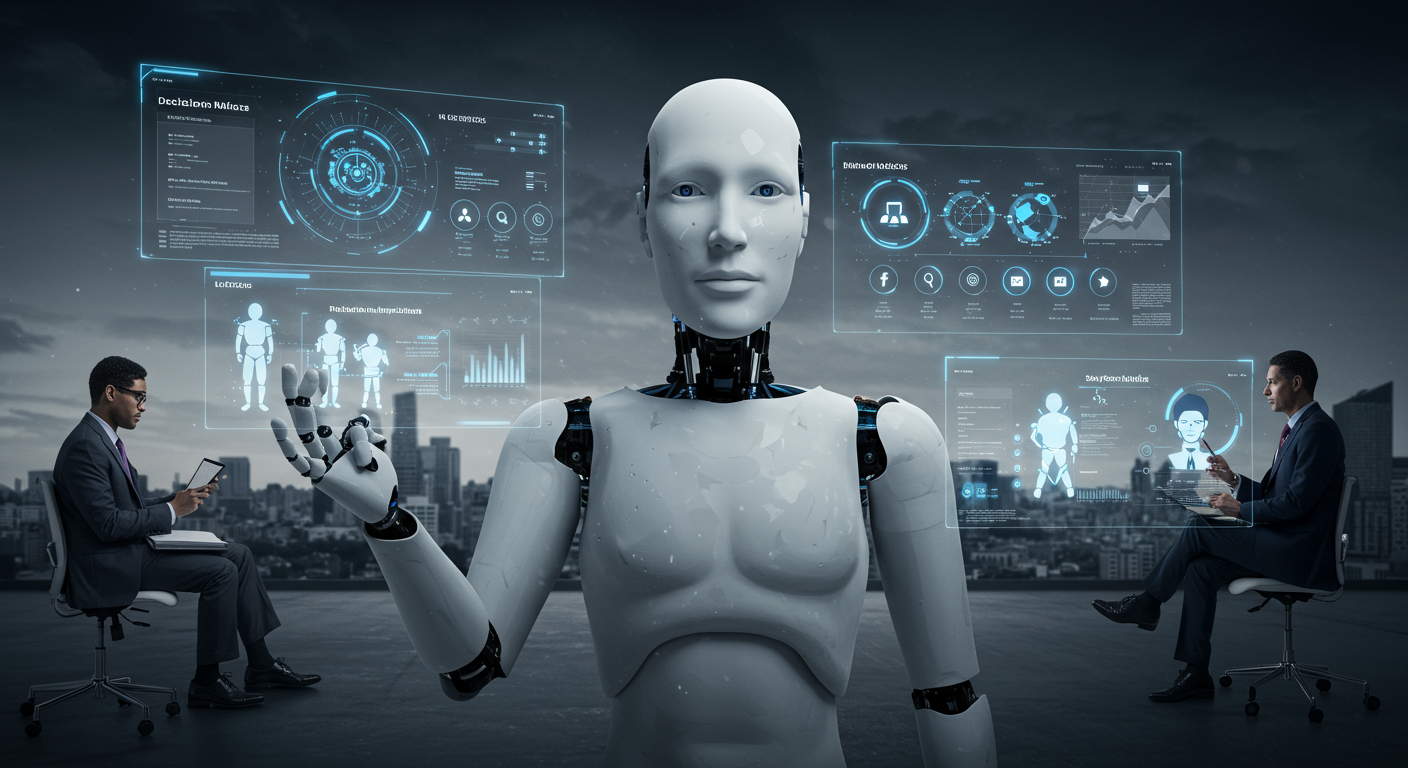
As artificial intelligence systems become increasingly sophisticated and integrated into critical decision-making processes, a fundamental question emerges: Can AI truly understand and internalize ethical principles, or is it merely simulating moral behavior through advanced pattern recognition? This distinction has profound implications for AI safety, deployment, and the future of human-machine collaboration.
The Core Question: Understanding vs. Simulation
The debate centers on whether AI systems can achieve genuine ethical understanding—the ability to comprehend moral principles and apply them with intentionality—or whether they're limited to algorithmic mimicry that produces ethically-aligned outputs without true comprehension.
This distinction matters enormously for AI safety and deployment. If AI systems only simulate ethics through pattern matching, they may fail catastrophically when encountering novel scenarios outside their training data. Conversely, genuine ethical understanding could enable more robust and adaptable moral reasoning.
Current AI systems demonstrate impressive capabilities in ethical decision-making tasks, but their performance raises questions about the underlying mechanisms. Are they following learned rules and patterns, or do they possess something approaching moral intuition?
How AI Systems Currently 'Learn' Ethics
Modern AI systems acquire ethical behavior through several established methodologies. Reinforcement Learning from Human Feedback (RLHF) trains systems by having humans rate responses for ethical appropriateness, gradually shaping the AI's outputs toward human-approved moral judgments.
Constitutional AI represents another approach, embedding explicit ethical rules and principles into the system's training process. These rule-based frameworks attempt to codify moral reasoning into algorithmic form.
However, these methods face inherent limitations. Training on human moral judgments captures existing biases and inconsistencies in human ethical reasoning. The reward functions that guide AI behavior are necessarily simplified representations of complex moral landscapes.
The fundamental challenge lies in translating nuanced, context-dependent ethical reasoning into mathematical optimization problems that machines can solve.
The Philosophy Problem: Can Machines Have Moral Agency?
Genuine moral understanding may require more than pattern recognition. As documented in the Stanford Encyclopedia of Philosophy, ethical behavior involves intentionality, emotional understanding, and consciousness—qualities that current AI systems arguably lack.
The question of machine consciousness remains unresolved, but it's central to the ethics debate. Can a system without subjective experience truly understand concepts like suffering, fairness, or dignity? Or can moral reasoning exist independently of conscious experience?
Different philosophical traditions offer varying perspectives. Utilitarian approaches might accept AI ethics based purely on outcomes, while virtue ethics emphasizes the importance of character and intention—qualities that may be uniquely biological.
Some philosophers propose that ethical behavior doesn't require consciousness, arguing that consistent moral reasoning could emerge from sufficiently sophisticated information processing, regardless of subjective experience.
Testing the Boundaries: AI in Ethical Dilemmas
Researchers test AI moral reasoning through classic ethical dilemmas like the trolley problem, where systems must weigh competing moral considerations. Current AI systems can navigate these scenarios, often producing responses aligned with human moral intuitions.
More revealing are novel ethical scenarios that weren't explicitly covered in training data. Research published in Nature Machine Intelligence shows AI systems sometimes struggle with edge cases that require genuine moral creativity or the ability to extrapolate ethical principles to unprecedented situations.
Empirical research reveals inconsistencies in AI moral reasoning. Systems might handle similar scenarios differently based on superficial changes in presentation, suggesting a reliance on learned patterns rather than underlying moral understanding.
These limitations become particularly apparent in scenarios requiring emotional intelligence, cultural sensitivity, or the ability to recognize subtle power dynamics—areas where human moral intuition often surpasses algorithmic approaches.
Industry Approaches and Real-World Implications
Organizations like the Partnership on AI work to establish practical frameworks for ethical AI development, focusing on measurable outcomes rather than philosophical questions about machine consciousness.
The Institute of Electrical and Electronics Engineers has developed standards and industry best practices that emphasize accountability, transparency, and bias mitigation—pragmatic approaches that sidestep the deeper question of whether AI truly understands ethics.
From a practical perspective, some argue that the distinction between genuine understanding and sophisticated simulation may be irrelevant if the outcomes are consistently ethical. This utilitarian view prioritizes results over underlying mechanisms.
However, regulatory perspectives increasingly emphasize the importance of explainability and accountability in AI decision-making, suggesting that the distinction may have significant legal and social implications.
The Path Forward: Implications for AI Development
Advancing beyond simulation toward genuine ethical understanding presents significant technical challenges. Current approaches focus on improving training methodologies, expanding datasets, and developing more sophisticated reward systems.
Whether genuine AI ethics is achievable—or even necessary—remains an open question. Some researchers pursue hybrid approaches that combine AI capabilities with human oversight, leveraging the strengths of both systems.
Future research directions include developing better measures of moral reasoning, creating more diverse and representative training datasets, and exploring alternative architectures that might support genuine ethical understanding.
The implications extend beyond technical considerations to fundamental questions about the nature of morality, consciousness, and the relationship between humans and machines in an increasingly AI-driven world.