Can AI Help Us Live Longer — or Just Longer With More Data?
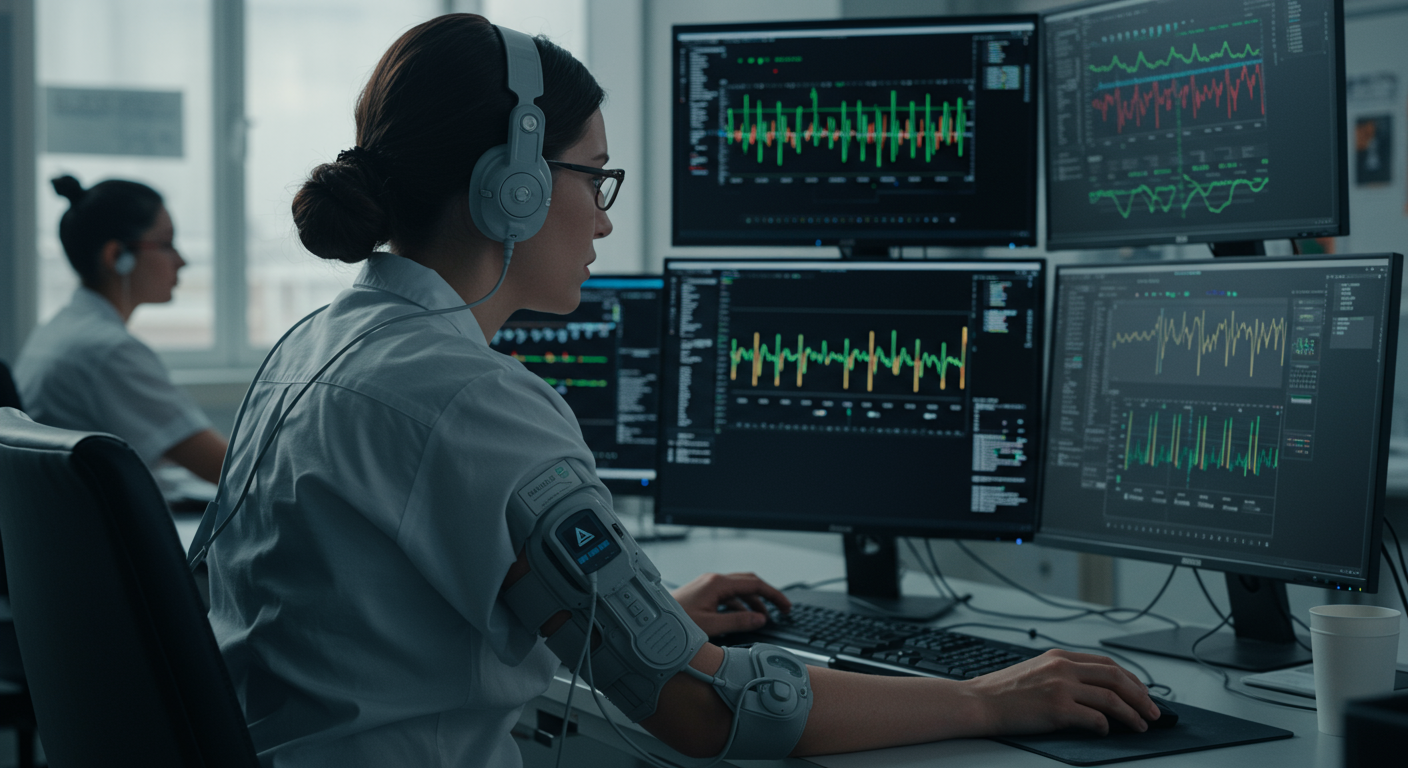
The promise of artificial intelligence extending human lifespan has captured imaginations and investments worldwide, but a fundamental question persists: Are we developing technologies that will genuinely help us live longer, healthier lives, or are we simply creating more sophisticated ways to measure our aging process? This distinction between meaningful longevity enhancement and data-rich health monitoring represents one of the most critical considerations in modern aging research.
AI's dual role in this space is becoming increasingly apparent. On one hand, machine learning algorithms are accelerating drug discovery, identifying novel therapeutic targets, and personalizing interventions in ways that could genuinely extend healthspan. On the other hand, much of the current AI longevity landscape focuses on increasingly precise measurement and prediction without necessarily delivering actionable interventions that change outcomes.
AI-Driven Drug Discovery: Targeting the Biology of Aging
Perhaps the most promising application of AI in longevity lies in drug discovery, where machine learning is fundamentally changing how researchers identify and develop anti-aging compounds. Traditional drug discovery for age-related diseases can take decades and cost billions of dollars, but AI algorithms can rapidly screen millions of molecular compounds, predict their interactions with biological targets, and identify promising candidates for further development.
Machine learning models excel at molecular modeling and target identification for age-related diseases. These systems analyze vast databases of chemical compounds and biological interactions to identify molecules that might modulate key aging pathways, such as cellular senescence, mitochondrial dysfunction, or protein aggregation. The ability to predict how different compounds might affect these fundamental aging mechanisms represents a significant advancement over traditional trial-and-error approaches.
Several AI-discovered interventions are now moving through clinical trials, though most remain in early stages. Companies are using machine learning to identify compounds that might extend cellular lifespan, reduce inflammation associated with aging, or enhance cellular repair mechanisms. However, as research published in Nature Medicine indicates, the timeline for breakthrough therapies remains measured in years to decades rather than months, and realistic expectations must account for the complex regulatory and safety requirements that govern anti-aging interventions.
Biological Age Clocks: Measuring What Matters
One of the most visible applications of AI in longevity research has been the development of biological age clocks—algorithms that analyze various biomarkers to estimate how quickly an individual is aging relative to their chronological age. These multi-omics approaches integrate data from genomics, proteomics, metabolomics, and other biological measurements to create sophisticated aging profiles.
AI excels at integrating these diverse data types because aging affects multiple biological systems simultaneously. Machine learning algorithms can identify patterns across thousands of biomarkers that would be impossible for human researchers to discern manually. These patterns can reveal whether someone's biological age is accelerated or decelerated compared to their chronological age, potentially identifying individuals who might benefit from specific interventions.
However, a critical distinction exists between biological age prediction and actionable health insights. While AI can increasingly accurately estimate biological age, the clinical utility of this information depends on whether it leads to effective interventions. The most sophisticated aging clock is primarily a measurement tool unless it connects to therapies or lifestyle modifications that can meaningfully alter the aging trajectory it measures.
Validation challenges also persist in this field. Many aging clocks have been developed on specific populations and may not generalize broadly. Clinical utility requires not just accurate prediction but demonstrated ability to guide interventions that improve health outcomes over time.
Personalized Longevity Medicine
AI's pattern recognition capabilities are enabling increasingly personalized approaches to longevity medicine. Rather than applying one-size-fits-all interventions, machine learning algorithms can analyze individual aging patterns, genetic profiles, lifestyle factors, and environmental exposures to tailor specific recommendations for each person.
This personalized approach extends to early detection capabilities for age-related diseases. AI systems can identify subtle patterns in health data that might indicate the early stages of cardiovascular disease, neurodegeneration, or metabolic dysfunction before symptoms become apparent. Early detection creates opportunities for intervention that could prevent or delay disease progression.
The integration of lifestyle, genetic, and environmental factors represents a particularly promising application. AI can analyze how different combinations of diet, exercise, stress levels, sleep patterns, and genetic predispositions interact to influence individual aging trajectories. This holistic analysis could enable more effective and targeted longevity interventions.
However, success metrics remain crucial. The goal should be healthspan extension—maintaining functional capacity and quality of life—rather than simply optimizing biomarkers. An intervention that improves aging biomarkers but doesn't translate to better physical function, cognitive performance, or overall wellbeing may represent sophisticated measurement rather than meaningful improvement.
The Data Dilemma: Privacy, Bias, and Equity
The extensive health monitoring required for AI longevity applications raises significant privacy and security concerns. Effective aging analysis requires intimate biological and lifestyle data, creating detailed profiles that could be valuable to insurers, employers, or other entities in ways that might disadvantage individuals. The long-term storage and use of such comprehensive health data requires robust privacy protections that may not currently exist.
Algorithmic bias represents another significant challenge in AI longevity applications. If aging research and AI model development focus primarily on specific demographic groups, the resulting algorithms may not work effectively for diverse populations. This could exacerbate existing healthcare disparities, with some groups receiving more accurate assessments and better interventions than others.
Healthcare equity implications extend beyond algorithmic bias to access and affordability. Advanced AI longevity tools may initially be available primarily to wealthy individuals or those in well-resourced healthcare systems, potentially widening longevity gaps between different socioeconomic groups. Research published in The Lancet Digital Health emphasizes that ensuring broad access to beneficial longevity interventions requires careful consideration of cost, distribution, and healthcare system integration.
Regulatory and ethical frameworks for AI longevity applications remain underdeveloped. Current medical device and drug regulations may not adequately address the unique challenges posed by AI systems that continuously learn and evolve, or by interventions targeted at aging rather than specific diseases.
The Critical Question: Substance vs. Surveillance
The fundamental question facing AI longevity applications is whether they genuinely extend healthy lifespan or primarily represent sophisticated surveillance of the aging process. Much of the current focus on measurement and prediction could lead to a scenario where we have unprecedented detail about how we age without meaningfully changing the aging trajectory.
The risk of measurement without meaningful intervention is particularly relevant given the commercial incentives in the longevity space. Companies may focus on developing impressive diagnostic and monitoring capabilities that generate revenue through ongoing measurement rather than investing in more challenging therapeutic interventions that could actually modify aging processes.
Distinguishing between health optimization and health quantification requires careful evaluation of outcomes. True health optimization should result in improved functional capacity, enhanced quality of life, reduced disease incidence, or extended healthspan. Health quantification, while potentially valuable, primarily provides more detailed information about health status without necessarily changing it.
A framework for assessing real longevity value in AI applications might include: demonstrated improvement in meaningful health outcomes, not just biomarker optimization; evidence that interventions guided by AI analysis outperform standard approaches; and validation that measurement capabilities translate into actionable interventions with proven benefits.
Looking Forward: Realistic Timelines and Expectations
The current state of AI longevity research shows promise but remains largely in early development stages. Most AI-driven drug discovery efforts are in preclinical or early clinical phases, biological age clocks require further validation for clinical utility, and personalized longevity interventions need more evidence of effectiveness.
Key milestones to watch for substantive breakthroughs include successful clinical trials of AI-discovered longevity interventions, validation of aging biomarkers that reliably guide effective treatments, and demonstration that AI-guided personalized approaches meaningfully outperform standard medical care in extending healthspan.
Balancing optimism with scientific realism requires acknowledging both the genuine potential and current limitations of AI longevity applications. While the theoretical foundation is strong and early results are encouraging, as recent studies in the New England Journal of Medicine demonstrate, translating these capabilities into proven longevity benefits will likely require years of additional research and validation.
For individuals navigating AI longevity tools today, the most valuable approach may be focusing on applications that connect measurement to proven interventions. Tools that identify opportunities for evidence-based lifestyle modifications, early detection of treatable conditions, or optimization of established health practices may provide more immediate benefits than those focused primarily on novel biomarker measurement or speculative interventions.
The question of whether AI will help us live longer or just longer with more data ultimately depends on how we develop and deploy these technologies. The technical capabilities exist to support both outcomes, making the choices we make about research priorities, regulatory frameworks, and commercial incentives crucial in determining whether AI becomes a genuine longevity breakthrough or an elaborate measurement system for watching ourselves age.