AI Revolution Transforms Radiology Departments Across Healthcare Systems
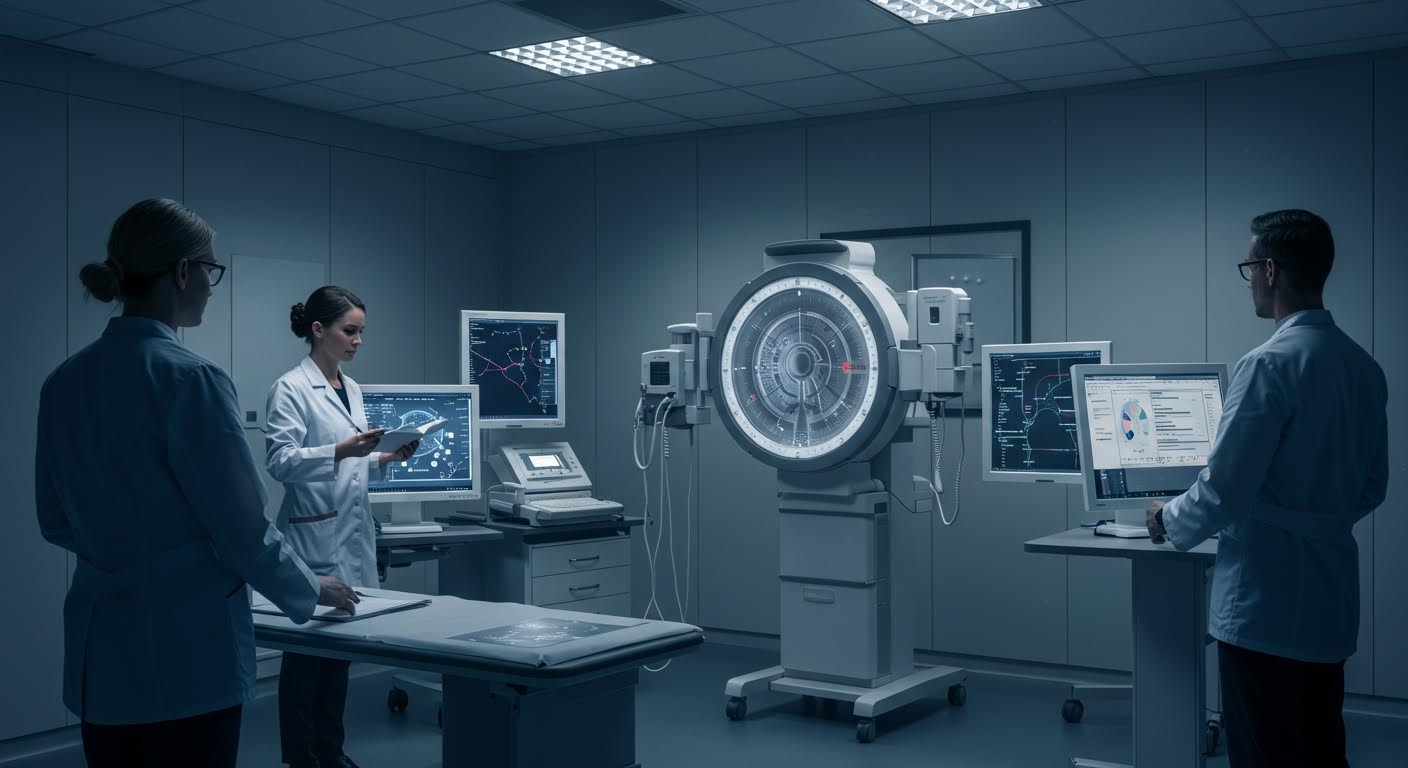
The Digital Transformation of Medical Imaging
Radiology departments across the United States are experiencing a fundamental shift as artificial intelligence becomes increasingly integrated into diagnostic workflows. Machine learning algorithms now assist radiologists in interpreting medical images, detecting abnormalities, and prioritizing urgent cases with unprecedented accuracy and speed.
This transformation goes beyond simple automation—it represents a comprehensive reimagining of how medical imaging operates. AI tools enhance diagnostic capabilities while streamlining workflows, allowing radiologists to focus on complex cases that require human expertise and clinical judgment.
The impact is most pronounced in chest X-ray interpretation, mammography screening, and stroke detection, where AI systems demonstrate remarkable performance in identifying critical findings that need immediate attention.
FDA Regulatory Framework and Approved AI Tools
The Food and Drug Administration has established clear pathways for AI and machine learning-enabled medical devices, ensuring these tools meet rigorous safety and efficacy standards before reaching clinical practice. The FDA's framework addresses the unique challenges posed by AI systems that can learn and adapt over time.
Currently, dozens of AI-enabled radiology tools have received FDA clearance or approval, covering applications from chest imaging and mammography to neurological imaging and cardiovascular assessment. These approved systems must demonstrate clinical validation through peer-reviewed studies and real-world performance data.
Regulatory compliance requires radiology departments to maintain detailed documentation of AI tool performance, implement quality assurance protocols, and ensure proper staff training on FDA-approved applications. This regulatory oversight provides confidence in the clinical reliability of AI-assisted diagnostics.
Diagnostic Accuracy and Clinical Evidence
Peer-reviewed research consistently shows that AI systems can match or exceed human radiologist performance in specific diagnostic tasks. Studies published in Nature Medicine and other leading medical journals show AI achieving superior accuracy rates in detecting diabetic retinopathy, skin cancer, and certain types of lung nodules.
Clinical validation studies use rigorous methodologies, comparing AI performance against expert radiologist interpretations using large datasets of diverse patient populations. These studies reveal that AI excels particularly in pattern recognition tasks and screening applications where consistency is crucial.
Real-world performance data from early adopting institutions confirms laboratory findings, with AI systems maintaining high accuracy rates in clinical practice while reducing interpretation times and improving workflow efficiency. However, these tools are designed to augment rather than replace radiologist expertise.
Workflow Integration and Efficiency Gains
Modern AI tools integrate seamlessly with existing Picture Archiving and Communication Systems (PACS) and radiology information systems, minimizing disruption to established workflows. These integrations allow AI algorithms to analyze images automatically as they're acquired, providing real-time insights to radiologists.
Time savings from AI assistance are substantial, with studies showing reductions of 20-30% in interpretation times for routine studies. AI systems excel at triaging cases, automatically flagging urgent findings and prioritizing worklists to ensure critical cases receive immediate attention.
Leading medical centers report significant improvements in turnaround times, with AI-assisted workflows enabling faster diagnosis and treatment initiation. These efficiency gains are particularly valuable in emergency departments where rapid diagnosis can be life-saving.
Implementation Challenges and Solutions
Successful AI implementation requires comprehensive staff training and change management strategies. Radiologists and technologists must understand AI capabilities, limitations, and proper utilization to maximize benefits while maintaining clinical oversight.
Technical integration challenges include ensuring adequate IT infrastructure, data security protocols, and system interoperability. Radiology departments must work closely with IT teams and AI vendors to address connectivity, storage, and processing requirements.
Quality assurance protocols are essential for ongoing AI performance monitoring. Departments must establish procedures for validating AI outputs, tracking accuracy metrics, and identifying cases where AI assistance may be less reliable.
Cost considerations vary depending on implementation scope and vendor agreements. While initial investments can be substantial, return on investment typically materializes through improved efficiency, reduced interpretation times, and enhanced diagnostic capabilities.
Professional Standards and Best Practices
The American College of Radiology's Data Science Institute provides comprehensive guidelines for AI implementation in radiology practice. These standards address technical requirements, clinical validation, quality assurance, and professional development needs.
Industry frameworks emphasize responsible AI deployment, requiring transparency in algorithm decision-making, bias mitigation strategies, and continuous performance monitoring. These frameworks ensure AI tools enhance rather than compromise diagnostic quality.
Professional development requirements for radiologists increasingly include AI literacy training, covering algorithm fundamentals, clinical applications, and quality assurance principles. This education ensures radiologists can effectively collaborate with AI systems.
Collaborative approaches between AI vendors and medical institutions foster innovation while maintaining clinical relevance. These partnerships enable continuous improvement of AI tools based on real-world clinical feedback and emerging diagnostic challenges.
Future Outlook and Emerging Trends
Next-generation AI capabilities in development include multimodal analysis combining imaging with clinical data, predictive analytics for treatment planning, and automated report generation with structured findings. These advances promise even greater integration of AI into radiological practice.
Applications are expanding beyond traditional diagnostic imaging to include treatment monitoring, surgical planning, and personalized medicine approaches. AI systems are being developed to assist with radiation therapy planning, interventional radiology procedures, and longitudinal disease monitoring.
The radiology workforce will continue evolving as AI becomes ubiquitous, with radiologists increasingly focusing on complex cases, clinical consultation, and AI oversight responsibilities. Training programs are adapting curricula to include AI principles and applications.
Market predictions suggest continued rapid growth in AI adoption, with most radiology departments expected to implement some form of AI assistance within the next decade. This widespread adoption will further validate AI's role as an essential tool in modern medical imaging.