AI Interview Cheating Is Becoming a Serious Hiring Concern
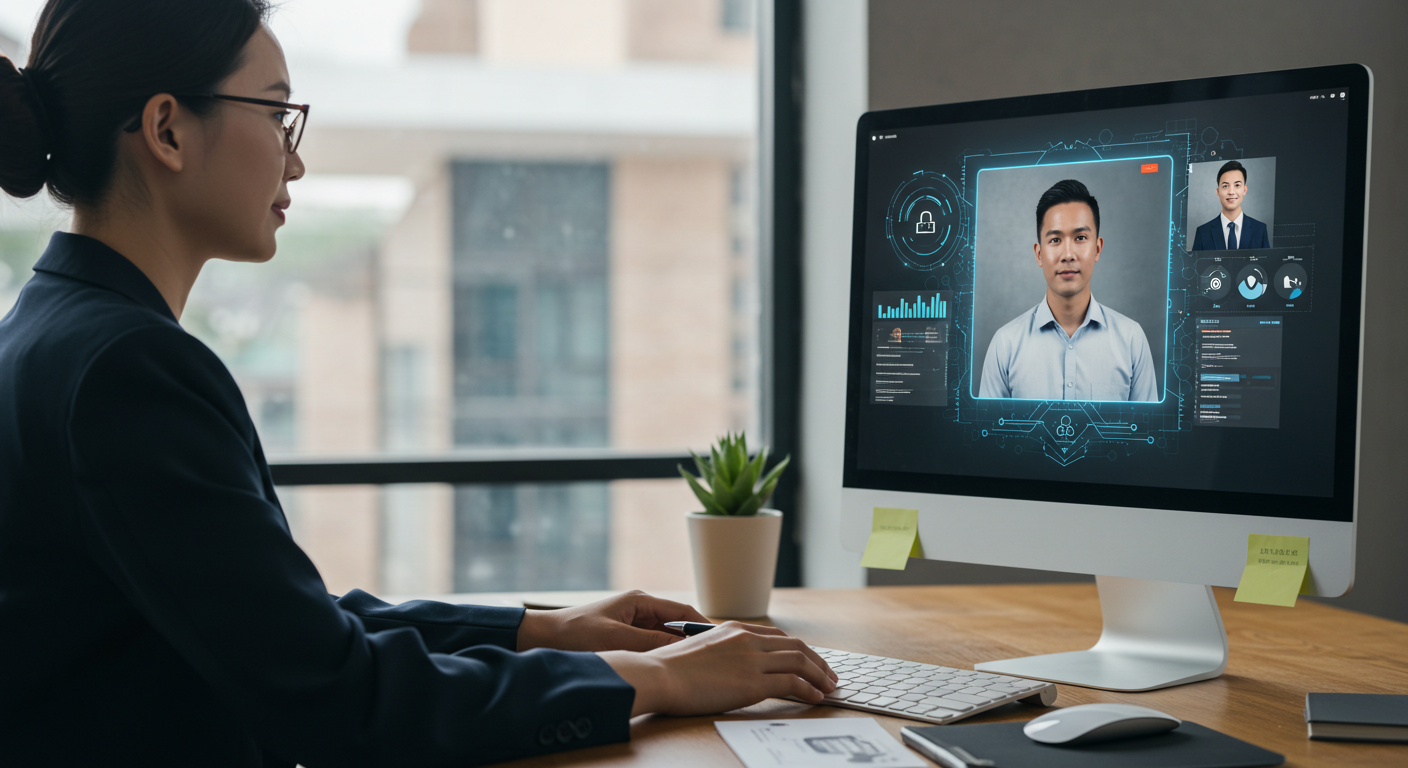
Artificial intelligence is reshaping hiring on both sides of the screen. Companies now use AI to sort resumes, screen applicants, and automate recruiting tasks. At the same time, employers are growing more concerned that some candidates may be using AI to game the interview process itself.
That concern covers a range of behaviors: candidates receiving real-time AI-generated answers during interviews, stand-ins completing screening steps on someone else’s behalf, and, in more extreme cases, identity masking or synthetic media used to misrepresent who is actually being evaluated. Current reporting and employer surveys make one thing clear: this is now a serious hiring concern. What remains less clear is how often suspected misconduct is actually confirmed.
Why AI-driven interview fraud is on employers’ radar
The clearest quantitative signal in the current source set comes from a ResumeBuilder survey on AI use in hiring. Surveys like that can help show what hiring managers believe they are seeing, but it is important to distinguish suspicion from verified incidence. A hiring manager who suspects a candidate used AI during an interview is not describing the same thing as a documented case of deception.
That distinction matters because the most dramatic versions of this story can outrun the evidence. Employers do seem increasingly alert to the possibility that candidates are using new tools to exaggerate skills or present themselves differently in remote interviews. But without broader time-series data or audited case counts, it is more accurate to describe AI interview cheating as a growing concern than as a definitively measured surge.
What counts as interview fraud in the AI era
Not every use of AI by a job seeker is deceptive. Many candidates now use AI for legitimate preparation, such as refining resumes, practicing common interview questions, researching companies, or organizing talking points. Those uses are closer to coaching or editing than fraud.
The line is usually crossed when AI or another person is used to misrepresent the candidate’s actual abilities during a live evaluation. That can include real-time answer generation through hidden prompts, unauthorized coaching during a technical screen, a proxy interviewer taking an assessment in place of the applicant, or identity-related deception that obscures who is actually participating.
Remote hiring workflows create more opportunities for these tactics. When interviews take place through laptops, messaging apps, shared documents, and unsupervised assessments, outside tools or third parties can influence the outcome more easily and with less obvious detection.
What the evidence actually supports
The available evidence supports two cautious conclusions. First, employers are worried enough about AI-assisted cheating that the issue is now part of mainstream hiring discussion. Second, there are credible reports and practitioner guidance from organizations such as SHRM, HR Dive, and LinkedIn Talent Blog suggesting that real cases have occurred across screening, interviewing, and skills testing.
What the evidence does not yet firmly establish is the full scale of the problem. Survey results can show how many managers suspect cheating or say they have encountered it, but those findings depend heavily on question wording, sample design, and how respondents define AI misuse. They are useful indicators of employer sentiment, not definitive proof of prevalence across all industries.
That is especially important with headline figures. A number like 59% may be eye-catching, but it should be understood as a survey result tied to a specific methodology, not as a population-wide measure of confirmed fraud.
Why employers are struggling to detect it
AI tools can now produce polished, immediate answers that sound fluent and well structured, even when a candidate’s underlying knowledge is weak. In a conventional interview, that makes it harder for employers to tell whether they are hearing original reasoning, memorized responses, or machine-assisted output.
There is also a practical detection problem. Candidates may pause because they are nervous, because they are thinking carefully, because they are relying on accessibility tools, or because they are being fed answers. Those situations can look very similar on a video call. The same ambiguity applies to eye movement, typing sounds, off-screen glances, and unusually polished responses.
Remote interviewing also removes some of the natural friction that once helped verify authenticity. In-person interviews, whiteboard exercises, and supervised assessments offered more direct ways to confirm identity and observe spontaneous thinking. Digital hiring can be faster and more flexible, but it can also weaken those checks if the process is not redesigned for the AI era.
How companies are responding
Many employers are moving toward assessments that are harder to fake. That can include live problem-solving, portfolio walkthroughs, follow-up questions that probe how a candidate reached an answer, and multi-stage interviews involving different evaluators. The goal is to test reasoning and skill demonstration rather than polished delivery alone.
Some organizations are also adding stronger identity verification, proctored assessments, and more structured technical evaluations. Guidance from SHRM and reporting from outlets such as HR Dive increasingly emphasize practical safeguards, including asking candidates to explain their work, comparing interview performance with submitted materials, and reducing reliance on generic question-and-answer formats.
These measures come with tradeoffs. More controls can improve confidence in the process, but they can also lengthen time to hire, raise privacy concerns, and make the candidate experience feel more adversarial. Employers are trying to balance integrity with speed and trust.
The bigger risk is outdated hiring design
The rise of AI-assisted cheating points to a broader weakness in hiring systems built for a pre-AI world. If an interview format mainly rewards rehearsed, predictable answers, it is naturally vulnerable to coaching, scripting, and automation. In that sense, the problem is not just candidate misuse. It is also the persistence of hiring methods that are easy to game.
That suggests the long-term solution is not merely better detection, but better evaluation design. Employers may need to rely more on demonstrated work, spontaneous reasoning, collaborative exercises, and identity-verified assessments that reflect the real demands of the role. AI has not made human judgment obsolete in hiring. If anything, it has made careful, evidence-based evaluation more important.
For now, the most responsible takeaway is that AI interview fraud is becoming a meaningful concern for employers, especially in remote hiring. But the strongest claims about scale should be treated carefully unless they are backed by transparent survey methods or authoritative reporting from organizations such as Gartner or The Wall Street Journal. The challenge is real. The numbers still need scrutiny.