AI in Healthcare: Faster Diagnoses, But at What Human Cost?
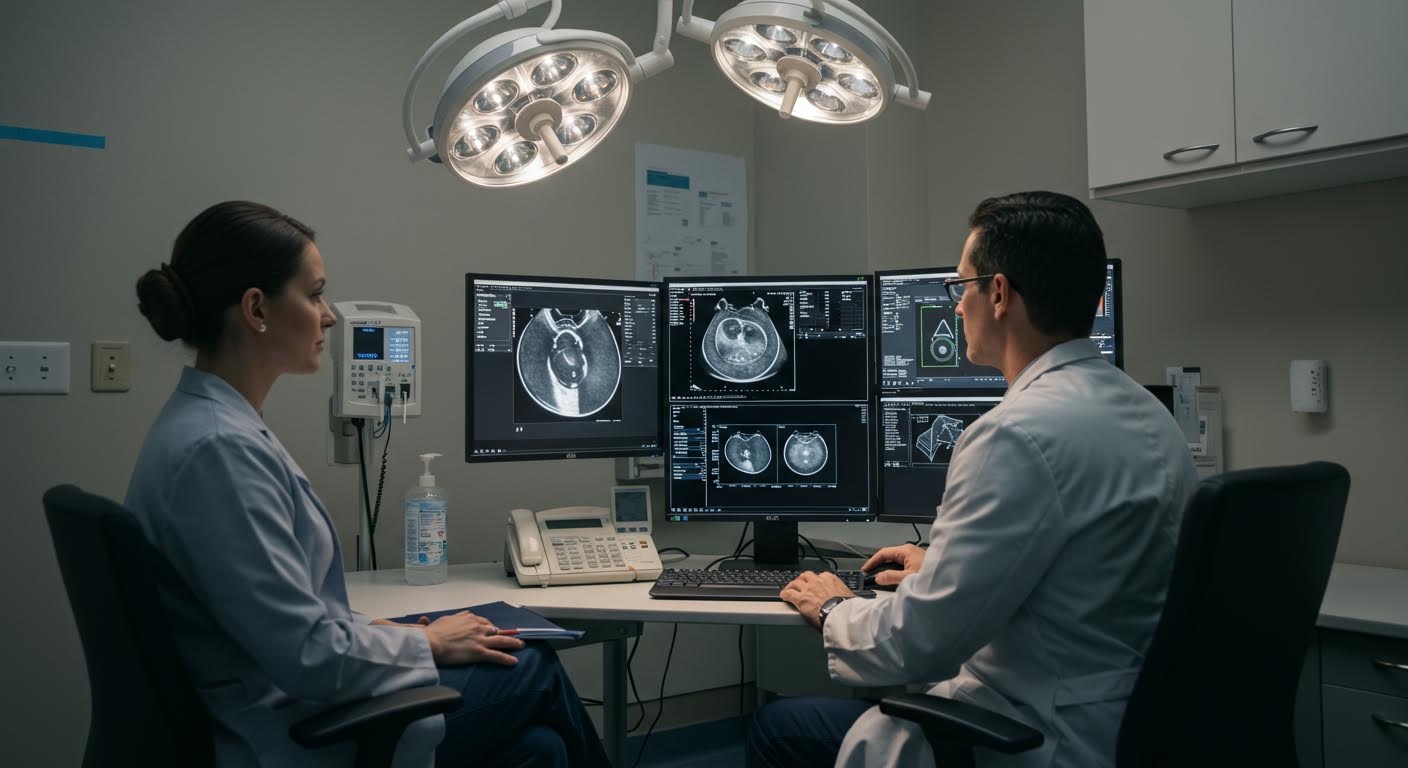
The stethoscope around a doctor's neck may soon seem as antiquated as the pocket watch. Across hospitals and clinics worldwide, artificial intelligence is transforming how diseases are detected, diagnosed, and treated—often with remarkable precision that surpasses human capabilities. Yet as AI systems demonstrate their diagnostic prowess, a fundamental question emerges: In our rush toward technological efficiency, what essential human elements of healthcare might we be leaving behind?
The Diagnostic Revolution: Where AI Excels
AI's impact on medical diagnostics has moved far beyond experimental phases into tangible clinical improvements. In radiology, machine learning algorithms now consistently outperform experienced radiologists in detecting certain cancers, particularly in mammography screening and lung cancer identification through CT scans. These systems can process thousands of images in the time it takes a human specialist to review dozens, identifying subtle patterns that might escape even trained eyes.
Pathology has witnessed equally dramatic advances. Automated analysis of tissue samples and cellular structures enables pathologists to identify cancerous cells with greater accuracy and speed than traditional microscopic examination. AI systems can detect cellular abnormalities at earlier stages, potentially catching diseases before they become visible through conventional diagnostic methods.
The speed improvements alone represent a paradigm shift. Where diagnostic results once required days or weeks, AI-assisted analysis can deliver preliminary findings within hours. For patients facing potential cancer diagnoses or other serious conditions, this acceleration from anxiety to answers—and from diagnosis to treatment—can be life-altering.
Regulatory Reality: The FDA's Balancing Act
Recognizing both the promise and complexity of diagnostic AI, the Food and Drug Administration has developed new frameworks specifically for artificial intelligence and machine learning medical devices. The FDA has established approval processes that account for the unique characteristics of AI systems, including their ability to learn and evolve after deployment.
These regulatory approaches emphasize rigorous validation requirements and quality control standards. Unlike traditional medical devices that remain static after approval, AI systems require continuous oversight to ensure their learning algorithms don't drift toward biased or inaccurate results. Post-market surveillance has become more sophisticated, monitoring how these systems perform across diverse patient populations and clinical settings.
International coordination has become essential as well. The World Health Organization has published ethical guidelines for AI in healthcare, recognizing that diagnostic algorithms developed in one country may be deployed globally, requiring common standards for safety and efficacy.
The Human Factor: What We Stand to Lose
Behind the impressive statistics of AI diagnostic accuracy lies a more complex story about changing relationships in healthcare. The traditional physician-patient interaction—built on clinical observation, intuitive reasoning, and human connection—faces fundamental alterations as algorithms increasingly drive diagnostic decisions.
Medical professionals express concerns about the gradual erosion of clinical skills that have defined their profession for centuries. When diagnostic AI systems provide immediate answers, there's less incentive for physicians to develop and maintain their own pattern recognition abilities. Some worry about creating a generation of doctors who excel at interpreting AI outputs but struggle when technology fails or when facing conditions outside algorithmic parameters.
Patient trust varies significantly across demographics and contexts. While younger patients often embrace AI-assisted diagnosis as cutting-edge care, older patients may feel uncomfortable with reduced human involvement in their medical decisions. Cultural factors also play a role, with some communities placing higher value on personal relationships with healthcare providers.
The question of medical workforce displacement looms large. Radiologists, pathologists, and other diagnostic specialists wonder whether their roles will evolve into AI oversight positions or become obsolete entirely. Early evidence suggests a more nuanced reality—while some routine diagnostic tasks may become automated, complex cases still require human expertise and clinical judgment.
Implementation Challenges: Theory Meets Practice
Despite proven capabilities in controlled studies, translating AI diagnostic tools into everyday clinical practice presents significant obstacles. Healthcare systems must integrate new technologies into established workflows, often requiring substantial changes to how medical staff approach their daily routines.
Resistance from medical professionals isn't merely technological aversion—it often stems from legitimate concerns about liability, accuracy, and maintaining professional autonomy. Training requirements are substantial, as healthcare workers must learn not only how to use AI tools but how to interpret their results appropriately and recognize their limitations.
Infrastructure costs present another barrier, particularly for smaller healthcare providers. Implementing AI diagnostic systems requires significant upfront investment in hardware, software, and ongoing maintenance. Rural hospitals and clinics may find these costs prohibitive, potentially widening healthcare disparities.
Data quality and bias issues pose ongoing challenges. AI systems trained primarily on data from certain populations may perform poorly when applied to different demographic groups, potentially exacerbating existing healthcare inequities. Ensuring diagnostic accuracy across diverse populations requires continuous monitoring and algorithm adjustment.
The Economic Equation: Costs vs. Benefits
The financial implications of AI in healthcare diagnostics present a complex calculus. Proponents point to substantial cost savings through faster, more accurate diagnoses that reduce unnecessary procedures and catch diseases earlier when treatment is less expensive. Emergency departments using AI triage systems can process patients more efficiently, reducing wait times and associated costs.
However, upfront investment requirements are substantial. Healthcare systems must budget not only for initial technology acquisition but for ongoing training, maintenance, and upgrades. The rapid pace of AI development means diagnostic systems may require frequent updates or replacement to remain current.
Long-term workforce implications add another layer of complexity. While some diagnostic roles may be reduced, new positions emerge in AI system management, quality assurance, and human-AI collaboration. The transition period requires significant investment in retraining programs to help healthcare workers adapt to new roles.
Insurance and liability considerations remain evolving areas. When AI systems make diagnostic errors, questions arise about responsibility and compensation. Medical malpractice insurance may need restructuring to account for AI-assisted diagnoses, potentially affecting healthcare costs across the system.
Finding Balance: A Path Forward
Rather than viewing AI as a replacement for human medical expertise, leading healthcare institutions are developing hybrid models that leverage technological efficiency while preserving essential human elements of care. These approaches position AI as a powerful diagnostic aid that enhances rather than replaces physician capabilities.
Research published in the New England Journal of Medicine demonstrates that hybrid approaches combining AI diagnostic tools with physician oversight consistently achieve better patient outcomes than either human or artificial intelligence alone. This collaboration model preserves the physician-patient relationship while capitalizing on AI's pattern recognition advantages.
Training programs are evolving to help healthcare workers develop AI collaboration skills. Medical schools are beginning to incorporate AI literacy into their curricula, preparing future physicians to work effectively with algorithmic tools while maintaining clinical reasoning abilities.
Policy recommendations from leading medical journals focus on managing the transition thoughtfully rather than rushing toward full automation. This includes phased implementation approaches that allow healthcare systems to adapt gradually, comprehensive bias testing to ensure equitable outcomes across populations, and maintaining requirements for human oversight in critical diagnostic decisions.
The integration of AI into healthcare diagnostics represents neither a utopian solution nor an existential threat to medical practice. Instead, it presents an opportunity to enhance human capabilities while preserving the empathy, intuition, and relationship-building that remain uniquely valuable in healthcare. The challenge lies in navigating this transformation thoughtfully, ensuring that in our pursuit of diagnostic precision, we don't lose sight of the human beings at the center of medical care.
The stethoscope may indeed become less central to diagnosis, but the need for skilled, compassionate healthcare providers who can interpret, contextualize, and communicate medical information remains as important as ever. The future of healthcare likely depends not on choosing between human expertise and artificial intelligence, but on finding ways to combine them effectively in service of better patient outcomes.